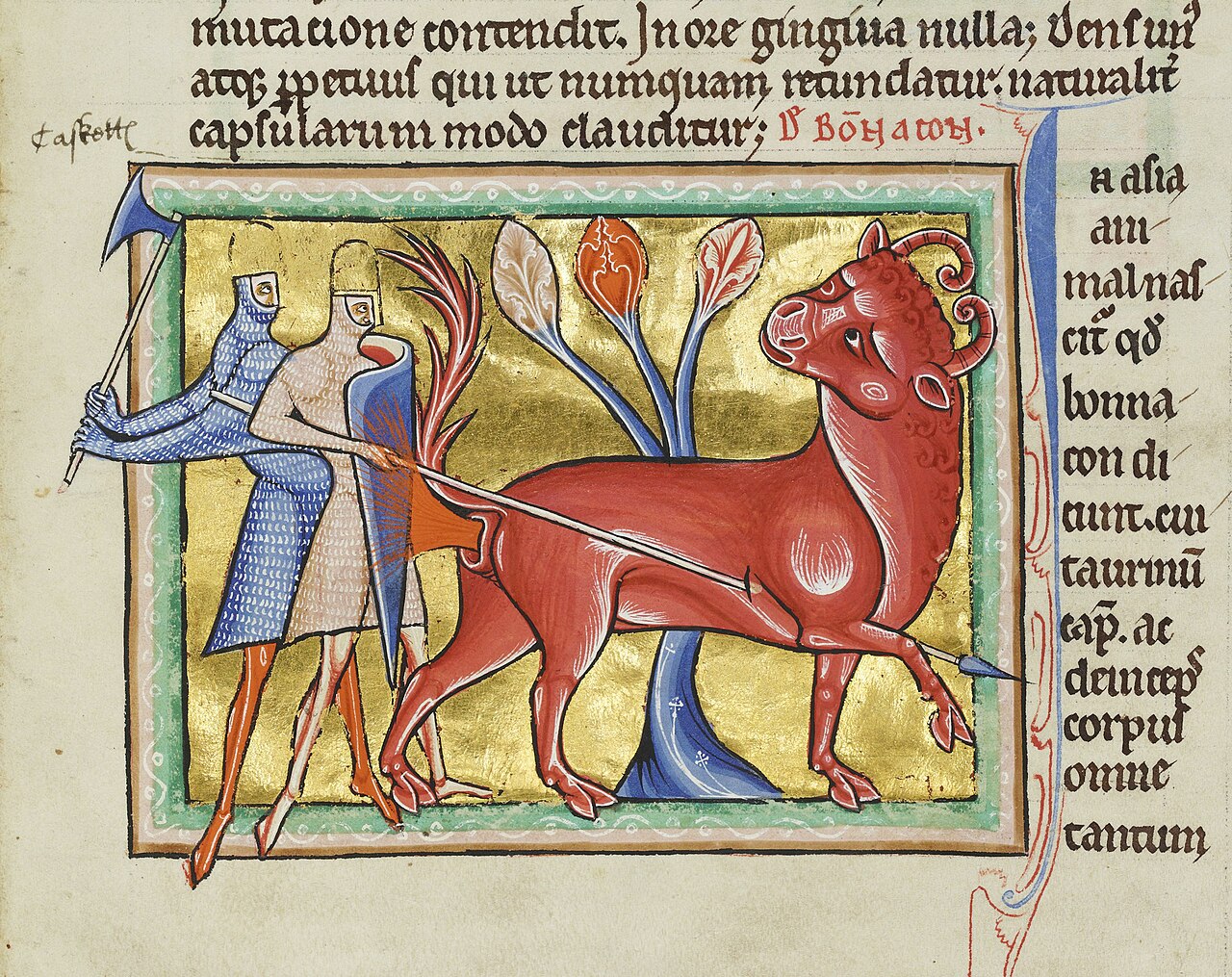

A medieval scribe sat in a cold monastery, sketching a beaver onto a heavy sheet of parchment. He truly believed the creature would willingly maim itself simply to escape a pursuing hunter. To him, this strange behavior was not a failure of basic biology. It was a hard moral truth about guarding personal purity. The scribe’s error perfectly frames the core function of animal symbolism. Humans rarely just observe the wild creatures living quietly in the surrounding forests. We project our most difficult psychological states directly onto their physical bodies.
The owl watching from the dark operates under the same psychological mechanism. Modern pop culture often reduces this solitary bird to a neat, highly intellectual mascot. We assign it a simple badge of academic wisdom. Yet older traditions recognized a much heavier, darker spiritual guide moving through the trees. The nocturnal hunter easily navigated the terrifying, hidden spaces of the long night. It emerged as an archetype for piercing through our deepest mental illusions. We use its silent image to face the hidden fears we prefer to ignore.
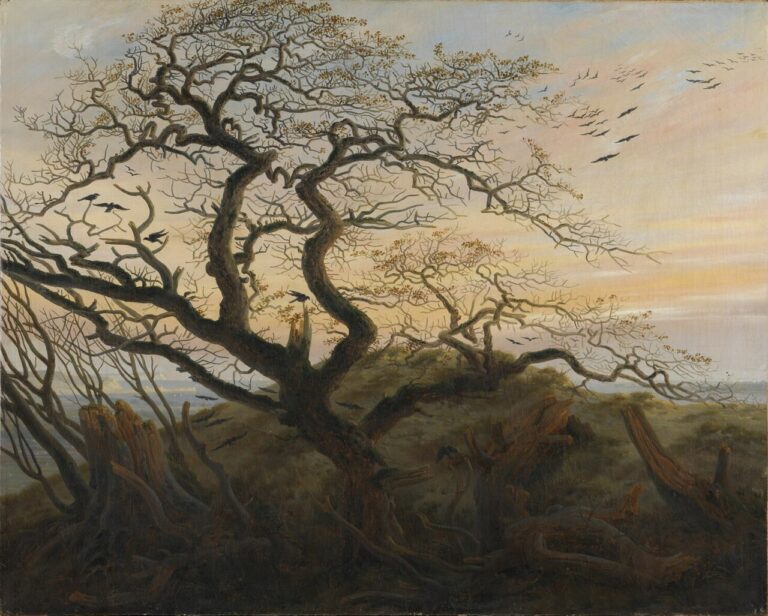
Every culture translates raw biological instinct into urgent, heavy mythological meaning. The Celtic phantom queen famously stepped onto the bloody battlefield as a dark raven. She carried harsh truths from the spirit world directly to fragile mortal humans. Even a small lizard resting quietly on a sunlit rock held serious spiritual weight. Indigenous traditions read its regrown tail as a practical map for human survival. The small creature became a living model for physical regeneration and radical psychological adaptability.
We still rely heavily on these quiet natural reflections in our daily lives. A wild beast gives solid shape to our completely formless inner anxieties. Facing our own destructive impulses feels entirely different when those impulses wear black feathers. The natural world constantly operates as a vast, breathing psychological mirror. What looks back at us is always our own hidden face.
Traditions understood the owl as a psychopomp – a guide of souls moving across the threshold of death. We do not just look at animals; we use their exact traits to map the borders of our own consciousness.
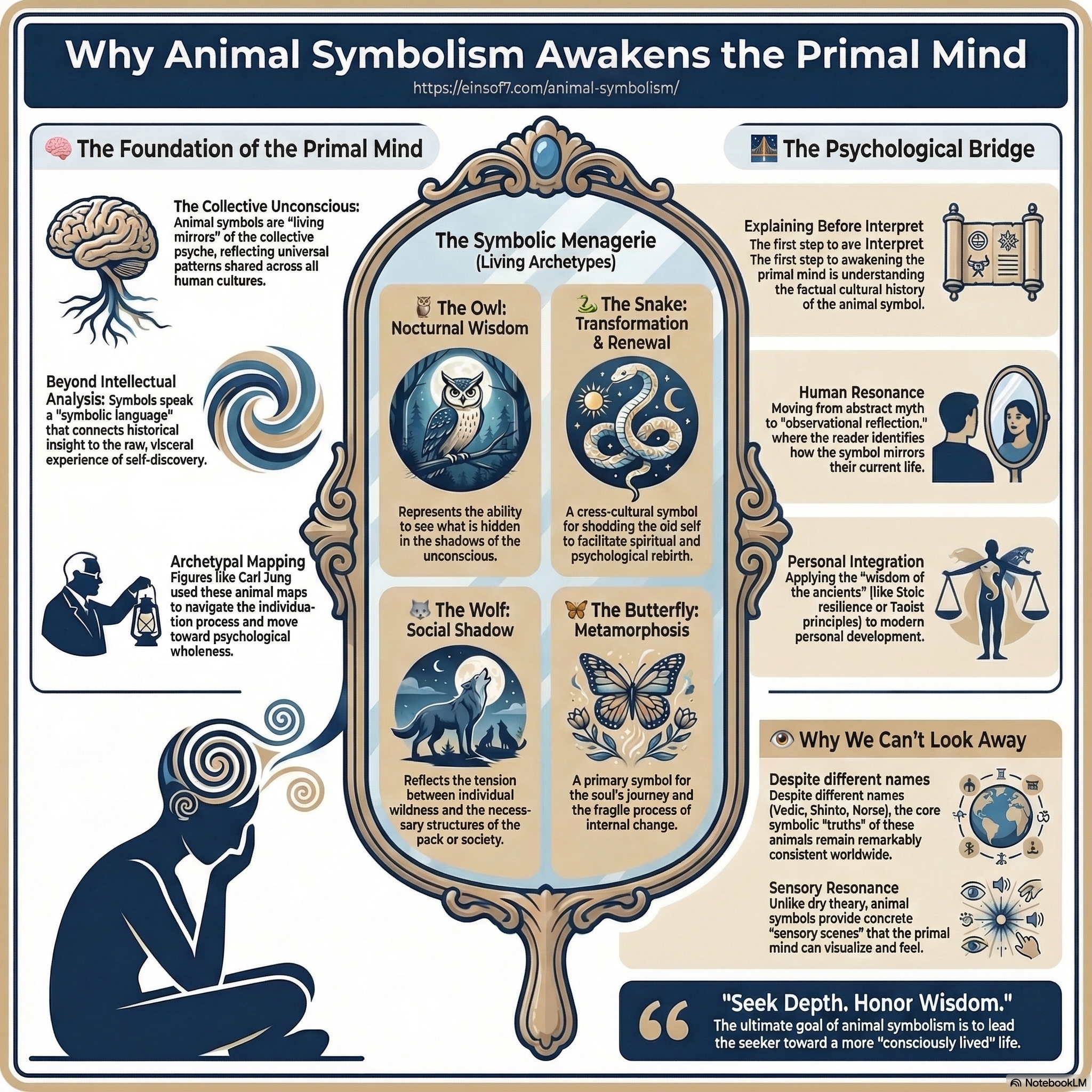
🪞 Projecting the Psyche: How Animals Hold Our Myths
Humans project psychological states onto the physical bodies of the wildlife sharing our environment. When a lizard sheds its tail to escape a predator and slowly regrows the appendage, observers do not merely log a biological fact. They witness a living metaphor for regeneration, survival, and the ability to leave behind a part of oneself to ensure continued existence. Such physical realities map directly onto abstract concepts like emotional healing and the cyclical nature of life.
Over generations, these observations solidify into cultural myths, animal divination practices, and Jungian animal archetypes. In Celtic mythology, the Morrigan—a phantom queen associated with war and sovereignty—appears as a crow or raven. Her presence on the battlefield bridges the physical reality of carrion birds feeding on the fallen with the spiritual concept of a deity claiming souls. The bird ceases to be a simple scavenger and becomes a shape-shifting messenger delivering truths from the spirit world directly into human awareness.
Different regions developed unique vocabularies based on their local ecosystems. Ancient Egyptian deities bore the heads of jackals, ibises, and crocodiles, embodying distinct forces of preservation, wisdom, and primal power. Vedic animal mounts carried gods and goddesses, acting as extensions of their divine authority. The medieval bestiaries of Europe attempted to catalog these moral and spiritual lessons, even when their biological facts were entirely incorrect. Even when human societies urbanized and walled themselves off from the wilderness, the reliance on these symbols remained completely intact.
Animal representations allow human beings to articulate internal experiences that defy simple language. A sudden encounter with a particular creature, whether waking or dreaming, often triggers profound emotional recognition. We assign the silent patience of a spider, the erratic movement of a moth, or the defensive posture of a snake to our own psychological processes. We turn the natural world into a vast, breathing mirror for human internal life. Why do we rely so heavily on these external biological forms?
🦋 The Metamorphosis Matrix: Butterfly Symbolism and the Soul
The biological reality of a caterpillar turning into a butterfly requires complete cellular dissolution. Inside the chrysalis, the insect digests its own body down to an elemental state before reorganizing into an entirely new form. Observers across centuries recognized this brutal, hidden process as an exact physical parallel for extreme spiritual transformation. The ancient Greeks noted this connection early on, adopting the exact same word—psyche—to designate both the delicate butterfly and the human soul.
Countless burial rites and creation stories frame the winged insect as a physical manifestation of a spirit leaving a physical body behind. The delicate wings emerging from a rigid, dead-looking shell provide the ultimate visual metaphor for surviving a dark night of the soul. Understanding this creature demands looking past the colorful wings to examine the quiet, terrifying darkness of the cocoon phase. The insect models the total surrender required for genuine psychological growth.
Read the full guide: The Butterfly as a Universal Symbol of Transformation →
🐦⬛ The Carrion Prophet: Raven Tricksters and Messengers
Carrion birds hold a unique position at the boundary line between the living and the dead. The raven, equipped with striking black plumage and highly complex vocalizations, naturally assumes the role of an oracle in human storytelling. Its high intelligence and problem-solving capabilities make it a prominent trickster figure in global mythology, capable of manipulating both ordinary humans and powerful gods to achieve its own ends.
Writers like Edgar Allan Poe leaned heavily on these established psychological archetypes, cementing the bird as a grim, foreboding messenger delivering uncomfortable truths to a fragile human mind. Yet this dark, literary reputation obscures the raven’s vital role as a teacher and a creator figure in various indigenous narratives. In Celtic traditions, deities like the Morrigan relied on the raven to shift shapes and communicate battlefield prophecies. The bird operates with a clear dual nature, bringing both destructive omens and necessary illumination to those willing to observe its complex behavior.
Read the full guide: Raven Symbolism and the Trickster Archetype →
🐍 The Shed Skin: Serpent Healing and Subterranean Knowledge
Few creatures provoke the same immediate, visceral reaction as a serpent sliding silently through tall grass. This biological response translates directly into a massive, globally recognized body of myth. Because the snake lives close to the ground, disappearing into the earth and re-emerging at will, early observers categorized it as a keeper of subterranean knowledge and raw earth energies.
The periodic shedding of its skin made the serpent a universal emblem of continuous rebirth and immortality. Ancient healing traditions latched onto the dual nature of snake venom—a potent substance capable of delivering both sudden death and powerful medical cures. The staff of Asclepius, wrapped with a single serpent, remains the primary global symbol of medicine today. Studying the serpent requires navigating the heavy tension between primal human fear and profound spiritual reverence for the cycle of life. The snake signifies that true healing often requires confronting the very forces that threaten to destroy us.
Read the full guide: Decoding Snake Symbolism and Serpent Myths →
🦉 Piercing the Dark: Owl Intuition and Nocturnal Deception
A nocturnal predator operating in total silence commands a unique type of respect from human observers. Instead of hunting with extreme speed or brute strength, the owl uses extraordinary perception and specialized hearing. This biological reality built the sturdy foundation for its enduring role as a symbol of deep intuition and the capacity to see through mental illusions.
While modern pop culture representations often domesticate the owl into a harmless mascot of academic study, older traditions maintained a healthy wariness of the bird. Operating as a psychopomp guiding souls in the dark, the owl frequently appeared as an omen of death or a stark warning of unseen dangers approaching. Its ability to navigate the black night sky turns it into a perfect psychological model for facing the shadowy, hidden aspects of the human unconscious without losing one’s way.
Read the full guide: The Owl in Mythology and Psychological Shadow →
🐾 Seeking the Guide: Personal Animal Archetypes
Discovering a personal connection to a particular animal extends far beyond taking a superficial online quiz or selecting a favorite creature. Authentic engagement with animal guides requires a disciplined approach combining quiet observation, dream analysis, and an honest understanding of one’s own psychological landscape.
Methods for finding these connections often borrow heavily from shamanic practices and deep Jungian introspection. In his landmark work Man and His Symbols, Carl Jung observed that animal motifs in dreams frequently represent the instinctual nature of the human psyche struggling for conscious recognition. A true animal guide rarely arrives as a glamorous apex predator like a wolf or an eagle; it frequently appears as an overlooked creature reflecting a person’s exact fears, strengths, or hidden potential. Establishing this relationship demands ethical respect for the biological animal itself, moving past mere aesthetic appreciation into a sustained study of its habits, environment, and survival strategies. This process requires patience and a willingness to accept uncomfortable truths about human nature. The chosen animal acts as a mirror, revealing internal blind spots that the conscious mind actively tries to ignore.
Read the full guide: Ethical Methods to Find Your Spirit Animal →
🏕️ Indigenous Animal Totems: Complex Spiritual Ecologies
North American indigenous traditions maintain highly structured, deeply ecological relationships with local wildlife. Animal totems in these cultures do not function as simple personality markers or casual mascots. They embody complex kinship networks, ancestral ties, and profound ecological responsibilities unique to individual tribes and clans.
A bear totem in the damp forests of the Pacific Northwest carries entirely different ceremonial weight than a bear symbol used in the harsh Southwestern deserts. These traditions weave animal behavior directly into governance, storytelling, and practical land management strategies. Understanding these symbols requires stepping away from broad, generic interpretations and examining the distinct regional ecosystems and tribal histories that give each animal its precise spiritual authority. Respecting these traditions means acknowledging that the symbol cannot be separated from the land itself. The animal operates as a living relative holding a distinct position within a shared environment.
Read the full guide: Native American Animal Totems and Traditions →
📱 Urban Wildlife: Animal Archetypes in the Digital Era
Human populations have largely retreated into concrete environments, heavily insulated from the daily rhythms of wild spaces. Yet the psychological reliance on animal imagery has not diminished. Sports franchises still attempt to channel the aggressive dominance of apex predators to intimidate rivals. Tech companies design logos featuring nimble, fast-moving birds or insects to communicate speed, efficiency, and quick adaptation.
Even in a heavily digitized environment, people still dream of wolves, spiders, and snakes. The algorithm dominating social media feeds constantly surfaces videos of clever crows solving complex puzzles or caterpillars entering their chrysalis stages. Viewers watch these clips obsessively because the underlying archetypes remain highly active in the human mind. We still require these creatures to help process complicated ideas about survival, adaptation, and sudden transformation.
The symbols persist. We need external anchors. The mind struggles with formless concepts.
A person facing a severe career transition will naturally find comfort in the biological certainty of a lizard regrowing a lost tail. A society dealing with widespread deception will continue to elevate the owl as a standard for piercing through the darkness. The animals themselves continue their biological imperatives, entirely indifferent to human observation, while human beings quietly borrow their shapes to make sense of an increasingly complicated reality.
📚 Explore the Full Animal Symbolism Guide
The intersection of human consciousness and wildlife creates a massive library of myth and metaphor. Use the resources below to investigate the distinct creatures and traditions shaping our psychological landscapes.
- The Butterfly as a Universal Symbol of Transformation →
- Raven Symbolism and the Trickster Archetype →
- Decoding Snake Symbolism and Serpent Myths →
- The Owl in Mythology and Psychological Shadow →
- Ethical Methods to Find Your Spirit Animal →
- Native American Animal Totems and Traditions →
We spend our entire lives trying to name internal shadows. Fear, grief, and sudden courage rarely arrive with clear labels. They resist easy definitions. Our deepest feelings are often too large for ordinary language. So we borrow the living shapes of the wild. A sudden flash of wings carries our most silent prayers. The animal kingdom becomes a vocabulary for the unsaid.
These creatures do not ask to carry our psychological weight. The owl hunts simply to feed itself in the dark. An ordinary moth circles a porch light out of instinct. Observers witness their struggles and recognize human battles. Yet we cannot help but read ourselves into their movements. This constant projection is not a failure of scientific observation. It operates as an old survival tool for the mind. Abstract thoughts require a solid physical form to be understood. We map the woods outside to survive the woods inside.
Tomorrow morning, a common crow might land on your windowsill. It will fold its dark wings against the morning cold. The wild bird will tilt its heavy head toward you. You might pause with your coffee cup in your hand. For a brief second, a dark eye meets your own. Then the creature pushes off the narrow concrete ledge. It vanishes entirely. The black shape disappears quietly into the heavy gray sky.
❓ Frequently Asked Questions
What are the 12 symbolic animals?
The twelve symbolic animals usually refer to the Chinese Zodiac, a cyclical calendar system based on lunar years. This system includes the Rat, Ox, Tiger, Rabbit, Dragon, Snake, Horse, Goat, Monkey, Rooster, Dog, and Pig. Each creature corresponds to specific psychological traits, elemental forces, and historical mythologies that influence personal temperament and social harmony.
What do different animals symbolize?
Meanings shift dramatically depending on the regional ecology and cultural history surrounding the creature. Apex predators like lions and eagles typically project solar authority, martial power, and spiritual ascension. Ground-dwelling or nocturnal creatures, such as snakes and owls, frequently map onto lunar cycles, hidden knowledge, and the navigation of the human unconscious.
How do I figure out my spirit animal?
Discovering a personal animal archetype requires tracking recurring motifs in your daily life, dreams, and unconscious reactions. Rather than selecting an animal based on aesthetic preference, pay attention to the creatures that provoke a strong, unexplainable emotional response or appear repeatedly during periods of personal crisis. Consistent journaling and studying the actual biological habits of these animals will clarify their specific psychological weight.
- Why Native American Animal Symbolism Awakens Us
- How Sacred Geometry Meditation Awakens You
- Shadow Archetype Jung: How the Dark Heals
- Sacred Geometry Shapes: Ancient Patterns That Awaken
Discover Your Archetype
What Archetype Lives Within You?
Take our 5-question symbolic journey through the unconscious and reveal your dominant Jungian archetype.

Dalton Treviso is an independent researcher and writer exploring archetypes, Jungian psychology, and mythological symbolism. His work focuses on how ancient philosophical traditions and symbolic systems illuminate the hidden structures of the human psyche.
Drawing on Jungian psychology, Stoic thought, and comparative mythology, Dalton examines how the inner patterns we carry shape perception, conflict, and transformation.
Through EINSOF7, he writes about the symbolic architecture of the mind — exploring how myths, archetypes, and philosophical traditions act as both mirror and map for psychological depth and self-understanding.
Areas of study: Jungian archetypes, animal symbolism, dream symbolism, mythological figures, and ancient symbolic traditions.