This article is part of our Animal Symbolism series. Read the full guide: Why Animal Symbolism Awakens the Primal Mind
The Ojibwe people of the Great Lakes region spoke of doodem. This indigenous term described a profound kinship between a human family and a specific animal. Modern culture later adopted and completely flattened this complex concept. Today, native american animal symbols are often reduced to casual personality quizzes. Yet the original meaning held intense social and spiritual weight. A clan member would never hunt or eat their guiding creature.
Indigenous traditions across North America do not share one single belief system. The Lakota and Cheyenne revere the buffalo as a sacred provider of life. Other groups speak of complex, shifting relationships with the wild. Certain traditions believe a person interacts with nine different animal guides. These unseen guides arrive and leave as life demands new lessons. Only one primary guardian remains attached for an entire lifetime.
You cannot pick this lifelong guardian from a convenient list of traits. The spirit always chooses the person. It decides exactly when and how it will reveal its presence. In his seminal work The Way of the Animal Powers, mythologist Joseph Campbell observed that this deep psychological bond inevitably materializes in daily life and sacred ritual. Eagle feathers bring divine wisdom and bravery into ceremonial spaces. Craftspeople etch these revered forms into silver or paint them onto clay. These crafted objects function as active spiritual anchors.
Understanding these traditions requires leaving behind modern assumptions about nature. Animals in this context are not mere mascots or simple metaphors. They operate as independent spiritual forces with their own agency. Studying their true historical context alters how we perceive the wild. A sudden encounter in the woods stops being a random event. It transforms into a very different kind of meeting.
🦬 The Plains Provider: Lakota Buffalo Symbolism
Before sunrise, a Lakota dancer tied a single eagle feather to his hair. The stiff quill pressed coolly against his scalp. The surrounding camp remained quiet. The air smelled faintly of cold wood ash and sweetgrass. Functioning as an active conduit to the Great Spirit, this feather served a purpose far beyond morning decoration.
Central to many plains traditions, eagle feathers physically manifest divine wisdom. The quill and vane embody honor, bravery, and absolute truth. Flying highest above the earth, the eagle acts as a direct messenger between the human realm and the sacred sky. Its feathers carry human prayers upward to the creator.
The Buffalo as a Walking Cosmology
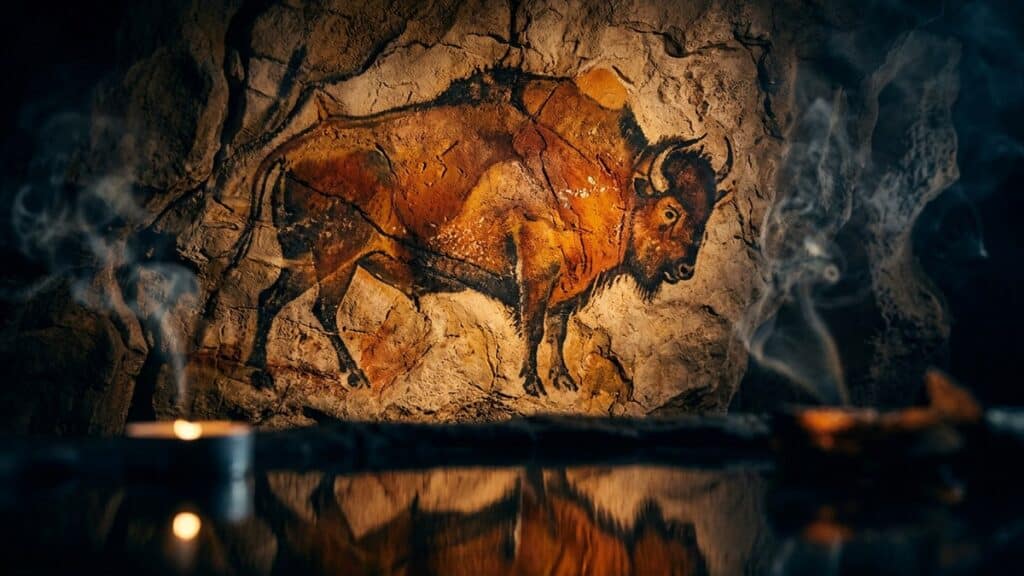
Maintaining a profound relationship with the bison, the Lakota and Cheyenne view the massive creature as a sacred provider. The animal gave meat for sustenance and thick hides for winter clothing. Its bones became necessary tools for daily survival. The buffalo embodied a walking cosmology of absolute abundance. The creature sustained daily life while operating as the physical embodiment of life itself.
Honoring this vital bond required strict clan totem taboos. A person belonging to a specific animal clan followed rigid dietary laws. They could never consume the meat of their protective creature. Hunting their specific guiding animal was strictly forbidden. Behavioral restraint created a perpetual respect for the natural world, ensuring the community never consumed its own spiritual foundation.
Transient Animal Messengers and the Lifetime Guardian
Recognizing a complex web of spiritual messengers, some traditions suggest a person interacts with nine different animals. These native american animal symbols accompany an individual over a lifetime. They embody different geographical directions, natural elements, and internal psychological qualities.
Many of these guides are entirely transient. Phasing in and out of daily reality, these power animals arrive to offer specific animal medicine for current challenges. A bear might appear during a period requiring strong boundaries. A hawk might visit when a person needs clearer vision. The animal leaves when the necessary lesson is fully learned.
Yet one primary guardian spirit remains constant. Accompanying the individual from birth until death, this lifetime guide walks beside them across both physical and spiritual realms. It forms the unseen core of their internal identity.
Material Reminders of Sacred Animal Kinship
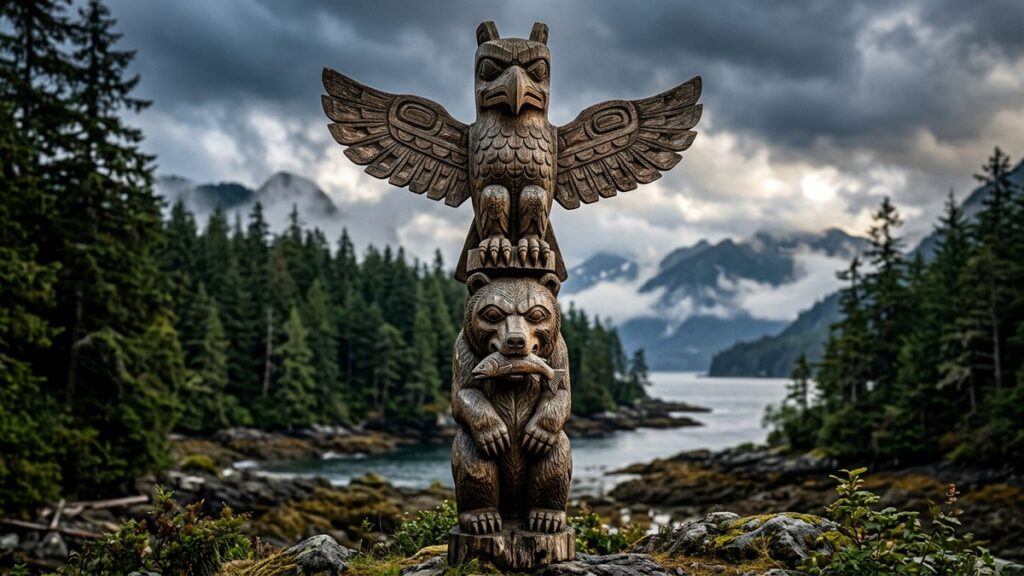
Capturing these lifelong bonds, artisans etched intricate symbols into heavy silver jewelry. They painted vivid animal forms onto fired ceramic vessels. Pacific Northwest carvers shaped monumental cedar logs into towering displays. These massive wooden pillars acted as historical records of clan lineage.
Weavers integrated animal motifs into intricate textiles and beadwork. Never considered mere artistic decoration, these crafted objects functioned as permanent spiritual reminders of sacred kinship. They kept the invisible world visually present in the daily human camp.
🐆 The Mesoamerican Nagual: Shared Destiny in the Jungle
Far south of the Great Plains, Mesoamerican cultures developed a distinct parallel. The ancient Maya and Aztec societies understood animal totems through a visceral lens. They recognized a spiritual companion known as the nagual. Far from a distant tribal emblem, it functioned as a twin soul born simultaneously with a human child.
Reading the Morning Ash for Totem Tracks
Careful observation at the exact moment of birth defined this tradition. Family members would spread fine ash around the perimeter of the house. They left the dust undisturbed throughout the dark night. The next morning, the elders inspected the ground for fresh tracks. A heavy jaguar paw or a winding serpent trail exposed the child’s nagual.
The bond is absolute. The connection cannot be broken. If the jungle cat suffered a severe injury in the wild, the human counterpart might suddenly develop an unexplained, dark bruise. If the wild animal died in the forest, the human would soon follow.
The Vulnerability of Shared Ecological Fate
The idea of guardian spirits shifts entirely here. It moves from gentle observation to absolute physical entanglement. North American traditions often view spirit guides as distinct, autonomous teachers. The Mesoamerican mind viewed the nagual as an invisible extension of the physical self.
Rejecting the illusion of human isolation, both systems place human identity firmly within the dense wild ecology. The human is never truly alone in the dark forest. A vital piece of their soul runs on four legs beneath the canopy. Ecological vulnerability naturally emerges from this belief. A person is only as safe as the wild creatures surrounding their village.
🏜️ Global Animism: Shona Laws and the Dreaming
But does this profound entanglement exist only in the Americas?
The history of totemism stretches far beyond the Americas. Indigenous groups across the globe developed remarkably similar structures of ecological kinship. In Zimbabwe, the Shona people organize their entire society around the mutupo. These are inherited animal totems passed down exclusively through patriarchal family lines. A Shona person inherits the elephant, monkey, or eland at the moment of birth.
The Mutupo Laws of Zimbabwe
Acting as a primary defining social marker for the individual, the mutupo dictates strict marriage laws, social obligations, and community structure. Two people sharing the exact same animal totem cannot legally marry. The animal acts as a permanent legal and spiritual boundary, ensuring necessary genetic diversity and deep social cohesion across distant villages.
Praising another often involves reciting their specific animal poetry. A Shona individual verbally honors the physical traits of the zebra or the lion. This poetic recitation shows deep respect for the person’s lineage. The wild animal’s inherent dignity transfers directly to the human family line. To insult a person’s mutupo is to insult their ancient ancestors.
Singing the Ancestral Animal Landscape
Across the Indian Ocean, Aboriginal Australian cultures maintain the complex system of the Dreaming. This ancient worldview links every single person to an ancestral animal spirit. The kangaroo or emu ancestor physically created the harsh desert landscape. They sang the winding rivers and red rocks into existence at the dawn of time.
Inheriting the animal creator of a specific geographical location, a person becomes directly responsible for the ancient songs and rituals associated with that creature. They must physically protect the sacred sites where the animal ancestor rests. The land is not considered dead rock and dry dirt. It is the sleeping body of the animal creator.
Shared understanding of kinship forms a vital chapter in the wider history of animal symbolism. A global pattern of deep animism emerges. Humans consistently use the wild animal kingdom to map their own complex social realities.
🦅 The Principle of Selection: How the Wild Chooses
One core rule unites these distinct cultural frameworks across continents. A person cannot consciously choose their specific spiritual companion. The rational human mind holds absolutely no authority over the wild spirit. The animal makes the final selection entirely on its own terms. It dictates exactly when and how it will reveal itself to the human.
Magnetic Attraction to Specific Animal Guides
Various methods exist for identifying spirit animals within indigenous frameworks. A person might experience an unexplainable, lifelong magnetic draw to a specific creature. They might obsessively collect images of wolves or ravens without knowing exactly why. The pull feels entirely natural and deeply subconscious.
Conversely, an extreme, irrational fear of a certain beast signals a similar tether. A person might feel terrified of spiders or snakes despite never being harmed. Both intense psychological reactions indicate a powerful, unseen resonance with that specific animal energy.
Nocturnal Visions and Violent Encounters With the Wild
Animal spirit guide dreams provide another very common pathway for connection. An individual might experience unforgettable childhood visions featuring a specific bird or mammal. These vivid nocturnal visits carry heavy psychological weight, interpreted as direct, intentional communication from the guardian spirits.
Physical interactions often serve as blunt messages from the unseen world. A sudden bite or an unprovoked attack by a wild creature holds immense meaning. Many traditions understand these violent encounters as severe spiritual initiations. The animal physically forces the human to pay immediate attention. The wound serves as a permanent, physical mark of the animal’s powerful claim.
Elders often encourage seekers to actively ask the universe for a clear vision. They suggest waiting quietly in nature for the animal to physically appear, respectfully asking the creature to reveal its hidden purpose. The entire process requires immense patience and the complete surrender of human control.
🦴 The Enduring Mirror: Human Kinship With Animal Symbols
The global presence of these beliefs exposes something fundamental about the human mind. Early societies did not view themselves as the absolute, unquestioned rulers of the earth. They recognized their deep physical vulnerability in the untamed wild. They clearly observed the superior speed, strength, and sharp senses of the creatures around them.
| Tradition | Symbol | Core Meaning |
|---|---|---|
| Lakota & Cheyenne | Buffalo | A sacred provider and walking cosmology of absolute life abundance. |
| Mesoamerican | Nagual | A twin soul sharing an unbreakable physical and spiritual destiny. |
| Shona | Mutupo | An inherited social marker dictating marriage laws and lineage boundaries. |
| Aboriginal Australian | Animal Ancestors | Ancient creators who sang the physical landscape into existence. |
The Removal of Human Supremacy in Indigenous Thought
Creating spiritual kinship with animals was a necessary method of psychological survival. It was also an act of profound ecological humility. The Kachina animal symbols of the Hopi reflect this exact same reverence. These beautifully carved figures embody the powerful spirits of nature that bring rain and life. They remind the community that human survival depends entirely on non-human forces.
Modern cultures often completely separate humanity from the surrounding natural environment. Indigenous traditions maintain that such severe separation is a dangerous, arrogant illusion. The human species is simply one thread in a massive biological web. To sever that connection is to invite spiritual and physical disaster.
An External Vocabulary for the Human Soul
Providing an external vocabulary for deep internal states, the animal kingdom acts as a necessary mirror for complex human behavior. The quiet stealth of the panther explains human intuition. The fierce protection of the mother bear explains human defensive anger.
Respecting a strict clan taboo practices vital ecological restraint. It ensures that a critical food source is never entirely depleted by greed. Waiting patiently for a dream quiets the demanding ego. It allows the deeper subconscious mind to speak in the ancient language of the forest.
The universal presence of these ancient symbols suggests a deep, unchanging human need. We require the wild to fully understand our own strange humanity. The rational, modern mind is often fragile and easily isolated. It seeks a natural, grounded companion in the dark. The animal guide provides a recognizable shape for the invisible forces of life. It reminds the solitary human that they are part of a massive, breathing whole.
The Watchful Forest of Indigenous Animal Lore
Across vast landscapes, diverse indigenous communities arrived at a quiet shared understanding. The natural environment was never an empty, silent stage waiting for human action. It breathes with a constant and watchful intelligence. Wild creatures operate with their own distinct spiritual agency, observing human lives just as closely as we watch them. Such beliefs drastically shift how a person walks outside. Trees and rivers become populated with quiet, observing neighbors.
Contemporary routines often build a thick wall between humanity and the wild. Paved roads and digital screens create an illusion of total separation. Yet a deep human instinct still reaches out for that lost kinship. We still pause when a hawk circles low overhead, and a deer on the trail demands our complete silence. Our pulse quickens when an owl calls out in the dark. In those brief moments, the old indigenous perspective makes sudden, perfect sense. The animal encounter feels much less like random biological chance. It feels like a deliberate meeting.
Recognizing animal spirits exposes a quiet human longing. People everywhere want to know they are not alone. We hope the natural world looks back at us. A deep bond with an animal guide offers a profound sense of belonging to the earth. The concept survives because it answers an old ache in the human heart.
You step onto a quiet dirt path just before dusk, leaving the noise of the day far behind you. Dry leaves rustle sharply near the edge of the dense woods. A dark eye catches yours from the deep tree shadows. The wind settles back into the heavy pine branches.
❓ Frequently Asked Questions
What are common Native American animal symbols?
While traditions vary widely across the continent, certain creatures frequently appear as powerful spiritual forces. The eagle often operates as a divine messenger connected to the sky, the bear embodies protective strength and healing, and the buffalo acts as a sacred provider of life. These forms function not as generic metaphors, but as distinct entities commanding deep cultural reverence.
What do Native American animals symbolize?
Rather than representing simple human traits, these animals embody complex ecological and spiritual relationships. They act as autonomous teachers, lifetime guardians, or transient messengers that deliver specific wisdom required for survival. The symbolism reflects a worldview where humanity is deeply entangled with, and dependent upon, the surrounding wild ecology.
How does someone find their birth spirit animal?
Indigenous frameworks strictly maintain that a human cannot consciously choose or find their spiritual companion from a list. The wild spirit possesses its own agency and makes the final selection, revealing itself through recurring dreams, unexplainable magnetic attractions, or sudden physical encounters. The process demands immense patience and the complete surrender of rational human control.
For a broader understanding of this symbolic tradition, explore our complete guide to Why Animal Symbolism Awakens the Primal Mind.
Explore Related Topics

Dalton Treviso is a depth psychology researcher and writer exploring how archetypes, shadow work and ancient philosophy illuminate the hidden structures of the human psyche.
Drawing on Jungian psychology, Stoic thought and mythological symbolism, his work examines how the inner patterns we carry shape perception, suffering and transformation.
Through EINSOF7, Dalton writes about the symbolic architecture of the mind — helping readers understand how myths, archetypes and philosophical traditions can act as both mirror and map for psychological depth and self-understanding. More about me click here.