
This article is part of our Ancient Symbols series. Read the full guide: Ancient Symbols: The Hidden Power That Drives Us
Look closely at the oldest stories told around ancient fires. You will often find a colossal ash or mighty oak standing at the center. Heavy roots reach deep into the dark soil of the underworld while high branches hold the heavens. This enduring image forms the core of tree of life symbolism.
Early cultures needed a tangible way to map the vast, terrifying cosmos. A massive trunk acting as a stabilizing central pillar provided a perfect living model. Mythologists call this vertical axis the world tree. It serves as a dynamic bridge spanning mortal earth and divine spaces. Without this vital anchor, ancient people feared a sudden cosmic collapse.
We see this magnificent structure rising in Norse myth as the mighty Yggdrasil. The gods held their daily councils beneath its massive, sheltering boughs. Celtic tribes honored a parallel concept known as the Crann Bethadh. They firmly believed these great oaks maintained the harmony of their tribal lands.
Thousands of miles across the ocean, the Maya imagined a giant ceiba tree. Vibrant green foliage pushed up through the exact center of their universe. Vastly separated civilizations somehow shared an identical vision of cosmic order. They all recognized a living, breathing pillar holding existence together.
This recurring motif moves far beyond the bounds of ancient geography. It accurately maps the hidden vertical structure of the human psyche itself. Every person stands suspended between base instincts and lofty aspirations. The world tree still grows quietly inside the modern mind.
🌲 Yggdrasil and the Norse Cosmos
Somewhere in a smoky 13th-century Icelandic hall, a scribe pressed ink into cold vellum to record the Prose Edda cosmology. He wrote of a colossal ash tree holding the entire universe together. This is the mighty heart of Yggdrasil in Norse mythology, forming the ultimate heaven and underworld connection.
The immense ash tree is the landscape itself. Nine distinct worlds rest within its sprawling branches and deep roots. A legendary eagle sits high in the topmost canopy while a great dragon named Nidhogg gnaws steadily at the deepest roots. Between these opposing forces, a squirrel runs up and down the trunk to deliver insults back and forth.
Constant tension and vibrant life pulse through the wood. Surviving this immense cosmic strain requires daily care from the Norns, the fates of Norse myth, who water the roots using white mud from a sacred well to prevent rotting. Four magical stags also live within the immense branches, constantly chewing on the green leaves of the canopy.
The trunk also served as a site of profound sacrifice. The chief god Odin hung himself from its harsh branches and pierced his own side with a heavy spear. He endured the freezing wind for nine full nights to discover the magical alphabet of runes. Universal wisdom exacted a severe toll in blood and cold.
Oluf Olufsen Bagge visualized this world tree motif perfectly. His famous 1847 artwork captures the immense scale of the ancient ash where the gods held their daily councils. It was a dynamic, living architecture. If the great tree shuddered, the entire universe trembled. The ash provided stability in a physical world defined by harsh winters and violent seas.
🌿 Crann Bethadh: The Celtic Oak
The ancient Celts held a similar reverence for the deep forest. When clearing land for a new settlement, a tribe planned carefully by leaving one massive tree standing in the exact center. Usually, this was a towering, ancient oak. This central pillar was the Crann Bethadh, widely known today as the Celtic tree of life.
The oak served as a physical gathering place for the village where chieftains were formally inaugurated beneath heavy, sweeping boughs. Its physical structure mirrored a profound spiritual reality. Branches reached upward to touch the vast, unknowable sky. Roots dug downward into the dark, silent earth. The sturdy trunk stood at the center, holding the mortal plane between the two.
Destroying an enemy tribe’s sacred tree was a devastating military blow that completely severed their spiritual connection to both ancestors and gods. The spiritual leaders of the Celts were the druids, a word linguists believe derives from the Celtic term for oak. True spiritual wisdom required a deep understanding of the surrounding forest.
Deep within oak groves, druids performed their most sacred rituals. The Roman historian Pliny the Elder documented these ancient practices, describing druids harvesting rare mistletoe from the sacred oaks. They used a special golden sickle for this delicate task to collect the divine essence growing upon the earthly trunk.
The Celtic knotwork captures this exact belief. Ancient carvers designed the tree with no clear beginning or end. The roots and branches weave together in an endless, looping circle. Life, death, and rebirth flow through the wood constantly.
🌴 The Ceiba and the Sycamore
How does the same pattern emerge across vast oceans? The ancient Maya looked up at the giant Ceiba and established a very similar cosmological logic. The Ceiba is a towering giant of the rainforest featuring massive buttress roots and a perfectly straight trunk.
Thick roots plunged into Xibalba, the watery underworld of the dead. Ceiba tree symbolism connected this dark depth to the highest starry sky. The canopy spread wide like an immense green umbrella while the trunk provided a sturdy vertical path for ascending souls.
Different trees aligned with specific cardinal directions in the Maya worldview. Each direction possessed a unique color and a guardian tree, but the great green Ceiba stood exactly in the center. It anchored the four corners of the known physical world. The branches grew outward to form a perfect natural cross. Arriving Spanish colonizers later noticed this distinct cross shape and mistakenly assumed the Maya already recognized Christian iconography.
Striking visual parallels emerge in the ancient Near East, making this recurring pattern a major focus in the study of ancient symbols. Sasanian Empire art from 5th-century Iran contains a distinct motif. Stucco reliefs frequently feature confronted animals flanking a central tree. These are often symmetrical ibexes standing on their hind legs to project profound balance around a sacred center.
Ancient Egyptian mythological art captures a different sacred act entirely. Tomb paintings depict divine figures breastfeeding before a sacred sycamore tree. Sometimes, the goddess Hathor emerges directly from the tree trunk. She offers water and nourishment to the souls of the dead, linking the wood directly to divine sustenance.
The Palace of Shaki Khans in Azerbaijan proves the incredible endurance of this motif centuries later. It features a prominent 17th-century depiction of the branching structure. The design also influenced daily household objects across the Near East, becoming a central pattern in Persian carpets. Weavers spent months tying knots to form the branching designs. A rug transformed a simple floor into a sacred garden.
📋 Etz Chaim: The Mystical Diagram
The Hebrew Bible locates the Etz Chaim in a physical location. Genesis 2:9 places it directly in the middle of Eden, explicitly calling it the Tree of Life. The medieval scholar Ramban interpreted this specific tree carefully, viewing it as a pure symbol of immortality entirely separate from the Tree of Knowledge.
Later Rabbinic literature transformed the tree into a powerful metaphor for the Torah itself. Proverbs 3:18 explicitly calls wisdom a tree of life, a verse actively recited during Jewish Torah services today to reaffirm the sacred text as a living, sustaining force. The physical objects of Jewish worship mirror this structure.
A Torah scroll wraps around two wooden rollers. These handles are the trees of life. The reader grasps the wood.
The Kabbalistic Tree of Life takes this metaphor into complex mystical territory. The Zohar mystical teachings describe it as a divine conduit mapping the invisible flow of creation from heaven to earth. The structure is a diagram of the 10 sefirot, which are distinct attributes of limitless divine energy. They include Chochmah for wisdom, Binah for understanding, and Chesed for kindness.
Infinite divine light, known as Ein Sof, pours into Keter, the highest crown sefirah. The light cascades downward through the complex branching pathways until it finally rests in Malkhut, the physical plane of existence. The sefirot sit in three vertical columns to establish cosmic balance. The left side forms the strict Pillar of Severity. The right side forms the expansive Pillar of Mercy. The middle trunk acts as the harmonizing Pillar of Mildness.
The prominent Kabbalist Rabbi Isaac Luria mapped these interconnected pathways. The resulting map provides a structural blueprint for understanding the universe and practicing structured spiritual ascension meditation.
💡 The Axis Mundi: Tree of Life Symbolism as a Shared Center
What exactly unites the Norse ash, the Celtic oak, and the mystical diagram? They all function as a stabilizing Axis mundi, a Latin term meaning the center of the world. The sacred tree symbolism solves a fundamental human problem by giving physical shape to the invisible, terrifying cosmos.
The trunk connects the lowest depths to the highest imaginable peaks. Ancient people needed a tangible way to organize existence, and a massive trunk provides a perfect living model. In his landmark work The Sacred and the Profane, historian of religion Mircea Eliade observed that an axis mundi provides the absolute fixed point required to establish a habitable world. The visual confirms that the universe is not random or scattered. Everything is safely tethered to a single, living core.
Roots, trunk, and branches depend on each other completely. If one part rots, the whole system eventually collapses. The massive canopy acts as a protective cosmic dome shielding fragile humanity from the chaotic, swirling cosmos. Deep roots contain the hidden past and buried ancestors, holding the dark, silent history of the entire world. The vertical trunk stands firmly in the active present moment while the branches reach toward an unwritten and expansive future.
This structure mirrors the human experience of time itself. Life requires tension to remain standing. Gravity pulls downward while sunlight pulls upward, forcing the wood to stretch between these opposing forces to grow strong. The symbol also bridges the gap between time and eternity. A tree sheds its leaves in winter and appears dead, only to bloom again in the spring. This visible cycle offered early cultures a promise of renewal. The tree became a natural clock for the turning year, proving that life outlasts the freezing darkness.
🧠 The Enduring Anchor of Tree of Life Symbolism
The human mind still seeks order, ensuring the symbol persists. Cultures continue to look for a reliable center in chaotic times. The branching structure remains a perfect model for interconnected existence. The pattern maps how high aspirations require deeply buried roots. A tree cannot grow upward without pushing downward simultaneously.
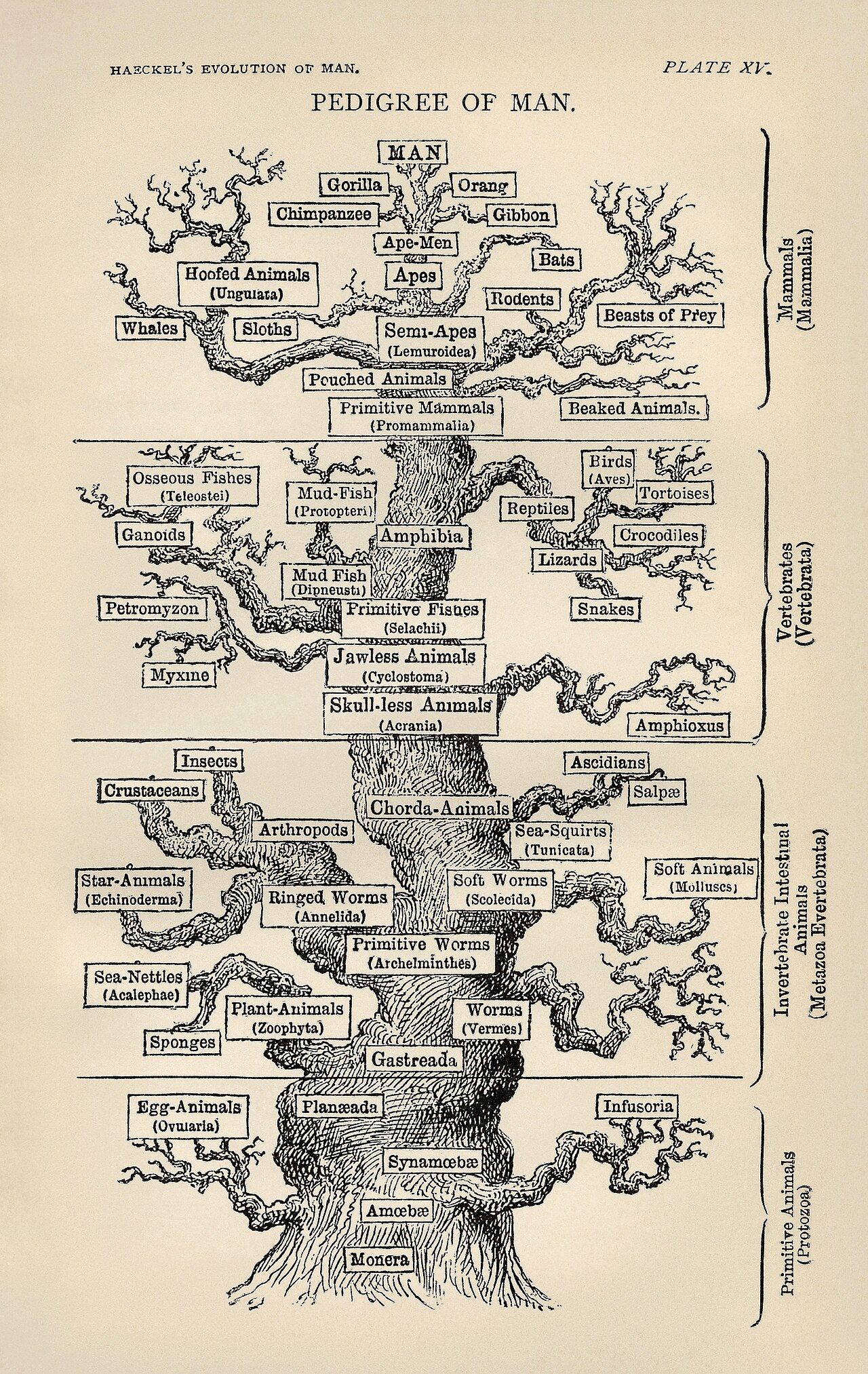
Societies build their cultural foundations in the exact same manner. They anchor themselves in history to reach toward the future. Anthropologists note that people still map knowledge using tree diagrams, drawing family trees to understand shared ancestry and evolutionary trees to map the history of biology. The cognitive need for a central, branching structure remains entirely intact.
Physical architecture often mirrors this natural anchor. Ancient stone pillars in temples mimic the trunks of trees. Gothic cathedrals feature towering columns that branch across the ceiling. Walking into a grand cathedral feels like entering a forest because the builders instinctively recreated the sheltering canopy of the ash.
The world tree offers a quiet, enduring image of natural balance. The trunk stands firm while the seasons and centuries change around it. This living pillar provides an architecture for human thought, growing silently and steadily over hundreds of long years. A single ancient oak witnesses the rise and fall of empires. Cultures separated by vast oceans instinctively reached for the same metaphor. They looked at a massive trunk and saw the spine of the world.
⚓ The Living Anchor of Tree of Life Symbolism
Separated by vast oceans and centuries, distant peoples looked into the forest and saw the exact same thing. They did not coordinate their mythologies or trade their sacred texts. Yet the Norse warrior, the Celtic druid, and the Maya priest all found a wooden spine holding reality together. This parallel vision reveals a quiet truth about human nature. We instinctively seek a living anchor in an unpredictable cosmos. A static pillar of stone could never capture the constant growth and decay of existence. Only a breathing entity could bridge the terrifying gap between the underworld and the heavens.
The world tree motif demonstrates how disparate civilizations solved the same cosmological problem. Yggdrasil’s ash, the Celtic oak, and the Mesoamerican ceiba all function as dynamic axes, proving that early cultures viewed the universe not as a static void, but as an organic, interdependent system. The Kabbalistic Etz Chaim abstracts this further, turning the physical trunk and branches into a map of divine emanation. Across these traditions, the vertical axis demands strict balance. The canopy cannot flourish without the deep, subterranean roots, and the mortal plane relies entirely on the tension between the two.
The sacred ancient groves have largely fallen to time and industry. Modern astronomy maps the stars with cold mathematics instead of sprawling roots and green leaves. Still, the old mythological image lingers quietly in the background of human consciousness. We walk past ordinary ash and oak trees every day without noticing their silent work. Their heavy branches still sway in the wind. They just keep holding the sky up.
❓ Frequently Asked Questions
What is the deeper meaning of the tree of life?
The symbol represents the interconnected nature of the cosmos, mapping how the physical and spiritual planes depend on each other. It visually establishes that high aspirations require deeply grounded roots to maintain structural balance. Across traditions, the motif serves as a living axis that anchors the chaotic universe into a stable, ordered system.
Is it okay to wear the tree of life?
Wearing the symbol is widely accepted across many cultures as a sign of personal growth, resilience, and connection to heritage. Because the motif appears independently in Norse, Celtic, Maya, and Near Eastern traditions, it is not an exclusive religious icon. It functions as a universal human archetype rather than a restricted ceremonial object.
What did Jesus say about the tree of life?
In the New Testament, the Book of Revelation references the tree of life standing in the New Jerusalem, bearing twelve kinds of fruit and yielding leaves for the healing of the nations. While the gospels do not record Jesus speaking directly about the Edenic tree, Christian theology frequently draws a symbolic parallel between the life-giving tree and the wooden cross of the crucifixion.
For a broader understanding of this symbolic tradition, explore our complete guide to Ancient Symbols: The Hidden Power That Drives Us.
Explore Related Topics

Dalton Treviso is an independent researcher and writer exploring archetypes, Jungian psychology, and mythological symbolism. His work focuses on how ancient philosophical traditions and symbolic systems illuminate the hidden structures of the human psyche.
Drawing on Jungian psychology, Stoic thought, and comparative mythology, Dalton examines how the inner patterns we carry shape perception, conflict, and transformation.
Through EINSOF7, he writes about the symbolic architecture of the mind — exploring how myths, archetypes, and philosophical traditions act as both mirror and map for psychological depth and self-understanding.
Areas of study: Jungian archetypes, animal symbolism, dream symbolism, mythological figures, and ancient symbolic traditions.