
This article is part of our Ancient Symbols series. Read the full guide: Ancient Symbols: The Hidden Power That Drives Us
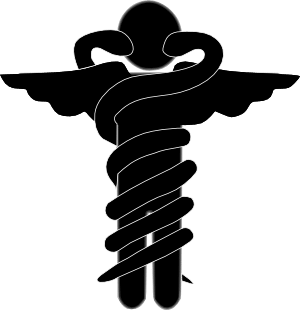
Look closely at the side of an ambulance passing on a busy city street. You’ll almost always see a winged staff with two entwined snakes. This exact image is printed on hospital walls, medical badges, and pharmacy signs everywhere. The modern caduceus symbol meaning is widely assumed to be tied directly to healing and physical care. Yet this everyday medical logo hides a much more volatile past.
The design actually belongs to the Greek god Hermes. He was not a physician. Hermes ruled over commerce, thieves, travelers, and the dark boundaries between worlds. His domain was the marketplace and the crossroads, not the clinic. Long before modern hospitals adopted it, his staff represented rapid change and cunning. It was a primary tool of alchemy and spiritual boundary crossing. Ancient mystics recognized the design as a sign of hidden knowledge.
The core image is even older than classical Greek mythology. Its visual roots stretch back thousands of years to Sumerian deities of the underworld. Later myths say Hermes found two fierce serpents locked in violent combat. He threw his wooden staff directly between them. The beasts stopped fighting immediately and coiled peacefully around the wood in perfect symmetry. This act transformed a plain herald’s wand into an enduring map of opposing forces.
That delicate symmetry gives the emblem its lasting psychological weight. The paired serpents mirror the constant tension between logic and intuition, order and chaos. An object once carried by tricksters and esoteric magicians now officially represents modern medicine. This strange historical evolution tracks our continued reliance on ancient maps of inner transformation.
💡 The Corporate Clinic and the Caduceus Logo
Stand near the pickup window in any major chain drugstore. You’ll hear barcode scanners beeping in rapid succession. Technicians count pills and move plastic bottles under harsh fluorescent lights. Look closely at the side of the white paper bag handed across the counter. You’ll often find a winged staff entwined with two snakes printed right next to the receipt.
We accept this image as a quiet promise of care. We assume it stands for health, recovery, and the preservation of human life. Yet the system operating behind that pharmacy counter is driven by entirely different forces. The contemporary medical landscape relies heavily on rapid transactions, chemical distribution, and logistical speed.
Healthcare today is an immense commercial apparatus. It functions through a vast network of global supply chains, complex insurance coding algorithms, and high-speed diagnostic protocols. The modern clinic is not a quiet sanctuary. It’s a highly efficient hub of movement and industry. Medical professionals balance patient care with the strict demands of billing and administration every single shift.
This reality creates a strange friction. Patients walk into a hospital hoping for the focused attention of a dedicated healer. Instead, they navigate an administrative labyrinth – billing departments, pharmaceutical patents, strict appointment time limits. The business of healing is a massive industry. The winged staff stamped on the paperwork perfectly mirrors this reality. The logo we assume represents physical healing actually belongs to the ancient god of commerce. How did a merchant’s tool become the face of modern medicine?
🏛️ The Herald’s Caduceus at the Marketplace
The ancient Greek world understood exactly who carried the winged wand. It belonged to Hermes – the swift-footed messenger of the gods. He held dominion over commerce, negotiation, physical boundaries, and theft. The staff of Mercury, as the Romans later called it, was the primary tool of the marketplace. A sign of safe passage for heralds, merchants, and diplomats crossing hostile borders.
The visual history of the emblem stretches back even further. Long before the Greeks, a similar image belonged to the Sumerian god Ningishzida – a Mesopotamian underworld deity associated with vegetation and intertwined serpents. As the symbol migrated into Greek culture, it evolved into an olive branch. Greek myth eventually formalized the design through a specific story. Hermes encountered two serpents locked in mortal combat. He thrust his wooden staff between them. The snakes immediately stopped fighting and coiled peacefully around the wood.
The resulting image represented negotiation and dispute resolution. It had nothing to do with medical practice. The actual Greek god of healing was a different figure named Asclepius. The authentic emblem of ancient medicine is the Rod of Asclepius – a rough wooden branch entwined by a single, unwinged snake. Hermes was a trickster and a boundary crosser. A psychopomp who led souls to the underworld. He eased the transition between the living and the dead. His staff represented fluid transformation and sudden change. It was never a tool for curing the sick.
🔍 Where the Single Serpent of Asclepius Failed Modernity
Historians often frame the modern use of the caduceus as a massive bureaucratic error. In 1902, the U.S. Army Medical Corps officially adopted the twin-snake design for its uniforms. Scholars pointed out the mistake immediately. In his landmark work The Golden Wand of Medicine, historian Walter J. Friedlander observed that military officials had confused the merchant’s wand with the healer’s rod. The single-snake design of Asclepius was the correct historical choice for a medical unit.
But this “error” points directly to the nature of contemporary healthcare. The old myth of Asclepius actually feels deeply out of place in a modern hospital. Asclepian healing rituals were notoriously slow and intensely personal. Sick individuals traveled to isolated sanctuaries. They slept inside dark stone temples, waiting for a divine dream to guide their cure. The process required immense patience, isolation, and spiritual quiet.
A trauma center does not wait for a dream. It requires immediate action. Blood and tools must move fast.
The modern system aligns almost perfectly with the domains of Hermes. It’s fast, brilliant, and deeply tied to commerce. The pharmaceutical industry requires the rapid movement of goods across borders. Healthcare thrives on the constant exchange of specialized information. The military didn’t make a mistake when they chose the winged staff. They accidentally selected the most accurate representation of what medicine was about to become. The slow, single serpent was left behind by the speed of the modern world.
🌙 Alchemy, Logistics, and the Modern Caduceus Symbol
The widespread adoption of the merchant’s staff reframes our view of medical systems. We’re caught between two distinct expectations. Patients want the single snake of Asclepius when they’re sick – the singular focus of a true, unhurried healer. Yet we actively participate in the twin-snake system of industry and rapid alchemy.
The twin serpents mythology suggests the integration of opposites. In modern healthcare, this tension is constant. The system balances human care with economic survival. It manages the fragile boundary between life and death using highly profitable chemical compounds. The winged staff captures this exact friction. It stands at the crossroads of science and commerce.
The history of alchemy mirrors this dynamic. The legendary figure Hermes Trismegistus adopted the staff as a sign of esoteric wisdom. It represented the volatile metal quicksilver and the process of spiritual transformation. This esoteric snake symbolism mirrors the pharmaceutical industry perfectly. Modern drug development is a form of high-speed, highly profitable alchemy – the precise combination of chemical elements to alter human biology. The methods have changed, but the underlying archetype of rapid, calculated alteration remains. This pattern appears often in the wider history of ancient symbols across global cultures.
🧘 Reading the Caduceus Signs in the Waiting Room
You encounter this tension every time you interact with the medical system. Sitting under the harsh lights of a hospital waiting room can feel deeply alienating. You carry a very real physical vulnerability into a space built for high-volume processing. You’re handed clipboards filled with insurance codes and liability waivers. The environment feels entirely stripped of the ancient magic of healing.
The true nature of the winged staff grounds the patient’s perspective. It clarifies exactly what kind of system you’re navigating. The modern clinic is not a sanctuary of slow, individualized care. It’s an engine of scientific transaction and rapid intervention. When you see the twin serpents stamped on a medical bill, it tells you something true about the building you’re sitting in.
The system excels at logistics, chemical alchemy, and emergency boundary crossing. Expecting the slow patience of an ancient healing temple will only lead to deep frustration. The modern medical apparatus is swift, highly organized, and deeply transactional. It operates under the rules of the marketplace, not the rules of the sanctuary.
Patients can then engage with the system exactly as it is. You can advocate for your own care within the complex rules of the medical marketplace. You can seek rapid chemical intervention when necessary. And you can accept that the slower, more personal aspects of healing might need to happen outside the clinic walls. The emblem on the hospital door is not a lie. It’s simply an honest advertisement for what’s happening inside.
The Caduceus at the Modern Crossroads
We walk into a clinic carrying our most vulnerable fears. Seeking physical recovery, most people hope for a quiet sanctuary – a space completely separated from the noise outside. Yet modern healthcare operates as a massive engine of commerce. The winged staff on the glass door exposes a complicated truth. It marks an industry of speed. This logo belongs to a god who managed the marketplace, and his presence makes perfect sense in a highly transactional environment.
Finding actual care today requires crossing difficult administrative borders and managing complex financial networks. Patients quickly become skilled negotiators. We track complicated insurance claims, argue with automated voices over prescription costs, navigate multiple layers of commercial exchange for a single doctor visit. Hermes protected travelers forced to navigate hostile territory. Anyone fighting a billing department understands that feeling perfectly. We’re all travelers trying to secure safe passage.
You sit in a bright waiting room holding a clipboard. A large digital screen flashes a numeric queue above the busy reception desk. Fluorescent lights buzz quietly while phones ring without pausing. Your eyes drift to the blue ink on your paperwork. Two snakes spiral tightly around a winged staff, resting right next to the barcode. The god of merchants has been here all along.
❓ Frequently Asked Questions
What does the caduceus symbolize?
Historically, the winged staff with two entwined snakes represents commerce, negotiation, and the safe passage of travelers across borders. It belongs to the Greek god Hermes, serving as an emblem of rapid exchange and boundary crossing rather than a marker of physical healing.
Why does the doctor symbol have a snake?
The authentic emblem of ancient medicine is the Rod of Asclepius, which features a single, unwinged snake coiled around a rough wooden branch. In ancient Greek tradition, serpents were associated with renewal and the shedding of skin, reflecting the restorative process of physical recovery.
Is the caduceus for nurses or doctors?
The twin-snake staff is widely used by various medical institutions, pharmaceutical companies, and military medical corps. However, many professional medical associations intentionally use the single-snake Rod of Asclepius to distinguish clinical patient care from commercial healthcare administration.
For a broader understanding of this symbolic tradition, explore our complete guide to Ancient Symbols: The Hidden Power That Drives Us.
Explore Related Topics

Dalton Treviso is an independent researcher and writer exploring archetypes, Jungian psychology, and mythological symbolism. His work focuses on how ancient philosophical traditions and symbolic systems illuminate the hidden structures of the human psyche.
Drawing on Jungian psychology, Stoic thought, and comparative mythology, Dalton examines how the inner patterns we carry shape perception, conflict, and transformation.
Through EINSOF7, he writes about the symbolic architecture of the mind — exploring how myths, archetypes, and philosophical traditions act as both mirror and map for psychological depth and self-understanding.
Areas of study: Jungian archetypes, animal symbolism, dream symbolism, mythological figures, and ancient symbolic traditions.