
This article is part of our Dream Symbolism series. Read the full guide: Why Dream Symbolism Awakens Your Hidden Mind
Before psychology existed, Sumerians saw the night as a physical world. They didn’t think dreams were just static. Scribes wrote visions on clay tablets because they saw them as vital tools for survival. You’d find both kings and farmers searching for answers in the dark. It’s a heavy thought. These people treated the dream world with the same respect we give our waking lives.
Science eventually tried to pin these images to REM sleep cycles. But if you turn dreams into simple brain chemistry, you lose the point. This view turns old stories into boring data points. Everything changed in the early 1900s. Freud argued that your mind hides what you actually want while you sleep.
Your mind builds stories using metaphors instead of dictionary definitions. If you dream about your teeth falling out or flying, you’re hitting an old, shared nerve. People in every culture see these same images. These symbols connect your private feelings to a history everyone shares. It’s strange how we all dream the same things.
We’re still looking for answers in the dark. Modern thinkers know you still need this kind of guidance. Your dreams aren’t noise. They are a constant conversation between your conscious self and the vast, quiet unknown that lives inside you during the long hours of the night. To understand them, you have to look past the surface.
🏺 The Sumerian Night: Clay Tablets and Prophecy
Sleep wasn’t a blank space. Ancient Sumerians saw it as a real place you visited. Imagine a scribe in Uruk hunched over a lamp, pressing his reed into wet clay to capture a king’s vision before it faded. To these people, dreams weren’t just brain noise. They were direct messages from the gods that needed an answer right away.
Prophecy had a real use for the whole culture. Kings changed their war plans or political moves based on what they saw while sleeping, while farmers watched for signs to time their harvest. It was like a second life. You had to pay attention.
The problem is, a single bad omen could stop an entire army. This gave the priests who read these visions massive political weight because they were the only ones who could tell the king what to do next. Priests built libraries of clay tablets to track symbols. That habit stuck. We still look for meaning in the dark.
But what happens when the gods stop talking?
🧠 The Freudian Shift in Dream Interpretation: Turning the Gaze Inward
Freud changed everything. He broke the old prophetic models that had ruled for thousands of years. Dreams weren’t external messages from distant gods anymore. They became a secret language your own mind uses to speak to itself. It was a total shift in focus.
Freud argued that your conscious guard drops when you fall asleep. This biological change lets buried desires bubble up toward the surface of your awareness. But your mind stays cautious even in deep slumber. It hides “unacceptable” thoughts behind boring, everyday symbols so you don’t wake up feeling overwhelmed by your own subconscious. The spiritual mystery of the past turned into a mental puzzle. You became your own oracle.
Finding meaning turned into a slow dig through your oldest memories. Freud believed every dream acted as a form of wish fulfillment, even when the scenarios felt anxious or strange on the surface. People eventually stopped visiting temple altars and started lying on analysts’ couches as the focus moved from predicting your future to understanding your past. The real question is how much of your history you’re willing to face.
🌙 The Hidden Mechanism: Metaphors of the Dreaming Mind
Science links these visions to your biology. Psychiatrist Thea Gallagher points out that they happen mostly during REM sleep. Even when your body rests, your brain stays busy sorting through daily emotions while your eyes dart back and forth under your lids.
Gallagher breaks these dreams into three groups. First, you have pleasant dreams where things go well. They provide a brief escape from stress. The second group involves weird or messy outcomes that take your normal life and twist it into surreal shapes that don’t make sense.
Your mind builds stories using pure metaphor. It takes images from your day and turns them into heavy emotional anchors that feel more real than the objects themselves. This is why some symbols never change. These symbols bypass your local culture – people everywhere dream about falling or losing teeth. It’s a universal language. Your brain turns abstract anxiety into a visceral physical experience so you can see your feelings disguised as a story.
🌍 The Global Dream Vocabulary: Heights, Teeth, and Flight
Your brain shares a visual dictionary with people from every century and continent. But dreams about dizzying heights usually mirror a deep fear of failure you feel when you’re awake. The physical sensation of falling mimics how it feels to lose control over your social standing or career when things start going wrong. You’ve probably heard about the tooth loss dream. It points to anxiety about aging or how you talk to others. Since teeth represent your ability to bite into life, losing them signals a sudden drop in your personal power while you struggle to find your voice.
Flight dreams don’t feel the same. When you defy gravity and leave the ground behind, it usually signals a new sense of freedom in your real life. Finding a hidden room in a house is another classic symbol. Honestly, the house is just you. Finding a new door means you’ve stumbled upon a talent or a memory you forgot you had.
These images create a weirdly beautiful dictionary for the whole world. Human joy and fear share the same basic design regardless of where you were born or what language you speak. Small details change between cultures. The core stories stay the same.
💡 The Digital Dreamscape: Cellphones and Modern Myth
Dreams change as your world does. Ancient people saw wolves and storms, but you probably dream about your brakes failing or your phone screen smashing. The props are new. Still, the underlying fear stays the same. If you can’t make a call in a dream, you’re experiencing a modern translation of that same raw helplessness your ancestors felt when they were lost in the dark. It’s social isolation in a digital mask.
We haven’t left animal symbols behind. Imagine a tiger walking through your office cubicles. That jarring image forces you to look at your own aggression. While your gadgets belong to this century, the plot of your life belongs to the oldest parts of human memory. You walk through an ancient landscape every single night. The real question is how we manage to stay so connected to the past while living in the future.
People often dream about being stuck in a zoo. It’s a sign of wild instincts hitting a wall of social rules. You feel watched, contained, and cut off from your own nature. This connects to the broader symbolism of dream symbolism across different cultures. We don’t stop dreaming of myths. We just update the hardware.
🌑 The Bizarre Outcome: Nightmares and the Shadow Self
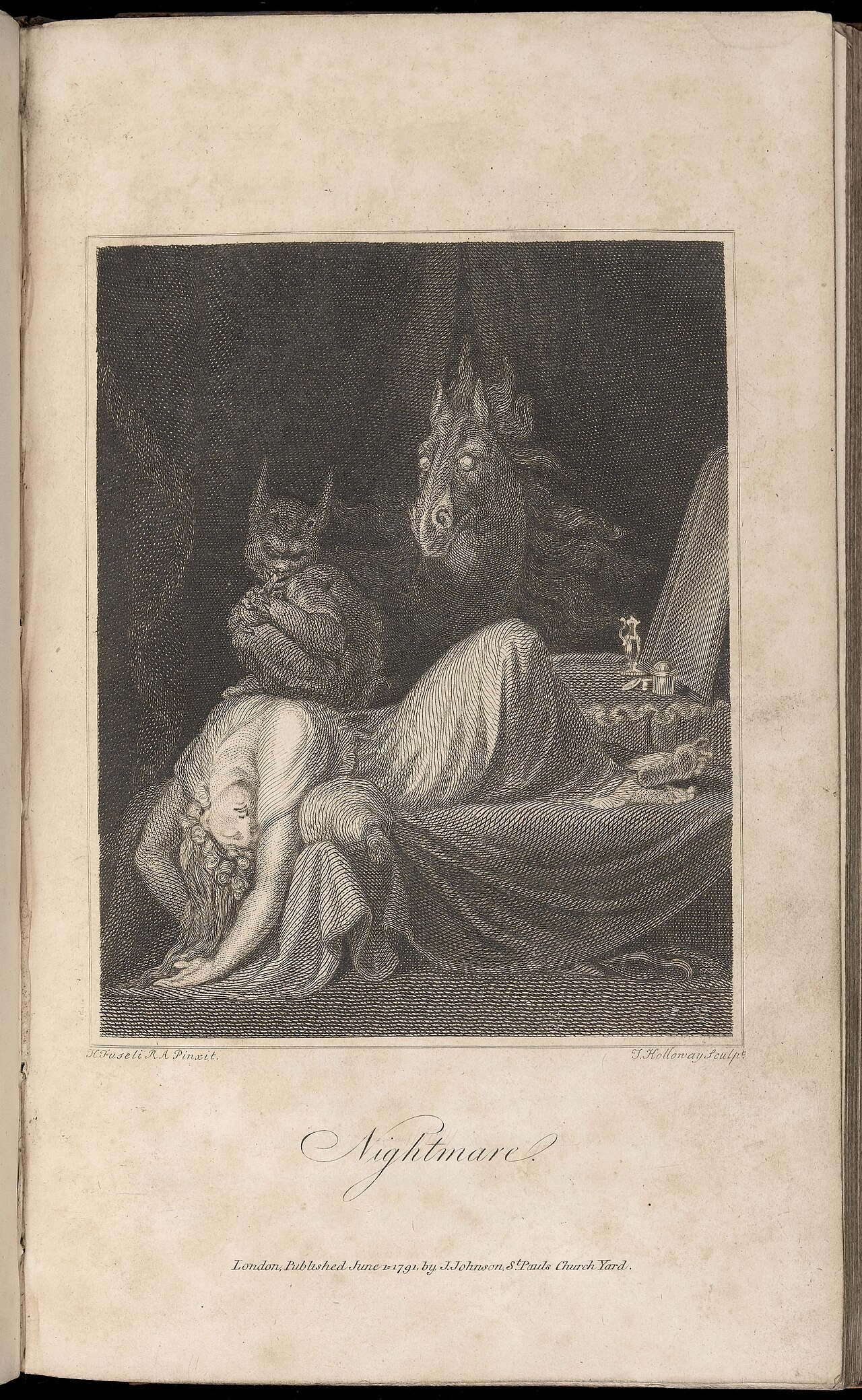
Gallagher’s third group skips the comfort. It focuses entirely on nightmares. These stories shove you into terrifying situations that feel impossible to escape. Think of a nightmare as a visual message that refuses to let you ignore whatever tension is brewing in your daily life. Freud believed these images were internal conflicts breaking through our mental armor. The conscious mind fails to hide the truth.
The problem is, a nightmare acts like an alarm bell ringing in the dark. It usually flags an emotional boundary you’ve neglected. These monsters aren’t real-world threats. Instead of being external physical threats, they represent the specific parts of your own personality you’ve rejected or hidden away. Facing this shadow takes serious guts. The scary image wants you to stop running and finally understand it.
But if you ignore these warnings, they’ll return with a vengeance. The dreams get more aggressive until you listen. Dark figures are often just wounded pieces of yourself trying to come home.
✨ Visionary Wisdom: Esoteric Dream Analysis and Ancestry
Modern psychology maps out how we sleep. But older mystical frameworks never really went away. Wellness astrologer Stephanie Gailing thinks your dreams act as a bridge to something much larger than your daily life. This approach treats symbols as more than just chemical misfires or hidden anxieties. It’s a spiritual dialogue. These night visions often reflect a shared human experience that stretches back centuries, connecting your personal mind to a collective history.
Many cultures still look for ancestral messages when they close their eyes. Visitations from relatives who passed away are handled with quiet respect. They feel real. These moments give you a sense of peace and continuity across time. The real question is why the motif of receiving gifts from the dead is so common globally. It suggests you’re inheriting old wisdom or perhaps some unresolved family duty that needs your attention now.
Dreams temporarily thin the wall between the living and the dead. You wake up with a lingering sense of contact that stays with you through the morning. This spiritual framework doesn’t fight against the psychological model. It works. Instead, it provides a broader perspective on what it means to be a person living in a complex and often confusing world.
📖 The Philosophers’ Sleep: Plato, the Stoics, and Dream Interpretation
Ancient thinkers spent a lot of time wondering what happens when we close our eyes. Plato thought the rational part of our brain basically clocks out at night, which lets your wilder, hungrier instincts run the show without any supervision. He realized sleep drops our moral guards centuries before Freud did. It’s a raw look.
Stoic philosophers had a different take. Epictetus believed your dreams are a progress report for your soul. If you act with kindness while you’re dreaming, your character is solid. But if you wake up realizing you were greedy or panicked in your sleep, your waking philosophy is just a front. It hasn’t reached your core yet.
These thinkers wanted the mind to stay disciplined even in total darkness. They saw the night as a final exam. You can’t really lie to yourself when your conscious will is turned off. Your deepest habits come out to play. This ancient perspective puts a heavy burden on you to stay self-aware at all times because it suggests your dreams are the ultimate truth about your character. It’s an intense way to live.
🎭 The Theatrical Dreaming Mind: Staging the Inner Conflict
Your brain acts like a theater director. It takes parts of who you are and gives them roles on stage. When you argue with an old friend in your sleep, it’s rarely about them. You’re actually watching two of your own conflicting desires fight it out while you watch from the sidelines of your own consciousness. That face is just a mask. It’s a fast way for your mind to personify a specific emotion.
Your mind loves borrowing faces from real life for these private plays. This is why celebrities show up so often. They represent something you admire or maybe even envy. That famous actor is just a tool to help you talk to the person you want to become.
And yet, the setting matters too. An empty stage might mean you feel unprepared or exposed. If you’re in a loud, chaotic crowd, you’re probably just overwhelmed by too much information from your day. Your brain builds a physical world just to hold a messy, abstract problem that you haven’t been able to solve while you were awake. It’s wild because you’re the writer, the star, and the only person in the audience all at once.
🧭 The Quiet Observer: Learning the Night Language of Symbols
Watch these visions. Forget those rigid dream dictionaries because they fail to capture your specific life. A lion represents courage for your neighbor but signals an old childhood fear for you because symbols link directly to your own life. Do this often. Pay attention to these stories and your perspective shifts.
Mornings change. Stop rushing and spend a few minutes reflecting on what happened while you slept. Writing down every fragment you remember keeps that strange logic alive so you can spot the patterns rising out of the mess later on. They show you exactly what your brain worries about during the day.
The night is no longer just a gap in your day. The real question is how you view this dark space when it stops being an empty gap in your daily life. It becomes a map of your inner world. You don’t need to decode every single image to get the point. Just noticing the story is enough to respect your hidden thoughts. Simply paying attention is where the growth happens.
The Morning After a Symbolic Dream
We don’t carve dream visions into clay anymore. Modern neurologists replaced ancient priests to track our sleep cycles with cold precision, using sensors to turn your deepest rest into a series of lines on a screen. Machines map every eye twitch. But waking up feels exactly as it always has. You open your eyes and reach for images that vanish as soon as you touch them. Your mind hates the silence. It wants a story to explain why the dark felt so heavy.
Knowing the biology of sleep doesn’t really help you. Your synapses fire in a specific pattern, but that fact won’t stop your heart from pounding after a nightmare. The terror is real. Walking through a house from your childhood leaves a physical ache that science can’t measure. You build a private mythology every single night before the sun comes up. These images are just a subjective language your brain uses to handle the stress of being alive while it tries to connect your oldest instincts to the problems you face at work. It’s a theater built for an audience of one. The play ends.
The oracle didn’t die – it just moved into your head. Your unconscious mind speaks in fragments. Here’s the thing: you have to decode these symbols entirely by yourself because no generic dictionary can tell you what your own life means. The tension between biology and meaning never goes away. You see the morning light hitting the floor. The room looks normal. Dust moves in the air. But something from the dream still lingers by the door.
❓ Frequently Asked Questions
What are the most common archetypal dreams?
You’ve probably had dreams where you’re falling, flying, or losing your teeth. These happen everywhere. They persist across cultures because they turn messy human anxieties like a loss of control into physical feelings you can’t ignore. It’s worth looking at dream symbolism if you want to see how these themes connect.
How do I find out what my specific dream means?
Forget those generic dream dictionaries. They don’t help. Real interpretation involves tracking your own patterns over time to find what triggers your emotions. The most accurate meaning appears when you connect a dream symbol to a specific tension or unresolved conflict in your daily life.
Why do recurring nightmares happen?
Your brain uses scary, repeating images to grab your attention. It’s usually pointing at a fear or a boundary you’re trying to ignore while you’re awake. These nightmares will likely keep happening until you face the problem directly. Your mind won’t stop until you listen.

Dalton Treviso is an independent researcher and writer exploring archetypes, Jungian psychology, and mythological symbolism. His work focuses on how ancient philosophical traditions and symbolic systems illuminate the hidden structures of the human psyche.
Drawing on Jungian psychology, Stoic thought, and comparative mythology, Dalton examines how the inner patterns we carry shape perception, conflict, and transformation.
Through EINSOF7, he writes about the symbolic architecture of the mind — exploring how myths, archetypes, and philosophical traditions act as both mirror and map for psychological depth and self-understanding.
Areas of study: Jungian archetypes, animal symbolism, dream symbolism, mythological figures, and ancient symbolic traditions.