
This article is part of our Ancient Symbols series. Read the full guide: Ancient Symbols: The Hidden Power That Drives Us
Deep inside the limestone walls of the Valley of the Kings, one shape repeats with deliberate rhythm. Gods hold it out to pharaohs by the loop, offering an invisible breath. To understand the ankh symbol meaning, one must look past its modern use as simple decoration. It was an actual key to a very specific door.
Early dynastic Egyptians did not view eternity as a passive state of rest. Death was not sleep. It was a threshold. It was dangerous. The teardrop loop embodies the unbound spirit hovering above the straight line of physical matter. Where these two lines cross forms the exact center of human existence. This intersection commanded immense power over the elements of water and air.
A departed king needed this precise geometry to navigate the Duat. Scribes painted this emblem across tomb walls and placed physical amulets inside royal sarcophagi. The dead required a mechanism to unite their vital spark with their individual personality. Without this complex fusion, true immortality remained completely impossible.
Deities like Osiris and Isis wielded this shape to control the breath of existence itself. It anchored heaven to earth. By holding the loop, the gods maintained absolute authority over the cyclical nature of rebirth. Contemporary readings frequently reduce this dynamic tension to a basic male and female duality.
Yet the actual philosophy behind this ancient African creation is much deeper. It maps the unseen mechanics of the universe. It was a tool for cosmic survival. The true function of this shape demands a closer look at how life confronts the dark.
🏛️ Ankh Funerary Rites of the Early Dynastic Period
In Early Dynastic Period Egypt, a distinct shape emerged in the historical record. This era began around 3150 BCE. Society was rapidly formalizing its understanding of the divine domain. Scribes called this new hieroglyph the Key of Life. It was never merely a decorative artistic motif. The shape functioned as a physical, practical tool. The dead needed it to navigate the treacherous underworld.
A priest placed copper ankhs between layers of linen. He pressed the cold metal against the embalmed chest. Resin and sharp spices filled the heavy air of the tomb. Torches cast long, flickering shadows against the freshly painted walls. This quiet ritual secured the spirit to the fragile body. Ancient Egyptian funerary rites treated the symbol as spiritual machinery. It operated the massive, invisible doors of the Duat.
The underworld was a terrifying landscape of dark fire. Demons guarded iron gates in the absolute dark. The deceased required specific passwords to survive the brutal journey. They also needed physical keys to unlock the final barriers. Sarcophagi amulets provided this essential spiritual technology. Craftsmen carved these vital symbols out of pure gold and lapis lazuli. They embedded the keys directly into the heavy stone lids.
The ankh unlocked the final gates to the bright afterlife. It guaranteed a prosperous eternal existence for the justified king. Without it, the wandering soul risked total, irreversible annihilation. The second death was the ultimate ancient Egyptian terror. This small metal shape prevented that complete cosmic erasure. It tethered the lonely ghost to eternal cosmic rhythms.
🌙 Geometry of the Ankh as the Key of the Nile
The visual anatomy of the ankh rewards careful attention. A teardrop loop rests cleanly on a sturdy horizontal bar. Below it, a straight vertical line drops downward. This specific geometry maps a deep, enduring spiritual equilibrium. The loop embodies the eternal, unbound human soul. It has no discernible beginning and no end.
The straight line signifies dense, heavy physical matter. It is finite, strictly bound by earthly gravity. Where they cross is the exact, fleeting present moment. This tight intersection anchors the famous breath of life symbol. It marks the meeting point of heaven and earth.
Egyptians often called this elegant shape the Key of the Nile. The great river itself mirrored this sacred geometric shape. The rounded loop resembled the fertile, sprawling river delta. The straight line mirrored the long, narrow river channel. Water was the ultimate source of physical existence then. The horizontal bar formed the flat, distant horizon line.
This geometry perfectly captured the sun and earth duality. The burning sun rises over the flat earth each morning. This reliable daily event mirrored the endless cycle of rebirth. The symbol held the massive tension of the cosmos. It tied the infinite sky to the grounding dirt. To hold the ankh was to symbolically master the elements. It signified absolute control over water, wind, and scorching heat.
How did mortal rulers harness this immense cosmic tension?
⚖️ Osiris, Isis, and the Ankh’s Divine Authority
Divine authority in Egypt relied heavily on this specific shape. Gods like Osiris and Isis carried it constantly. Tomb paintings show deities extending the loop gently forward – pressing it directly to a mortal pharaoh’s nose. By doing so, they transferred divine, invisible breath. They offered the invisible elements of water and air. These specific elements were absolutely essential to preserving biological life.
Mortal rulers required this breath to maintain their power. Kings were frequently depicted holding the golden ankh. It proved their divine right to rule the living. It also secured their eventual pharaonic immortality. The gods possessed ultimate power over human life and death.
The myth of Osiris and Isis enacts this dynamic directly. Isis resurrected her murdered husband using ancient magic. The ankh was the visual manifestation of that power. It reversed the finality of cold physical decay. These immortality hieroglyphs coded resurrection directly into heavy tomb stone. They transformed ordinary painted walls into engines of eternity.
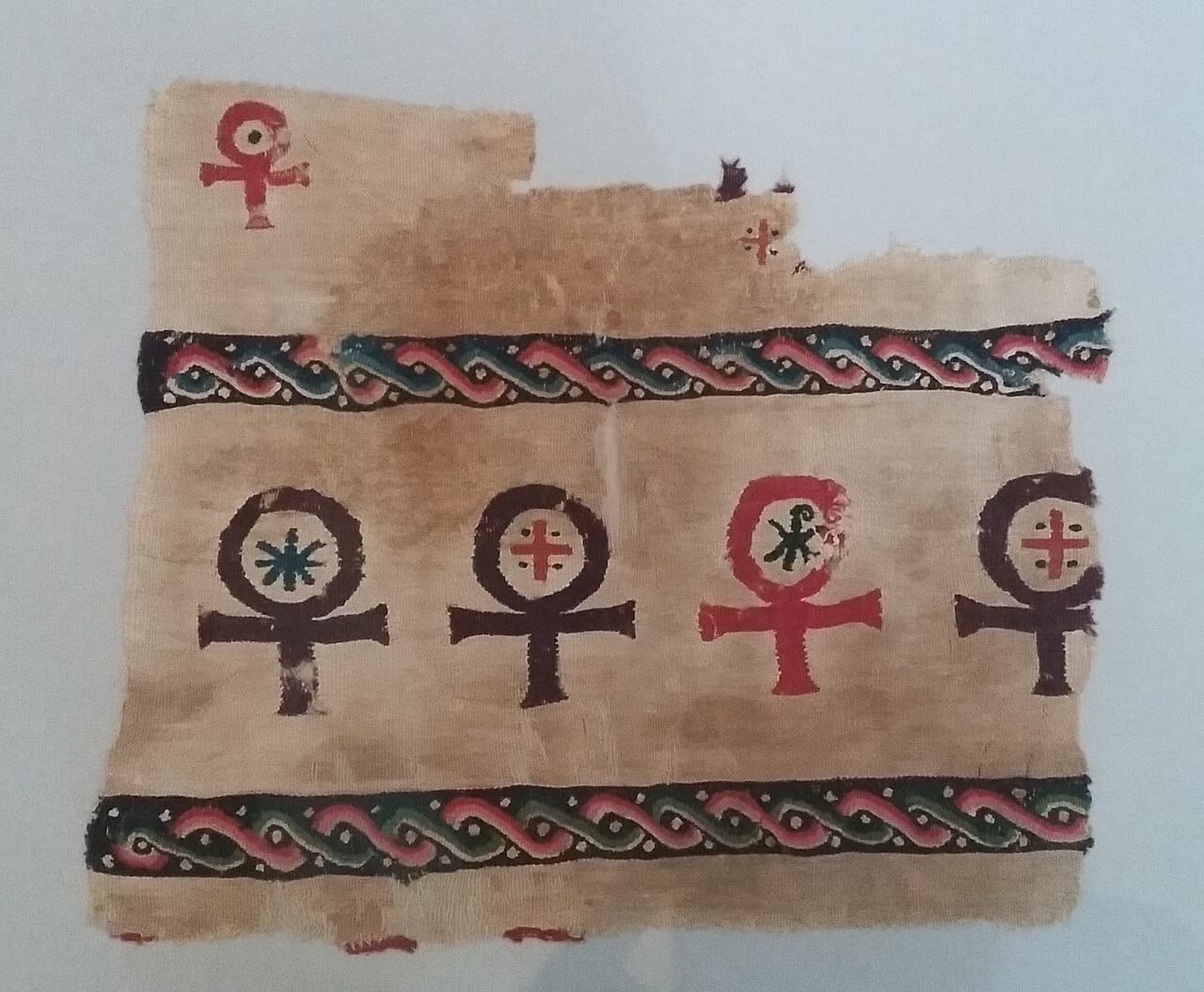
The symbol became a permanent battery of divine energy. Even in total darkness, the shape radiated invisible life. Pharaohs deliberately took this radiant energy into the sealed tomb. Later, early Christians in Egypt adopted this exact same shape. They transformed the ancient key into the looping Coptic cross. The old gods faded, but their primary geometric symbol survived.
📖 The Ankh’s Philosophy of Breath and Matter
The desert environment heavily influenced this precise symbolic geometry. Egypt was a harsh, unforgiving landscape of endless burning sand. Survival depended on a very fragile elemental balance. Without the flooding Nile, the physical earth would completely die. Without the northern winds, sailors could not navigate the river.
The ankh functioned as a physical diagram of desert survival. The rounded loop captured the brilliant disc of the daily sun. The horizontal bar represented the flat expanse of the dry desert. The vertical line tracked the deep, life-giving waters of the Nile. This was not abstract philosophy. It was the brutal, daily reality of maintaining biological existence.
Philosophers later interpreted this balance in highly abstract, spiritual terms. But the original meaning was deeply rooted in the harsh physical elements. The key held the unforgiving Egyptian world together. If the loop separated from the cross, chaos would instantly reign. The sun would scorch the earth without the river’s relief.
The symbol promised that the vital elements would always cooperate. It guaranteed that the breath of life would never permanently fail. This stark environmental reality gave the amulet its tremendous psychological weight. It provided immense comfort in a highly unpredictable natural world.
🌏 The Tyet and Ankh Symbol Parallels
Interpreters often trace the ankh to older ancient African symbols. Its exact visual origin remains a subject of intense academic debate. Some historians link it directly to the Knot of Isis. Scholars call this looping ceremonial knot the Tyet. It resembled heavy, beautifully woven ceremonial girdles. Priests tightly tied these girdles around the waists of stone statues.
This physical binding tied the spiritual and physical worlds together. The ankh shares striking visual similarities with the Tyet. Both shapes feature a very prominent, rounded upper loop. Both feature horizontal elements dropping into a long vertical line. The shape also mirrors concepts found far beyond Egypt.
Observers note a striking yoni and lingam parallel today. Vedic traditions revere these distinct, gendered geometric shapes. The rounded loop signifies the divine feminine space. It acts as the sacred, dark womb of all creation. The straight vertical line represents the active masculine principle. It functions as the generative, activating spark of sudden life.
Their deliberate union generates a perpetual, unbroken cycle of rebirth. This merging of dualities appears repeatedly across global cultures. It forms a central theme in the study of ancient symbols worldwide. The ankh physically maps the very generation of existence. It maps life arising from opposing, perfectly balanced cosmic forces.
🌑 The Ankh and the Shadow of Conditional Eternity
The ankh was never a simple guarantee of eternal paradise. It carried a heavy burden of moral responsibility. The Egyptian afterlife required absolute, uncompromising cosmic balance. They called this strict concept of universal truth Ma’at. The deceased faced a terrifying judgment in the dark underworld.
Gods weighed the human heart against a single feather. A heavy heart indicated a selfish life of cruelty. A light heart indicated a noble life of truth and justice. The monster Ammit waited patiently beside the great scales of truth. She had the head of a crocodile and the body of a lion. She embodied the terrifying, permanent end of all personal existence. If the heart failed the test, the monster instantly consumed it.
The golden ankh could not save a corrupted, wicked soul. The sacred key only worked for the justified dead. It offered zero protection against deep, personal moral failure. This dynamic introduces a heavy shadow to the ancient symbol. Immortality was conditional, not an automatic human right.
The breath of life could be permanently, violently revoked. The symbol demanded rigorous ethical purity from the living. Holding the key required clean hands and a light heart. Eternity was a rare privilege granted only to the righteous. The loop could easily become a tight noose for the wicked.
💡 The Ankh Amulet in the Modern World
This distinct cross outlasted the pharaohs who carried it. It survived the eventual fall of the native Egyptian dynasties. People still seek out protective amulets Egypt popularized. Today, the ankh frequently hangs alongside Hamsa hand jewelry. Both distinct shapes offer a quiet sense of spiritual defense. They supposedly ward off negative energies and invisible hostile forces.
Ancient Egyptian hospitals actually utilized the ankh in early medical practice. Healers believed the symbol possessed potent, tangible protective qualities. It was drawn on walls to accelerate slow physical recovery. Modern wearers often adopt the symbol for very similar reasons. It acts as an anchor in an unpredictable, chaotic world.
In the twentieth century, counterculture movements enthusiastically embraced the symbol. They wore it to signal a connection to esoteric, hidden wisdom. It appeared heavily in bohemian fashion and underground spiritual art. The geometric shape carries the weight of five millennia. It connects the modern wearer to a vast, mysterious ancient lineage.
The modern mind often rigidly separates the sacred from the physical. We generally treat eternity as an abstract, distant, untouchable concept. The ancient Egyptians saw no such hard division. The eternal loop fed directly into the physical, immediate present.
🤝 The Ankh Symbol Holding the Tension of Duality
The ankh quietly suggests that life is a single continuous thread. It does not suddenly end at the threshold of physical death. The straight line of matter eventually meets the eternal loop. This enduring geometry offers a subtle shift in human perspective. The symbol remains a quiet marker of deep, enduring vitality.
It patiently holds the tension between the earth and the infinite. Humans constantly navigate the chaotic space between these two poles. We are bound by the gravity of the vertical line. Yet we are naturally drawn to the absolute freedom of the loop. The ancient key does not force a terrible choice between them.
It insists that both elements are equally necessary. Existence requires the heavy dirt and the thin, invisible air. The key functions only when both parts remain fully intact. This ancient wisdom endures long past the original tomb builders. It echoes quietly from the dark, ruined limestone walls. The sacred geometry of eternity remains perfectly, beautifully unbroken.
The Weight of the Ankh’s Eternal Loop
The ankh was never a simple piece of art. Ancient priests understood the end of life as a violent, deeply unpredictable crossing. They forged a precise geometric key to protect the fragile human breath. The heavy copper amulet served as a firm anchor for the drifting soul. Modern people no longer paint these symbols on the walls of limestone tombs. We do not wrap our dead in layers of resin and gold. Yet our quiet fear of the dark remains identical.
Look at the brass shape resting in an open palm. Straight vertical lines of physical matter pull downward into the dirt, while the open loop hovers above. This tight crossing maps the exact center of human existence. Every person alive today exists right at that fleeting intersection. Our physical bodies remain heavy with gravity, aging, and daily obligations. We are bound to the flat horizontal line of earth. Meanwhile, the human mind floats upward into formless, impossible dreams. The ancient scribes simply gave this massive daily tension a physical body.
The Nile still flows toward the wide delta. Time pulls us all toward an entirely unknown threshold. We carry the exact geometry of survival inside our own lungs. Every single inhale draws the infinite down into the heavy dirt. We hold the breath for a brief moment, mimicking the posture of eternal gods. Then the heavy chest falls, and the warm air rushes back out into the room. Just a temporary loop of wind, waiting at the dark gate.
❓ Frequently Asked Questions
What is the spiritual meaning of wearing an ankh?
Wearing the ankh serves as a physical anchor for those seeking a connection to ancient Egyptian concepts of vitality and equilibrium. It functions as a personal marker of the delicate balance between the physical body and the enduring spirit.
What does the ankh mean in Christianity?
Early Egyptian Christians adapted the hieroglyph into the Coptic cross, preserving its distinct loop while shifting its theological focus. The shape transitioned from a tool of pharaonic cosmic survival to a representation of Christ’s promise of eternal life.
Is it respectful for anyone to wear the ankh symbol today?
The symbol has transcended its original dynastic context to become a global emblem of life and spiritual endurance. While rooted in specific ancient African funerary rites, its geometric representation of breath and matter holds universal human relevance today.
For a broader understanding of this symbolic tradition, explore our complete guide to Ancient Symbols: The Hidden Power That Drives Us.
Explore Related Topics

Dalton Treviso is an independent researcher and writer exploring archetypes, Jungian psychology, and mythological symbolism. His work focuses on how ancient philosophical traditions and symbolic systems illuminate the hidden structures of the human psyche.
Drawing on Jungian psychology, Stoic thought, and comparative mythology, Dalton examines how the inner patterns we carry shape perception, conflict, and transformation.
Through EINSOF7, he writes about the symbolic architecture of the mind — exploring how myths, archetypes, and philosophical traditions act as both mirror and map for psychological depth and self-understanding.
Areas of study: Jungian archetypes, animal symbolism, dream symbolism, mythological figures, and ancient symbolic traditions.