You stare at a blank sheet of paper. The room remains quiet, but your mind races with daily anxieties. This internal chaos drives the search for 10 rare ancient symbols for strength and how to use them as anchors for the psyche. A visual mark gives an exhausted brain something physical to hold onto. Drawing a simple geometric shape creates necessary mental focus.
Carl Jung drew a sharp line between mere signs and true symbols. Signs only point to everyday objects. A true symbol points toward something hidden or barely comprehensible to the conscious mind. Jung described these archaic forms as living, active psychological processes. They are vital bridges connecting us to deep unconscious human resilience.
Modern society lacks a working vocabulary of meaningful inner images. Jung called this widespread psychological condition a severe state of symbol-lessness. We have lost our direct connection to the historical roots that once grounded our ancestors. This absence leaves us reaching for temporary fixes. Real psychological tools must offer more than surface comfort.
Older cultures left behind visual tools for mental endurance. These archaic forms belong outside the pages of dry academic textbooks. They are active instruments for personal psychological integration. Visualizing a specific shape redirects a scattered and anxious mind. You can actively reclaim these inherited marks for your own daily mental practice.
Tracing a forgotten design shifts your internal emotional state. The physical act of drawing alters your natural breathing patterns. These images work across different cultures and psychological boundaries. They bypass the rational brain to awaken older survival instincts. The right mark is waiting.
10-rare-ancient-symbols-for-strength-and-how-to-use-them”>🏛️ 10 Rare Ancient Symbols for Strength and How to Use Them
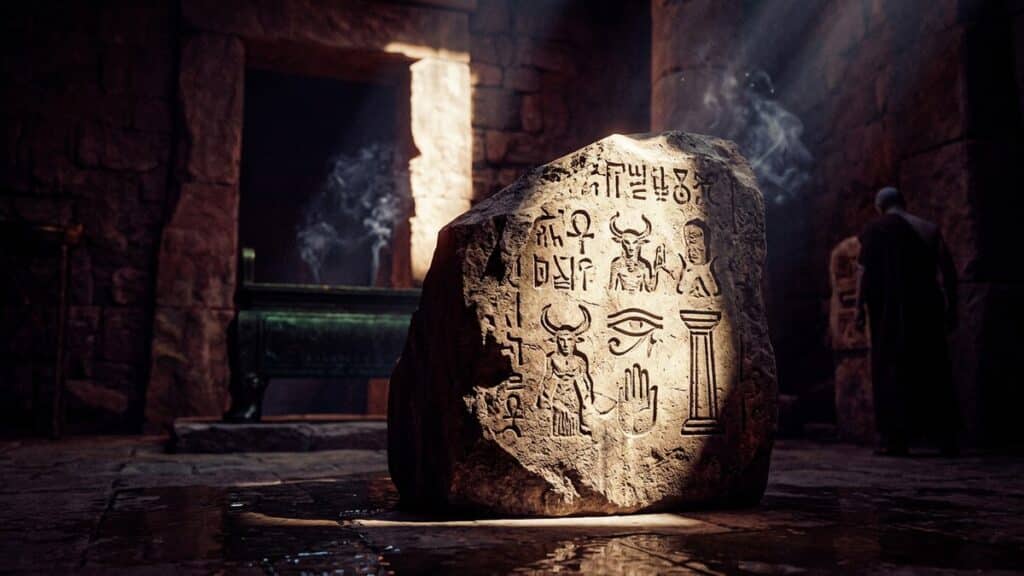
The heavy iron chisel strikes cold limestone. White dust settles on the temple floor. An Egyptian artisan carves the Djed pillar into a tomb wall. He works in silence. He does not view this shape as simple decoration. This mark represents the spine of the god Osiris. It represents the ability to remain upright during the transition from life to the afterlife. It provides absolute stability when the physical world collapses. Ancient cultural mythology treated these marks as literal anchors.
Across the Mediterranean Sea, similar practices emerged in dark workshops. Greek soldiers painted the gorgoneion on their heavy wooden shields. They wanted the fierce gaze of Medusa to ward off psychic fragmentation and external threats on the battlefield. These were not mere artistic choices. They were necessary acts of talismanic magic. Ancient people needed tangible representations of human endurance. They understood that the human mind easily fractures under pressure. A physical mark binds that dangerous fracturing energy.
Rare mythological symbols functioned as vital psychological survival tools. They provided a visual vocabulary for human resilience. They anchored the nervous system before modern psychology existed.
🌙 The Bridge to the Unconscious: Why Strength Shapes Communicate
Carl Jung dedicated decades to understanding this human reflex. He observed a profound spiritual poverty and symbolism deficit today. He argued that modern people confuse signs with true symbols. A sign merely points to a known, everyday object. A stop sign dictates a physical action. A true symbol contains an unresolved mystery. It points toward something barely comprehensible to the conscious mind.
The psychological meaning of symbols lies in their active nature. Jung saw them as living psychological processes within the brain. They pull raw energy from the deep mind. Cross-cultural strength symbols bypass rational thought. Your conscious mind might feel exhausted by daily stress. Yet, an archaic geometric shape reaches an older brain. It accesses collective unconscious archetypes. These are inherited patterns of ancient human experience.
Each symbol represents a specific configuration of the human spirit. They are maps of internal states. A vertical line is the experience of standing upright against gravity. A knot is the experience of holding complex emotions together. A circle is the experience of psychic wholeness. By engaging with these forms, you are not merely looking at history. You activate the corresponding architecture within your own consciousness. You give a name and a face to the formless strength that already exists in your depths.
When you engage with ancient symbols of strength, logic drops away. You communicate directly with your own frayed nervous system. You offer your anxious mind a rigid structural anchor. The shape itself is a secure psychological container. It holds the silent anxiety that ordinary words cannot manage.
🖋️ The Practice of Inscription: Awakening the Strength Mark
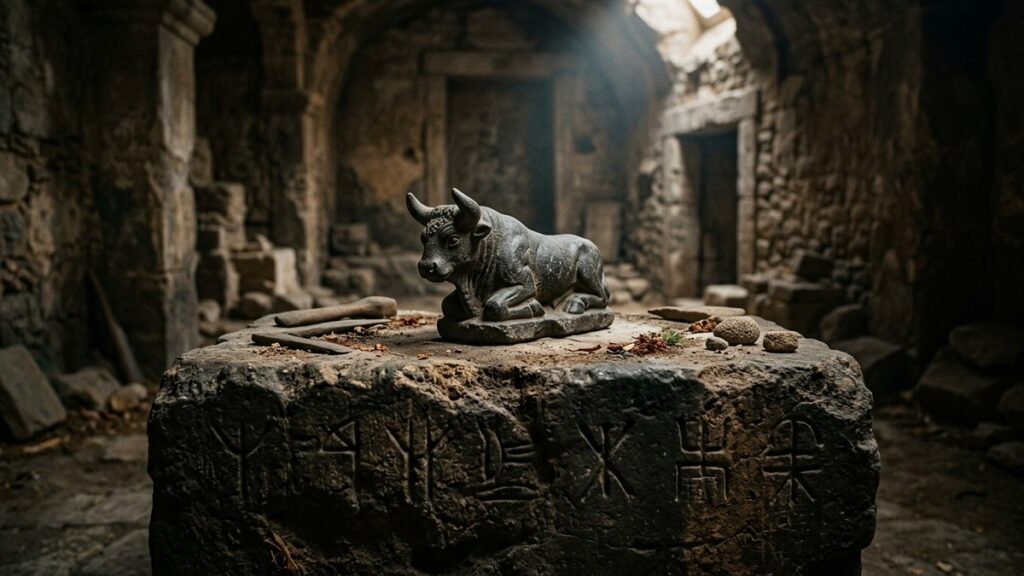
You must begin this practice by choosing a specific shape. Do not rely on a glowing digital screen. The practice requires immediate physical engagement. Select one of the esoteric strength symbols that holds your attention. You might choose the Egyptian Tyet, often called the knot of Isis. It represents the protective binding of life and death, holding opposing chaotic forces in a state of tension. Alternatively, you might select the Norse Uruz rune. It mimics the heavy, sloping horns of the aurochs, representing the raw, untamed vitality and endurance of the physical body.
Another option is the West African Adinkra symbol Fwempu. It depicts a double-headed eagle, representing the vigilance and dual-perspective required to maintain strength through time. You might also choose the Vedic Shrivatsa, or endless knot. It represents the infinite nature of human resolve and the interconnectedness of all internal struggles. Find a quiet, well-lit space and a blank piece of paper. Use a dark, heavy ink for this ritual. The sharp contrast of black ink against white paper matters. Sit comfortably and let your shallow breathing slow down. Look closely at your chosen reference image. Notice the sharp angles, the sweeping curves, and the intersections. Close your eyes. Picture the stark shape hovering in the dark space behind your eyelids. Open your eyes and pick up the heavy pen.
Do not rush the physical act of drawing. Trace the first line slowly. Feel the slight, gritty resistance of the paper against the pen tip. If you are drawing the Djed pillar, draw the central vertical line first. This vertical line is a sturdy spine. Let your own posture straighten as you draw it. Add the four horizontal crossbars one by one. Breathe out slowly with each horizontal ink stroke. The act of deliberate drawing is an ancient ritual. It forces your scattered, frantic attention into a single focal point. You are not trying to create art. You are building a sturdy psychological container. If your mind wanders, pull it back to the ink. Watch the wet black line sink into the paper fibers. Focus on the friction of the pen. If you choose the Celtic Dara knot, follow the continuous interwoven line. Do not lift your pen from the paper. The unending line represents the complex root system of an ancient oak. It signals to the brain that true strength remains mostly unseen and grounded.
Once the symbol is completely drawn, set the pen down. Rest your empty hands flat on the wooden table. Keep your eyes fixed on the fresh drawing. Let your peripheral vision blur at the edges. Allow the dark shape to take up your entire visual field. This is how you internalize inner strength symbols. You are teaching your brain to recognize this specific geometry. Tell yourself exactly what this heavy mark represents. Say it quietly aloud in the empty room. “This mark is absolute stability.” “This mark is raw, quiet endurance.” Associate the physical shape with the specific feeling you need. Sit with the dry drawing for five minutes. Notice any subtle physical shifts occurring in your body. Perhaps your tight shoulders drop. Perhaps your shallow breathing deepens. You are forging a new neurological link. You are connecting a visual anchor to a physical state of calm. Fold the paper into a small square. Keep the folded edges sharp and clean. Place the folded square in your pocket. You have created a physical touchstone for the day.
🌿 Earth, Water, and Stone: Expanding the Strength Medium
Drawing on paper is only the beginning. You can expand this practice using different physical mediums. Engaging with natural elements deepens the psychological impact. In his landmark work The Sacred and the Profane, Mircea Eliade observed that the act of marking a center creates a point of absolute reality amidst the chaos of the world. Go outside and find a patch of damp, bare earth. Use a heavy wooden stick to carve a symbol into the dirt. You might choose to draw the alchemical symbol for iron. It is a simple circle with an arrow pointing upward and outward. It represents the martial energy of Mars and the unyielding momentum required for forward movement. Carving into the earth requires physical effort. You must press down and drag the wood through the soil. This physical resistance makes the symbolic action feel heavier. It grounds the abstract concept of strength into the physical world. Leave the mark there to weather away naturally. The gradual impermanence is a vital part of the process.
You can also work with cold water. Fill a small ceramic bowl with clean, cold water. Dip your right index finger into the bowl. Trace a symbol of protection onto a wooden doorframe. You might use the ancient Aegishjalmur, the Icelandic Helm of Awe. It consists of eight spiked tridents radiating from a central point to induce psychological intimidation and protect the mind from fear. The water leaves a temporary dark mark on the wood. It fades away within a few minutes. This specific practice remains private and hidden. No one else will know it is there. Yet, your mind retains the memory of the physical action. You have intentionally marked the boundary of your personal space.
Advanced practitioners use these geometric shapes just before sleep. This touches upon dream symbol interpretation. Before turning off the light, draw your chosen symbol again. Use a simple pencil and a scrap of paper. Place the paper under your pillow. You are intentionally priming your deep unconscious mind. You are offering it a specific shape to work with overnight. Keep a small notebook beside your bed. When you wake up, write down any lingering images. The symbolic life Carl Jung described often unfolds in the dark. You might not dream of the exact symbol you drew. Instead, you might dream of the heavy qualities it represents. You might dream of standing firm in a storm. You might dream of carrying a heavy stone weight with ease. The hidden symbol acts as a quiet prompt for the sleeping mind.
Another variation involves working with heavy stones. Find a smooth, flat river rock that fits in your palm. Use a thick marker to draw the Hamsa, an ancient Middle Eastern hand symbol. It represents divine protection and the strength to ward off negativity. Keep the heavy painted stone on your work desk. When a difficult task arises, hold the cold stone. Let the physical weight ground your racing thoughts. The stone is a physical battery of focused intention.
💡 The Quiet Anchor: Carrying the Strength Mark Daily
The true value of this practice emerges in ordinary moments. A symbol sitting in a sketchbook does very little. You must integrate it actively into your daily routine. This requires small, deliberate touchpoints throughout your waking hours. Remember the folded paper resting in your pocket. Reach for it when your daily anxiety spikes. You do not need to unfold the paper. Just press your thumb against the thick paper square. Your brain already knows exactly what shape is drawn inside. This simple tactile feedback interrupts rising mental panic. It prompts your nervous system of the quiet ritual you performed. It brings back the sharp focus of the ink and the desk.
You can also practice visualizing the symbol without drawing it. Try this while sitting in heavy city traffic. Try it during a tense, difficult conversation at work. Close your eyes for a fraction of a second. Recall the specific geometry of the Tyet or the Uruz rune. Project that stark image onto the back of your eyelids. Let it burn in your mind for one single breath. This is a silent, invisible mental practice. It provides immediate psychological grounding without anyone noticing.
You will encounter days when the practice feels empty. The drawn shape will look like random, meaningless lines. The deep symbolic resonance might fade. This is a normal part of the psychological process. The rational mind frequently rejects esoteric practices. It constantly demands immediate, logical solutions to every problem. When this happens, do not force the feeling to return. Simply repeat the physical drawing practice without expectations. Go back to the blank paper and the dark ink. The physical action alone is often enough to reset the mind. You are maintaining the invisible neurological bridge. Over time, the deep meaning will naturally return to the shape. The symbol will accumulate psychological weight through quiet repetition. It is a quiet, steadfast companion in your daily life. It sits in the background of your busy mind. It waits for the exact moment you need its structural support.
The ink bleeds into the grain of the paper, a dark liquid becoming a static boundary. In the silence of the room, the hand moves as a servant to an older necessity. There is a specific frequency in the friction of the pen – a low, rhythmic vibration that signals to the nervous system that the storm has found a shore. To draw the Djed or the Shrivatsa is to participate in a grand architecture of the invisible. These lines are not mere ink; they are the externalized ribs of a psychological fortress. When the mind is a chaotic sea, the geometric precision of the mark acts as a breakwater. You are not just tracing a shape; you are reassembling the scattered fragments of your own resolve. The weight of the stone, the coolness of the water on the doorframe, the sharp contrast of black on white – these are the physical anchors that prevent the soul from drifting into the void of modern abstraction. In the stillness following the final stroke, the symbol begins its real work. It does not shout; it simply exists, a quiet sentinel standing guard over the interior landscape, signaling the weary traveler that the center still holds, even when the periphery is in flames.
🧭 [How to Work With This Strength Awareness]
Working with these marks feels like finding a heavy stone in a fast river. You do not need to analyze the stone to know it is solid. When you carry a symbol like the Uruz or the Djed in your mind, you might notice a subtle shift in how your body occupies space. It is a sensation of increased density. The air in a crowded room feels less thin. The noise of a deadline feels less sharp. You are not trying to change your circumstances; you are changing the internal architecture that meets those circumstances.
As you move through the day, the symbol acts as a silent reference point. If you find yourself leaning into a difficult conversation, you might mentally trace the vertical line of the Djed pillar. This is not a thought process. It is a physical recollection of the spine. You might feel your heels press more firmly into the floor. You might feel the crown of your head lift. This is the symbol working through the body rather than the intellect. It is a way of being that does not require words or justifications.
The awareness eventually becomes automatic. You do not have to “do” the practice as much as you allow the symbol to inhabit the background. It is like the steady hum of a distant engine. You only notice it when it stops. By returning to the mark in small, quiet moments – a thumb pressed against a paper in a pocket or a glance at a stone on a desk – you maintain the structural integrity of your inner world. You are building a habit of resilience that does not rely on external validation or temporary motivation.
🖋️ The Path Inward Through Strength Symbols
Use a heavy pen. Press the tip firmly against the rough texture of the page. Track the subtle friction as you drag the dark ink downward. This simple physical resistance slows your racing heart. You are giving your nervous system a solid, tangible anchor. The mind stops spinning just to watch the moving line.
These ancient shapes do not erase your daily stress. They simply offer a sturdy place to put it. A drawn mark absorbs the chaotic energy of everyday anxiety. Trace the exact same knot twenty times. Each thick loop pulls your attention back into your physical body. The room around you remains quiet. Yet the crushing internal pressure begins to shift.
Modern life will always demand your immediate attention. Frantic obligations pile up outside your closed door. That loud external noise never truly goes away. But a deliberate mark changes how you meet that chaos. The paper carries the heavy weight you cannot manage alone. Fold the small page. Slip it into your pocket while the ink dries. The drawn shape rests quietly against your chest.
❓ Frequently Asked Questions
What is the symbol of unbreakable strength?
The Djed pillar from ancient Egypt is often cited as the primary symbol of unbreakable stability and endurance. It represents the backbone of the god Osiris, signifying a permanent vertical axis that remains standing even when the surrounding world is in chaos. In a psychological context, it represents the internal resolve that survives external collapse.
How do I choose the right symbol for my specific situation?
Selection should be based on immediate physical resonance rather than intellectual study. Look at several rare symbols and notice which one causes a slight change in your breathing or posture. A symbol that feels “heavy” or “sharp” usually indicates a shape your nervous system needs to counteract a specific type of mental fragmentation or drift.
Can I use these symbols if I am not from the culture they originated from?
Ancient symbols function as archetypal patterns that reside in the collective unconscious, making them accessible to all humans regardless of specific heritage. While it is important to respect the historical context, the psychological power of a geometric shape – such as a circle, a cross, or a knot – is a universal human inheritance that speaks directly to the shared architecture of the mind.

Dalton Treviso is an independent researcher and writer exploring archetypes, Jungian psychology, and mythological symbolism. His work focuses on how ancient philosophical traditions and symbolic systems illuminate the hidden structures of the human psyche.
Drawing on Jungian psychology, Stoic thought, and comparative mythology, Dalton examines how the inner patterns we carry shape perception, conflict, and transformation.
Through EINSOF7, he writes about the symbolic architecture of the mind — exploring how myths, archetypes, and philosophical traditions act as both mirror and map for psychological depth and self-understanding.
Areas of study: Jungian archetypes, animal symbolism, dream symbolism, mythological figures, and ancient symbolic traditions.