
The ancient Greeks had a specific word for the walk into the dark. They called it katabasis – a hero’s descent to the underworld. Orpheus went down to sing for a stolen life. Dante walked through hell to find his own mind. These stories are older than the paper that holds them, and they describe something that hasn’t changed: the sudden drop into the shadows always demands a price.
Modern culture tends to flatten this myth into dark aesthetic. Recent fantasy fiction treats hell as a metaphor for rigid institutions, and some popular stories argue that modern academia is its own underworld. But the original meaning carries far more weight. A true descent isn’t merely a survival narrative – it’s a severe psychological necessity. Carl Jung recognized this inward drop as the nekyia, the ritual ghost-calling that forces you to face the unlit parts of your own mind.
Ancient rituals understood the danger of this crossing. The opening of gateways to the underworld demanded steep metaphysical prices. Mythological travelers often paid with their own blood, and some sacrificed half their remaining lifespan just to cross the threshold. Conquest was rarely the purpose. The goal was almost always soul retrieval – a hero going down to rescue a trapped piece of humanity.
The human experience includes moments when the floor gives way. The descent is a brutal confrontation with what we keep hidden. It strips away our comfortable daily illusions. Only a walk through the dark allows us to drag our scattered pieces back to the light.
🏛️ Katabasis at the Cave of Taenarum: Orpheus Descends
The ancient Greeks understood the physical reality of the underworld. They located entrances in actual caves and sulfur springs. One famous gateway was the cave at Cape Taenarum, where a freezing wind blew constantly from the dark rock. The mythological descent wasn’t just a theoretical idea. You could walk right up to the edge.
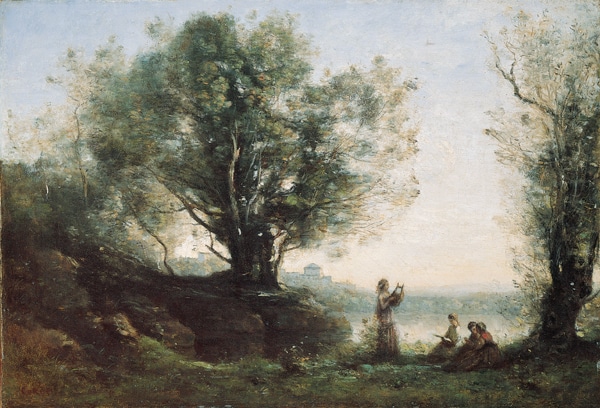
The most famous katabasis in Greek tradition centers on Orpheus. He didn’t go down for military glory or stolen treasure. He went to perform a desperate rescue – his bride Eurydice had died suddenly from a viper’s bite.
Orpheus carried only his wooden lyre. The music softened the terrible furies and made the king of the dead weep quietly. It’s a core truth about art: beauty offers a temporary pass through hell, but the underworld always demands a steep price.
Hades allowed Eurydice to follow Orpheus back to life, with one strict condition. Orpheus couldn’t look back to check on her. The ascent is often harder than the initial descent – doubt creeps in as the surface light approaches, and Orpheus, like most of us, couldn’t hold his nerve.
He turned around and looked directly at her face. Eurydice vanished back into the shadows permanently. The descent changes a person deeply. The return’s never guaranteed.
🌍 The Seven Gates: Inanna in the Dust
The Greeks didn’t own the underworld journey. A much older story exists in ancient Sumeria – the Inanna descent myth predates Orpheus by thousands of years and offers a more brutal look at what the crossing actually demands.
Inanna was the powerful Queen of Heaven. She chose to visit her sister Ereshkigal, who ruled the Great Below with an iron fist. Inanna arrived at the outer gates dressed in divine splendor, wearing a heavy lapis lazuli necklace and a royal crown.
The gatekeeper stopped her and demanded a toll. At each of the seven gates, she surrendered a precious item – first the golden crown, then her earrings, her necklace, and her breastplate.
By the final gate, she was entirely naked, stripped of all earthly power and royal status. Ereshkigal struck Inanna dead without hesitation. The Queen of Heaven hung in the silence of the Great Below, a piece of meat on a hook.
| Tradition | Symbol | Core Meaning |
|---|---|---|
| Ancient Greek | Orpheus’s Lyre | Music and beauty as a temporary pass through death. |
| Sumerian | The Seven Gates | The systematic stripping of earthly ego and status. |
| Christian/Dante | The Dark Wood | A midlife moral crisis requiring a descent to resolve. |
| Jungian | The Nekyia | A ritualized confrontation with the repressed shadow. |
This myth is the raw mechanics of a spiritual katabasis. The underworld strips away every false identity – you can’t bring your worldly achievements into the dark. The descent requires absolute, terrifying vulnerability. Inanna’s return wasn’t triumphant. It was a cold calculation: tiny, dirt-covered beings eventually revived her by slipping past the heavy gates entirely unnoticed, offering empathy instead of brute force.
📖 The Dark Wood: Dante and the Map of Hell
While ancient Greeks sought physical caves, later thinkers imagined moral landscapes. Dante Alighieri provided the literary framework for this shift – his epic poem redefined the descent as an inward moral reckoning rather than a physical journey.
Dante begins his journey completely lost in a dark wood, experiencing a severe midlife crisis. He can’t find the straight path forward. When three wild beasts block his ascent, he’s forced to take the long, agonizing path down instead.
The Roman poet Virgil becomes his guide – human reason and classical wisdom leading through the terrifying gates of hell. Dante structures Hell as nine descending circular terraces, and the Inferno symbolism is deliberately unsettling. Each circle houses a specific type of moral failure, and the punishments match the earthly crimes. Flatterers swim endlessly in human waste. Hell freezes traitors solid in a massive lake of ice.
Dante faints multiple times from the sheer sensory horror. He speaks directly to the damned souls he recognizes. This journey isn’t about rescuing a lost bride – it’s about understanding the nature of evil by walking through it. Dante walks through hell to find his own mind. Only then can he begin the climb.
🌑 The Shadows Speak: Jung and the Nekyia
Early 20th-century thinkers recognized these old myths as psychological maps. Carl Jung saw the underworld as the deep, uncharted unconscious – he linked the katabasis literary trope directly to the structure of mental development. The descent isn’t optional. It’s a required stage of psychological growth.
Jung distinguished between simply going down and actually communicating. In his landmark work The Archetypes and the Collective Unconscious, he described the nekyia as a descent into the cave of initiation. In ancient Greek rites, a nekyia was a ghost-calling ritual – Odysseus performed one to speak with the blind prophet Tiresias, digging a shallow trench and pouring milk, honey, and warm blood into the earth. The dead swarmed to drink. Odysseus had to hold them back with his bronze sword. Only the prophet drank and spoke.
A depth psychology nekyia works on a similar principle. The human mind contains buried memories and repressed traits, waiting in the dark. Jungian shadow work means inviting these ghosts forward – actively facing the parts of yourself you fear most.
The unconscious holds dormant anger, silent grief, and unacceptable desires. Like Odysseus, you must navigate these forces without letting them consume you. The underworld journey is a harsh confrontation with reality. You can’t heal what you refuse to look at directly. The dark night of the soul often begins right here in the dirt.
🌙 The Sacrifice of Katabasis: Blood and Soul Retrieval
The entry into the dark is never casual. Ancient and modern traditions agree on this: the gateway always demands a heavy sacrifice. You must pay a personal toll to cross the threshold.
Some magical traditions associate this crossing with archaic ritual tools. The opening of a hidden portal might require specific geometric symbols, white chalk pentagrams drawn with care, and old words that blur the lines between worlds. The objective is almost always soul retrieval – a concept that spans global shamanic traditions. A sudden trauma or shock can fracture a spirit, sending a piece of it down into the underworld. The practitioner must descend to find it.
The hero doesn’t wander aimlessly through the shadows. They hunt for a lost, vital fragment of life, and the spirits don’t give up their prizes easily. In some folklore traditions, a person sacrifices their actual lifespan to open the gate – the surrender of half their remaining years is the toll. This dramatic imagery points to something real. The engagement with deep trauma exhausts the mind and the physical body. It takes everything out of you.
💡 The Campus as Hell: Modern Dark Academia
Mythology never stays trapped in the distant past. It adapts to the anxieties of the present moment. Today, the katabasis pattern surfaces in an unexpected arena: modern dark academia fiction.
The search for meaning now often happens in dusty libraries. R.F. Kuang’s novel simply titled Katabasis takes this idea directly – it treats elite academic institutions as actual underworlds, reframing the ancient descent for a modern audience. The premise suggests that modern academia is its own kind of hell. That’s not entirely wrong. The relentless pressure to succeed strips students of their humanity in ways that mirror Inanna’s seven gates quite precisely.
The university campus becomes the new cave at Taenarum, and this dark aesthetic now dominates modern pop culture. Amazon MGM Studios has acquired the screen rights, with Angela Kang executive producing the television series.
The appeal isn’t difficult to understand. Students and workers feel trapped in rigid, uncaring systems. They sacrifice their mental health and youth for paper credentials, navigating terrible professors and impossible exams. The Dante Inferno symbolism adapts naturally to this environment. The descent is real and dangerous to them. The body doesn’t lie.
🧗 The Anabasis: Climbing Back to the Light
And yet, a true descent always implies an eventual return. The Greek word for the upward climb is anabasis. You can’t stay in the underworld forever – to call that a journey would be false. It’s simply a death.
The return is often the quietest part of the myth. Dante eventually climbs out of hell and looks at the stars. He saw everything. He knows the exact geography of his own darkness now.
A severe personal crisis often follows this pattern. The sudden drop into grief or failure feels permanent, but it never is. The days are heavy and colorless. Yet a slow upward movement eventually begins. This climb is rarely triumphant or cinematic.
Recovery is a simple cup of hot tea. A quiet conversation with an old friend. The person returning from the depths moves differently – they carry a new, quiet gravity, and the underworld has stripped away the superficial concerns. A person who has faced their shadow fears very little. They’ve seen worse. The mythology of katabasis is a strange kind of comfort. It suggests that darkness is a temporary geography – a place you pass through to gain clear sight. You lose your illusions, but you gain your absolute truth.
🔯️ The Final Descent: When the Floor Gives Way
Nobody ever schedules a deliberate trip into the dark. The descent usually begins when the floor gives way – sudden grief, quiet collapse, or the slow failure of something you relied on. Modern culture demands constant upward motion and treats any fall as a personal failure rather than a natural cycle. We scramble for desperate handholds. But the ancient mind understood that resistance to the downward pull only prolongs the agony of the fall.
These old myths are a different kind of map. They suggest that the act of falling apart is a required human skill. Like Inanna at the heavy gates, you must drop your armor to pass through the threshold. The underworld doesn’t care about your carefully built reputation or your surface achievements. You can’t negotiate your way through the dark. This inward drop forces you to sit with your own ruins until you find the pieces you left behind.
The emergence from the depths isn’t a clean, victorious march back to regular life. Those who survive the crossing carry the heavy shadows back upward with them. The return permanently changes how you look at the bright surface world. Things that once mattered deeply suddenly feel strangely hollow. Slowly, the air grows warmer as the steep slope levels out. Your foot finally touches the soft, sunlit grass. A freezing draft still blows from the rock behind you.
❓ Frequently Asked Questions
Is Katabasis a love story?
The myth of Orpheus begins with love, but the katabasis itself is a story of loss and the limitations of the human will. While love provides the motivation to enter the underworld, the journey usually ends with a hard realization: the dead can’t be bargained with. The descent isn’t about romance. It’s about the psychological cost of attempting to undo the past.
What is an example of a Katabasis?
The most famous examples include Orpheus entering Hades to retrieve Eurydice and Dante Alighieri traveling through the nine circles of hell. Another ancient instance is the Sumerian goddess Inanna descending to the Great Below to face her sister Ereshkigal. In modern literature, any story where a character must enter a dark environment to recover a lost piece of themselves follows this pattern.
Is Katabasis a retelling of Dante’s Inferno?
Katabasis is the ancient structural pattern that Dante used to write his poem, not a retelling of it. The concept of the underworld journey existed thousands of years before Dante was born. He adapted Greek and Roman traditions of the hero’s descent into a Christian moral framework to map the human conscience.

Dalton Treviso is an independent researcher and writer exploring archetypes, Jungian psychology, and mythological symbolism. His work focuses on how ancient philosophical traditions and symbolic systems illuminate the hidden structures of the human psyche.
Drawing on Jungian psychology, Stoic thought, and comparative mythology, Dalton examines how the inner patterns we carry shape perception, conflict, and transformation.
Through EINSOF7, he writes about the symbolic architecture of the mind — exploring how myths, archetypes, and philosophical traditions act as both mirror and map for psychological depth and self-understanding.
Areas of study: Jungian archetypes, animal symbolism, dream symbolism, mythological figures, and ancient symbolic traditions.