This article is part of our Dream Symbolism series. Read the full guide: Dream Symbolism: The Ancient Secret That Awakens Us
In 1909, Carl Jung had a profound vision while traveling by ship across the Atlantic Ocean. He found himself exploring an unfamiliar two-story dwelling filled with classical statues and fine art. The ground floor was much older, dating back to the heavy stonework of the Middle Ages. He kept descending past the deep cellar until he discovered a hidden Roman vault. Below that lay scattered prehistoric bones.
Interpreting a house dream meaning is not merely a modern analytical habit. Our sleeping minds constantly build. Recent clinical data shows nearly half of all adults regularly navigate complex buildings while completely asleep. These nightly architectural structures appear far more often than basic survival elements like food or water. Modern analysts view these unfamiliar residences as unintegrated parts of the waking self.
Long before psychoanalysis, traditional cultures recognized these structural visions as something older than personal psychology. The Dogon people of Mali deliberately design physical homes to mirror a flat human body. In their tradition, the warm central hearth acts directly as the human head. Ancient Indian Vastu Shastra maps the spiritual floor plan as a cosmic man pinned to the earth. The completely empty center corresponds to the solar plexus.
Wandering through unfamiliar corridors at night means walking through your own subtle body and personal history. Finding a hidden door implies a sudden, unexpected capacity for real internal change. A flooded dark basement forces an immediate psychological encounter with forgotten grief. You are never just organizing random daily memories. The shifting architecture of the sleeping mind maps out exactly who you are actively becoming, exposing unintegrated or undiscovered facets of your identity. Encountering new rooms points to latent potentials, new roles, or emerging unconscious material.
🏗️ Architectural Blueprints of the House Dream
Working relentlessly, our minds act as nocturnal builders. Every night, the subconscious constructs vast environments from nothing. In his landmark work Big Dreams, sleep researcher Kelly Bulkeley tracks these nocturnal patterns. His extensive database points to a startling architectural obsession in adults, where nearly half of all people regularly navigate complex buildings while asleep. Seeking symbolic shelter long before we seek water, we conjure houses more frequently than food.
Structuring our nights, these visions outline a distinct hierarchy of needs. The physical body rests safely in a warm bed, yet the dreaming mind constructs walls, staircases, and locked doors. Psychological dream interpretation treats these rigid structures as psychological mirrors. The house reflects the current state of the self.
The house is the self. The rooms are memories. The locked doors are fears.
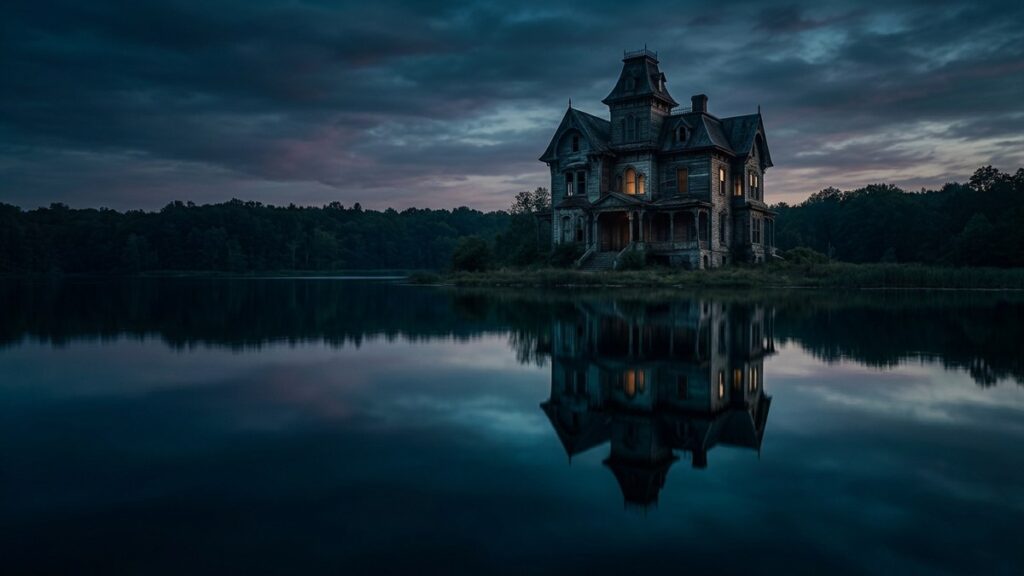
Waking suddenly in the dark, a woman realizes her mind still wanders the endless corridors of a Victorian mansion. She has never seen this place in waking life. Yet she knows exactly where the narrow back staircase leads. She feels the cold mahogany railing under her bare palm. Sensory familiarity acts as a hallmark of house dream symbolism. The dreamer knows the space intimately because she is the space.
Structural condition matters immensely. Peeling wallpaper might indicate neglecting an outer persona. A leaking roof suggests emotional overwhelm breaking through established defenses. Conversely, a sturdy stone foundation implies deep psychological resilience and grounding. We are constantly assessing our own structural integrity through these visions. While the ego acts as the bewildered tenant, the subconscious operates as the master architect.
🗝️ Carl Jung’s Foundational House Dream
That famous 1909 voyage changed how we understand the mind. Traveling to America with Sigmund Freud, Carl Jung spent mornings analyzing vivid dreams. Jung analyzed his own profound architectural vision. He recognized the bright upper floor as his conscious ego. Furnished, modern, and easily understood, it represented the surface level of his identity. The descent changed the psychological atmosphere completely.
The ground floor held his immediate personal memories. Darker and heavier, it was built of medieval stone. He then discovered a heavy door he had not noticed. The descent eventually reached the collective unconscious basement. Containing the ancient patterns of humanity, this hidden Roman cellar held prehistoric bones scattered in the ancient dust.
Freud interpreted these skulls as repressed death wishes. Rejecting this narrow, personal interpretation entirely, Jung saw the vertical axis mapping the depths of human awareness. The conscious mind occupies the brightly lit upper rooms. The older, primitive human instincts rest in the deep foundation.
Birthing a new psychology, Jung’s profound house dream proved the self extends far beyond waking memory. He realized the ego is merely a single, small room within a sprawling, multi-tiered estate. We rarely hold the keys to every single door. Spending our waking hours entertaining guests in the parlor, we ignore the vast, ancient architecture resting beneath our feet.
Where does the conscious mind end, and the ancient foundation begin?
🌍 The Physical Body as a Dream Dwelling Place
Representing more than the abstract mind, the symbolic house often mirrors the physical human form directly. Traditional Western dream lore explicitly maps this somatic connection. Attics represent the head, brain, and intellect. The middle floors symbolize the chest, lungs, and heart. Ground floors indicate the legs, feet, and physical mobility.
Somatic dream mapping spans multiple continents and eras. The Dogon people of Mali design their physical homes deliberately. A traditional Dogon house represents a human lying flat. The warm hearth acts as the physical head. The open central room functions as the breathing torso. The smaller side rooms form the hands and feet. Dreaming of a house here is a direct somatic experience. The dreamer explores their own physical and spiritual body.
Ancient Indian architecture follows a similar sacred, bodily geometry. The Vastu Shastra treats the house as a living organism. The floor plan forms a sacred Vastu Purusha Mandala, where the cosmic man is symbolically pinned to the ground. The center of the home is called the Brahmasthan. This central point corresponds directly to the human solar plexus.
Empty and open to the air, this central space maintains balance. Dreams of cluttered central rooms reflect blocked core energy, while stagnant furniture in the middle indicates stalled spiritual momentum. Spatial mapping acts as a recurring motif within the wider history of dream symbolism. The architecture of the soul often remains indistinguishable from the body, with walls that breathe just as human lungs breathe.
🕊️ Teresa of Avila and the High Tower in Dream Symbolism
Altering the entire psychological atmosphere, movement within the dream house changes its spiritual meaning. Climbing the stairs usually points toward the superconscious mind, commonly known as the attic dream meaning. Elevated floors hold higher perspectives, storing conscious aspirations, spiritual ideals, and forgotten childhood memories.
Acting as the designated space of pure intellect, the attic is where we store old photographs and quiet reflections. Ascending to the roof suggests a strong desire for clarity. The dreamer seeks a broader, elevated view of their waking life, wanting to rise above mundane, daily emotional turbulence.
Sixteenth-century mystic Teresa of Avila understood this spatial metaphor perfectly. She wrote The Interior Castle to explain the deep spiritual journey, envisioning the human soul as a single, clear diamond. This massive crystal contained seven distinct concentric mansions. The outermost rooms held worldly distractions and superficial concerns. The innermost chamber held absolute divine presence and perfect peace.
Because navigating the rooms of the psyche requires immense patience, forcing a way directly into the center chamber remains impossible. One must walk through the crowded outer halls first. Echoing this ancient text, the spiritual meaning of houses in dreams suggests every open door moves closer to the core, while every climbed staircase elevates basic understanding.
🌑 Descending to the Forgotten Floor of the Dream House
Not all doors lead upward toward the warm light. Every house requires a heavy foundation buried in the dirt. The basement represents the psychological shadow of the dreamer. It holds the repressed, the forgotten, and the deeply feared, containing everything the waking ego refuses to acknowledge.
Shadow work dream analysis pays close attention to subterranean rooms. Storing the raw emotions we refuse to process awake, the basement is often damp, unlit, and full of discarded objects. It holds hidden anger, old shame, and unacknowledged grief. Sometimes, a massive furnace dominates the center of the cellar. This fire represents raw, unrefined emotional power burning below consciousness.
Discovering a secret passage acts as a common nocturnal motif. In hidden doors dream interpretation, this suggests a sudden encounter with the unknown. Finding a wooden panel behind a dusty bookshelf or prying open a heavy trapdoor hidden under a rug forces confrontation. Rusted iron hinges scream against the oppressive quiet, and the air below smells of wet earth and old paper.
Because they contain disruptive truths the fragile ego actively avoids, the conscious mind hides these lower rooms for a reason. Opening these doors requires immense psychological courage. Yet the deeper psyche demands wholeness over pleasant perfection. Eventually, the dreamer must explore the shadow floor. Living an entire life safely in the attic proves impossible. The journey down into the dark remains ultimately unavoidable.
🕰️ Processing the Childhood Home Dream Meaning
Many architectural dreams bypass our current adult residences entirely. The mind frequently returns to the very first house we knew. Dreaming of a childhood home is a widely documented phenomenon. These structures hold the original blueprints of our developing psyche, representing our earliest understanding of safety, family, and personal space.
Acting as the foundation of emotional memory, the childhood home offers deep comfort. Retreating there in sleep often signals a need for grounding when facing complex, modern waking challenges. The subconscious seeks the simplicity of the first bedroom it ever knew.
However, familiar spaces rarely remain exactly as they were left. Altering the childhood floor plan with strange new additions, the dream might introduce a massive, unfamiliar window to a bedroom. An old living room might connect to a strange, dark forest. Such alterations mark the integration of adult experiences into early foundations.
Measuring personal growth, the psyche uses the childhood home as a baseline. Walking through the tiny hallways of the past with adult eyes, the daunting spaces of youth suddenly appear quite small. Recognizing this shift allows the dreamer to process old, lingering family dynamics. Though the architecture remains, the emotional scale completely changes. The original container is outgrown, yet never truly erased.
🚪 The Meaning of the Unfamiliar Room in a House Dream
An unfamiliar house dream often arrives during periods of waking transition. Entering their own ordinary, everyday home, the dreamer suddenly notices a long hallway that was never there before. They walk tentatively into a sprawling, sunlit glass conservatory. A massive library filled with heavy, unread books appears. They discover an entire new wing attached to the kitchen.
Carrying profound psychological significance, these phantom rooms represent vast, unlived potential waiting to be claimed. Outgrowing a narrow definition of the self, the dreamer finds the psyche has already built the necessary architectural expansion. The conscious mind simply tours the brand new addition.
Spending immense time defining strict personal limits, the ego insists it is one predictable thing. A waking identity feels completely fixed and final. Rejecting this cramped view entirely, the sleeping mind builds secret gardens, hidden wings, and expansive new floors. It opens up massive spaces previously unknown.
Silent architectural dreams ask how much of ourselves we actually use. Confining entire lives to the kitchen and the bedroom, most people live in a tiny fraction of their available space. The subconscious insists the house is much larger. One only needs to turn the heavy brass handle on the next door.
The Internal Architecture of House Dreams
We spend our waking hours curating a small, predictable identity. Over time, we mistake the tidy front parlor for the entire estate. We arrange the furniture to please our guests. Yet the night insists otherwise. The sleeping mind pulls back the familiar floorboards to reveal hidden depths. Descending into those dark basements forces a sudden reckoning. You might find buried grief, forgotten joy, or the ancient bones of humanity itself.
Every time you wander an unfamiliar hallway in your sleep, you meet a stranger. That stranger is you. While daylight demands a simple narrative, the dark embraces sprawling complexity. You carry heavy stone foundations and locked doors inside your chest right now. The psyche refuses to stay confined to a single, brightly lit floor. Beneath the quiet rhythm of your breathing, new rooms are constantly being built. The subconscious continues laying bricks while the ego rests.
The true scale of the self remains forever out of reach. We are vast, shifting structures. Walking through these internal spaces requires quiet courage rather than a perfect map. There is no final blueprint to master. You simply learn to navigate the hidden corridors as they appear. Sometimes you find a sunlit conservatory. Other times, just the willingness to turn a rusted handle, step over the threshold, and walk into the dark…
❓ Frequently Asked Questions
What do houses represent in dreams?
In psychological and symbolic traditions, houses represent the dreamer’s mind, body, and current state of self. The various floors and rooms map out different aspects of consciousness, from the intellectual attic to the foundational, often repressed, basement.
Which dream indicates good luck when dreaming of a house?
Discovering a sunlit, expansive new room or a sturdy, well-maintained foundation often points to positive internal growth and latent potential. These spatial expansions suggest the dreamer is successfully integrating new capacities and moving into a period of psychological abundance.
What is the spiritual meaning of the house in a dream?
Spiritually, the house often functions as a mandala or a sacred container for the soul’s journey. Navigating its rooms mirrors the internal process of moving from superficial waking concerns toward a deeper, more centered divine presence within the self.
For a broader understanding of this symbolic tradition, explore our complete guide to Dream Symbolism: The Ancient Secret That Awakens Us.