
Modern sleepers often wake in a cold sweat when an eight-legged shape crawls across the subconscious. Yet the oldest human stories tell a different version of this encounter. Long before we reduced spider dreams to mere phobias, indigenous cultures revered them. Hopi cosmology places Spider Grandmother at the center of creation, viewing the weaver not as a nocturnal terror but as a divine architect.
Western psychoanalysis usually treats this visitor as a psychological warning. Sigmund Freud viewed the creature as a symbol of the devouring mother. Carl Jung saw it as a reflection of the shadow self creeping out of the dark. Both men recognized a profound, unsettling energy at work in the human psyche. We naturally fear the web because it traps its prey with silent precision.
That fear mirrors real waking anxieties. A large arachnid hovering over the bed might point to a suffocating situation or hidden deceit. Modern analysts often view the animal as a manifestation of daily annoyances – but stopping at fear ignores the creature’s original role as a creator. The act of spinning requires patience, careful design, and quiet focus. This dual nature forces us to look past initial disgust.
When this silent weaver arrives in the night, she brings a duality. She holds the power to trap. She also holds the power to build. A spider dream asks you to examine what you are currently constructing. The web she spins across the sleeping mind is never just a snare. It’s the architecture of your own unacknowledged inner life.
🕸️ The Spider Web of Maya: Cosmic Illusions
A Hopi potter in the high desert traces a line of clay. She paints a small cross to honor the Spider Grandmother creator. In her landmark work The Woman’s Encyclopedia of Myths and Secrets, Barbara Walker notes that the spider was often synonymous with the Fates who spun the thread of life. This ancient deity didn’t spin silk to trap prey. She wove the structure of the sky and brought fire to humanity. She guided the first people up through a hollow bamboo reed, from the dark underworld into the bright sun. Hopi elders teach that she spun a web across the dark dew and sang the dawn into existence through those threads. Dreaming of her suggests earth-based wisdom and maternal protection. The weaver is a sacred architect.
Across the world, ancient Indian sages observed the exact same creature and drew a very different cosmic conclusion. The spider pulls a thread directly from its own belly, walks across the geometry it just built, and eventually reabsorbs the silk back into its body. The connection between the Vedic concept of Maya and the spider appears in ancient texts because the pattern is unmistakable. The Supreme Creator spins the physical universe like the spider spins its web – the silk shimmers in the light and tricks the eye of the observer. When the cycle ends, the spider eats the web.
We wander through a world that’s a temporary projection. The spiritual meaning of spiders begins with this vast cosmic architecture. The creature builds an entire world from its own biological center, relying on nothing outside itself for construction materials. The web is simultaneously the creator and the creation. Vedic philosophy views waking reality through this lens – we’re all caught in the threads of Maya. The illusion feels solid until we try to grasp it.
🎭 Anansi and the Spider Trickster’s Mind
West African mythology shifts the creature from creator to cunning survivor. Here we meet Anansi – the keeper of all stories and ancient wisdom. Anansi doesn’t rely on physical dominance to win battles. He uses his intellect to outsmart larger, dangerous animals. He captures the leopard and the hornet through psychological manipulation, not force. The stories of Anansi honor the triumph of mind over muscle. The spider outlasts the lion by refusing to fight directly.
In Caribbean folklore, his stories survived the transatlantic slave trade. Enslaved populations kept his myth alive as a symbol of resistance, proof that physical chains couldn’t bind a sharp mind. This cultural lens changes how we view the weaving archetype. The spider is never a passive or accidental builder. It’s a patient tactician who waits for the perfect moment, understands the landscape better than its enemies, and lays out its threads with mathematical precision. The web is a metaphor for a carefully constructed plan.
When this figure appears in the subconscious, it signals a need for strategic patience. Physical force can’t solve every waking problem. Sometimes survival requires quiet observation and the willingness to wait. The trickster teaches the dreamer to outthink heavy obstacles. You can dismantle a massive problem with a series of tiny threads. Raw power is inferior to knowing when to strike.
🌙 The Spider as Devouring Mother: Psychological Shadows
Western psychoanalysis strips away the cosmic majesty of the weaver. Sigmund Freud looked at the spider and saw terrifying human family dynamics. He interpreted the eight-legged shape as the Freudian mother – the web as a symbol for a suffocating maternal relationship where the child feels trapped in sticky threads of emotional dependency, its individuality slowly consumed. The venom paralyzes the victim, mirroring the paralyzing effect of childhood trauma.
Carl Jung took this interpretation into darker psychological territory. He viewed the arachnid as a manifestation of the shadow self. The spider crawls up from the damp basement of the human psyche carrying repressed fears and uncomfortable desires. Spiders are invertebrates with an alien, non-human intelligence – they represent the primitive, instinctual parts of the human brain. Jung saw the web as the hidden architecture of the unconscious mind. The center of the web is the dark core of the self. The spider waits for a stray thought to get stuck.
The spider web dream meaning points to traps we set for ourselves. We spin our own neuroses and then get caught in them. The shadow self creeps out when the rational mind loses control, forcing the dreamer to look at what they have hidden. The eight legs tap out a rhythm of forgotten traumas. The dreamer must face the cold, calculating aspect of their own mind. That’s never comfortable.
🐈 Jorōgumo: The Japanese Spider Spirit’s Trap
This psychological dread finds a mirror in Japanese Shinto traditions. Folklore warns of the Jorōgumo spirit, a shape-shifting yōkai who appears to wandering men as a beautiful woman. She sits by isolated waterfalls playing a traditional wooden biwa lute. She lures travelers in with quiet charm and sweet music – they mistake her deadly silk threads for beautiful garments. Japanese woodblock prints often depict her with a hauntingly pale face, wearing exquisite kimonos woven from her own binding silk. The waterfalls she haunts represent the boundary between human and spirit worlds.
The men who hear her lute never return. Once her victim is mesmerized, she reveals her true form – a giant, predatory spider. The beautiful face melts away into a cluster of black eyes. The Jorōgumo captures the primal human fear of deception. The trap looks inviting at first glance, and the victim walks in before realizing the danger.
The yōkai often targets men who are overconfident or arrogant. Her trap is for those who ignore subtle warning signs. The myth is a cultural warning against unchecked desire – lust blinds the victim to the sticky threads wrapping around his ankles. By the time he looks down, the silk has hardened. This myth captures the exact anxiety that modern dreamers experience. The monster hides behind a pleasant, familiar face and only reveals the deceit when escape is impossible. The subconscious uses this image to warn of false friends. Pay attention to it.
🦾 Somatic Spider Dreams: The Body’s Web
Sometimes the nocturnal encounter is physical rather than visual. The dreamer feels phantom legs brushing against bare skin. They wake up swatting at the empty air. These somatic disturbances often reflect a dysregulated nervous system. The body keeps score of invisible waking-life stressors.
A spider crawling on the body is an invasion of boundaries. Someone or something has crossed a personal line during the day. The physical sensation of bugs under the skin points to profound anxiety – the dreamer can’t outrun this type of internal threat because the danger is already touching them in the dark. The only solution is to calm the physical body and recognize that the immediate threat is a projection. The phantom spider vanishes when the breathing finally slows.
🌙 Modern Spider Nightmares: Reading the Strands
Modern analysts look at these night visions through a personal lens. Author Jane Teresa Anderson argues against rigid dream dictionaries. She believes the symbolism of spiders relies on childhood associations – a person who kept pet tarantulas will interpret the dream positively, while a person with severe arachnophobia will experience nocturnal terror. Anderson emphasizes that the emotional tone of the dream is critical. A feeling of awe changes the interpretation entirely from a feeling of disgust.
An oversized spider suggests a specific energy is dominating waking hours. The subconscious magnifies the creature to demand attention. A giant spider blocking a doorway indicates a massive psychological barrier. The dreamer cannot move forward until the creature is addressed.
Celebrity dream researcher Lauri Loewenberg takes a literal approach. She notes that dreaming of bugs usually points to waking-life annoyances – things actively bothering the sleeper during the day. These arachnids usually indicate a complex web of lies or feeling trapped. Loewenberg points out that the spider’s many legs represent multiple moving parts. A complicated situation in waking life feels impossible to track.
The location of the creature changes the interpretation. A spider on the bed points to intimacy issues. A spider high on the wall suggests a distant, looming threat. A spider dropping from the ceiling represents an unexpected crisis falling into the dreamer’s personal space without warning. A spider bite dream interpretation points to a sudden betrayal – someone in the dreamer’s circle has delivered a toxic emotional strike. And killing a spider in a dream carries a positive charge, pointing toward successfully ending a toxic situation. The dreamer reclaims personal power by destroying the woven trap.
🧷 The Weaver in the Waking Mind
Dream researcher Ryan Hart points out a duality in these nocturnal encounters, and Jung saw this clearly. The spider can symbolize acute anxiety or spiritual protection – the context of the dream dictates which. A dreamer might feel terrified by the sudden movement in the dark. Another might watch the spider build its geometric home with pure fascination.
Prophetic dreams involving spiders often warn of a social entanglement. The subconscious notices the invisible threads before the waking mind does. A common pattern emerges during moments of sudden life transition when the mind searches for a way to map new emotional territory. The eight eyes of the spider suggest an expanded, supernatural vision – the creature sees in all directions at once. The dreamer might need to adopt that same situational awareness.
Overcoming arachnophobia dreams can signal a shift in personal courage. The dreamer stops running from the terrifying dark shape and turns around to face the shadow creeping across the floor. This quiet confrontation changes the internal emotional landscape. The sudden terror dissolves into quiet observation. The rational mind realizes the creature is just building a home – not a malicious trap but a masterpiece of biology and silent intention. The sleeper wakes up feeling a strange sense of peace. The dark corner of the room no longer holds power.
🕷️ Waking the Weaver: The Meaning of Spiders in Dreams
The next time a spider crawls through your sleep, pause before reacting with fear. That biological panic is a reaction to the unknown. Yet the old myths ask us to look closer at the visitor. This creature isn’t hunting you in the dark corners of your bedroom. She’s showing you how to build a world from scratch. Whether she appears as a wise grandmother or a cunning trickster, her message remains consistent. True creation requires patience and deliberate focus. It demands that we pull resources from our own center.
Waking life demands immediate solutions to every passing problem. People constantly try to force outcomes through willpower and physical effort. The dream weaver suggests a different approach. She designs a structure and waits for the environment to interact with it. Her work relies on quiet observation rather than aggressive movement. Your subconscious might be asking you to stop fighting current reality so hard. Perhaps it’s time to examine the hidden threads you’re currently spinning. You might be building a trap for yourself, or a bridge to something new.
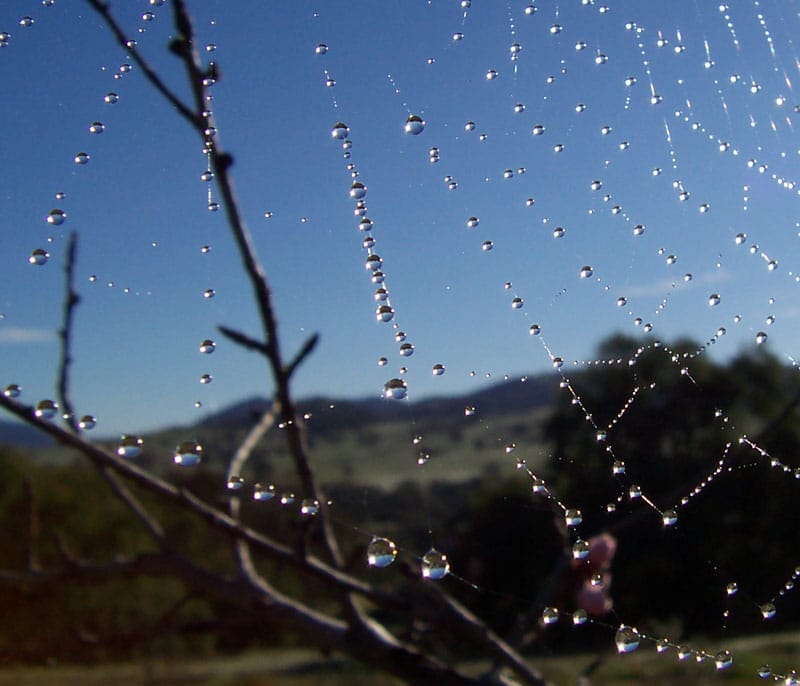
The morning light breaks the heavy illusion of the night. You open your eyes to a normal, quiet room. The terrifying giant from your dream has vanished into the waking hours. But somewhere in the architecture of your mind, a silver thread catches the dew. Does the spider trap us, or do we trap ourselves?
❓ Frequently Asked Questions
Is dreaming of spiders good luck?
Cultural context determines whether the spider’s a lucky omen or a warning. In many indigenous traditions, the spider is a creator figure associated with wisdom and protection, making the dream a sign of spiritual guidance. However, if the dreamer feels intense fear or suffocation, the dream usually points to waking anxieties that need to be addressed rather than external good fortune.
Why do spiders appear in my dreams?
Spiders often arrive when the subconscious mind’s processing themes of creation, manipulation, or feeling trapped. They represent the way we weave our own lives, including the social networks and personal narratives we build. If you’re facing a complex situation with many moving parts, the spider appears to mirror that complicated structure.
What’s the spiritual meaning of a spider?
Spiritually, the spider represents the sacred architect who builds a world from her own inner substance. It symbolizes the power of the mind to manifest reality and the patience required to wait for the right opportunities. Many traditions view the spider as a reminder that we’re the authors of our own webs, responsible for both the beauty and the traps we create.

Dalton Treviso is an independent researcher and writer exploring archetypes, Jungian psychology, and mythological symbolism. His work focuses on how ancient philosophical traditions and symbolic systems illuminate the hidden structures of the human psyche.
Drawing on Jungian psychology, Stoic thought, and comparative mythology, Dalton examines how the inner patterns we carry shape perception, conflict, and transformation.
Through EINSOF7, he writes about the symbolic architecture of the mind — exploring how myths, archetypes, and philosophical traditions act as both mirror and map for psychological depth and self-understanding.
Areas of study: Jungian archetypes, animal symbolism, dream symbolism, mythological figures, and ancient symbolic traditions.