
A weaver bird builds a complex nest without ever seeing one built. The blueprint sits inside the creature before it hatches. Carl Jung looked at the human mind and saw the exact same mechanism at work. We don’t enter existence as blank slates waiting for the world to write on us. We arrive with invisible maps already folded into our psyche. These inherited patterns are what we call Jungian archetypes. They act as the psychic counterpart to biological instinct.
Ancient philosophy named these patterns the archetypon – the original model. Plato visualized them as ideal Forms existing above the material plane. Jung grounded this abstract idea in the soil of human evolution. He viewed these images as deep riverbeds where mental energy naturally flows. When we encounter a figure in a dream, we’re often meeting a universal constant. The face changes, but the underlying structure stays identical across cultures and centuries.
Modern interpretations often dilute this raw power into a neat system of twelve personalities. Marketing teams and storytellers use these labels to define a brand or a character. But commercial simplifications obscure the clinical reality Jung described. The archetypes of the collective unconscious are not passive descriptions of who we are. They’re active, autonomous forces that shape our perception. The organs of the soul rather than personality quirks.
Recognizing these forces offers more than intellectual satisfaction. It provides a framework for understanding why we repeat certain behaviors despite our best intentions. The specific images may vary, but the instinctual drive behind them is consistent. To study this map is to begin the process of untangling the individual self from the collective. When we encounter situations that match these internal maps, the archetype activates, flooding us with emotions and imagery that feel larger than our personal lives.
🧬 The Blueprint of Instinct: How Archetypes Shape Reality
An archetype is not merely a character in a story, nor is it a stereotype. It’s a psychological organ. Just as the body has a liver to process toxins and a heart to pump blood, the psyche has archetypes to process experience. Jung described them as the “psychic counterpart of instinct.” They’re the empty forms that give shape to our lives, waiting to be filled by personal history.
Think of a dry riverbed. The water – our psychic energy – has not yet flowed, but the channel is already carved. When the rain comes, the water must follow that specific, pre-determined path. The “Mother” is one such riverbed. A child is born with the expectation of a nurturer. When the child meets their actual mother, the biological reality slots into the archetypal expectation, and a complex is formed. If the reality matches the blueprint, the water flows smoothly. If the reality is harsh or absent, the riverbed floods or runs dry, creating neurosis.
Such a mechanism explains why certain themes appear in the myths of cultures that never interacted. The Aztecs, the Norse, and the ancient Chinese all told stories of great floods, trickster gods, and dying heroes. They weren’t copying each other. They were all describing the same internal geography. These primordial images reside in what Jung termed the collective unconscious – a shared library of human history written into our genetic code.
While modern branding agencies often reduce this concept to “12 personality types” for marketing purposes – the Outlaw, the Sage, the Innocent – Jung’s original work was clinical and dynamic. He was interested in the raw, often overwhelming power of these forces as they manifest in dreams, art, and mental illness. To engage with archetypes is not to pick a label, but to understand the ancient machinery driving your modern behaviors.
🌊 The Collective Unconscious: The Reservoir of Human Memory
To understand where archetypes live, you need to look below the surface of personal memory. Most psychology focuses on the personal unconscious – the specific memories, traumas, and forgotten phone numbers of your individual life. Jung argued that beneath this personal basement lies a much deeper, darker ocean: the collective unconscious.
It is the ancestral heritage of humanity. It contains the spiritual inheritance of our species’ evolution, born anew in the brain structure of every individual. It’s why a person in New York might dream of a symbol found in a 2,000-year-old Egyptian papyrus they’ve never seen. The collective unconscious doesn’t contain specific memories – you won’t inherit your grandmother’s memory of baking bread – but you do inherit the propensity to experience the “Grandmother” figure, or the emotional weight of “Home.”
Accessing this layer of the psyche is often the goal of deep psychological work. When we touch the collective unconscious, we stop feeling isolated in our suffering. We realize that our personal struggle is part of a timeless human drama. That connection provides the energy needed for transformation, turning a neurotic symptom into a meaningful creative act.
Read the full guide: Mapping the Reservoir of the Collective Unconscious →
🌑 The Shadow: Gold Hidden in the Dark
The brightest light casts the deepest shadow. In the process of growing up, every human being undergoes a necessary split. We are taught to be polite, quiet, or brave. We identify with these “good” traits and construct a persona – a social mask – to present to the world. But the traits we reject don’t disappear. The anger, the greed, the vulnerability, or even the intense creativity that was discouraged by parents gets shoved into the unconscious. This creates the Shadow.
The Shadow is often misunderstood as simply “evil.” While it contains our capacity for malevolence, it also holds the “golden shadow” – our repressed potential. A person who identifies as “humble” might repress their ambition, forcing it into the shadow where it festers into passive-aggression. But that same ambition, if integrated, provides the drive needed to succeed. In his landmark work Aion, Jung observed that the shadow is the moral problem that challenges the whole ego-personality, for no one can become conscious of the shadow without considerable moral effort.
Jung warned that ignoring this figure is dangerous. When the shadow remains unacknowledged, it’s projected outward. We start to see our own worst traits in our neighbors, our political enemies, our partners. We demonize others to avoid facing the stranger in the mirror. The work of integration – acknowledging that “I am also that” – is the first and most difficult step toward psychological wholeness.
Read the full guide: Confronting and Integrating the Shadow Self →
🎭 Anima and Animus: The Soul’s Other Half
If the Shadow is what we hide from the world, the Anima and Animus are what we hide from ourselves regarding gender and soul. Jung observed that the human psyche is inherently androgynous, yet society forces us into a singular gender role. The contra-sexual elements don’t vanish. They form a bridge to the unconscious.
For a man, the Anima represents the personification of all feminine psychological tendencies – moods, prophetic hunches, and the capacity for love. She’s the muse and the seductress. For a woman, the Animus represents the masculine aspect, often manifesting as conviction, logic, and strongly held opinion. These energies relate to connection (Eros) and discrimination (Logos) rather than biological sex.
When these figures are unconscious, they cause havoc in relationships. A man possessed by a negative Anima becomes moody and touchy. A woman possessed by a negative Animus becomes obstinate and cold. We tend to project these images onto our romantic partners, falling in love with the fantasy of our own soul image rather than the real person in front of us. Recognizing the Anima or Animus internally allows a person to stop seeking completion solely through another and find balance within.
Read the full guide: The Syzygy of Anima and Animus →
⚔️ The Hero: The Architecture of Struggle
Why does Star Wars resonate with the same intensity as the epic of Gilgamesh? Because they’re the same story. The Hero archetype is perhaps the most celebrated pattern in human history because it’s the metaphor for ego consciousness waking up. It’s the story of the individual breaking away from the comfort of the Mother – the known – to face the terror of the unknown.
The pattern is structurally identical across cultures, a phenomenon Joseph Campbell called the Monomyth. It involves a call to adventure, a crossing of the threshold, a descent into the underworld (the unconscious), and a return with a gift. We’re obsessed with this narrative because it provides the script for psychological growth. We cannot mature without slaying dragons, whether that dragon is a literal addiction, a tyrannical boss, or an internal fear.
But the Hero is not the final stage of development. A psyche stuck in “hero mode” sees everything as a battle to be won and everything different as an enemy to be defeated. The Hero must eventually give way to the wise ruler or the elder, learning that not all problems can be solved with a sword.
Read the full guide: The Psychology of the Hero’s Journey →
🃏 The Trickster: Chaos as a Teacher
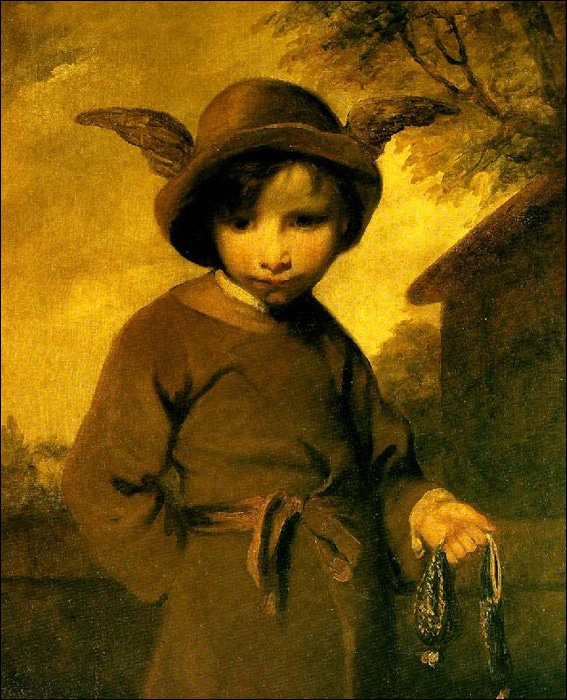
In the orderly court of the psyche, the Trickster is the jester who farts during the coronation. Represented by figures like Loki in Norse mythology, Coyote in Native American lore, or Hermes in Greek tradition, this archetype embodies the chaotic, disruptive force of change. The Trickster breaks rules, crosses boundaries, and makes a mockery of sacred things.
| Tradition | Symbol | Core Meaning |
|---|---|---|
| Greek Mythology | Hermes | The messenger who crosses boundaries between worlds. |
| Norse Mythology | Loki | The agent of chaos who forces necessary change. |
| Native American | Coyote | The foolish teacher who reveals wisdom through error. |
| West African | Esu | The unpredictable force of chance and opportunity. |
While this sounds destructive, the Trickster is essential for health. A mind that is too rigid, too moralistic, or too orderly becomes brittle. The Trickster trips us up to force us to look at what we’re ignoring. It manifests in slip-ups, accidents, and the sudden collapse of best-laid plans. It’s the mechanism that shatters the old order so that something new can be built.
In modern life, the Trickster often appears when we take ourselves too seriously. The computer crash before the deadline, the embarrassing text sent to the wrong person – these are the domain of Hermes. By learning to laugh at the chaos rather than fight it, we integrate the Trickster’s wisdom: that control is an illusion, and flexibility is the only true strength.
Read the full guide: Hermes, Loki, and the Trickster Archetype →
🎉 The Puer Aeternus: The Flight That Never Lands
The Puer Aeternus – Latin for “eternal boy” – is the archetype of potential that refuses to become reality. In mythology, he’s Icarus flying too close to the sun or Peter Pan in Neverland. Psychologically, this pattern appears as a person who maintains an adolescent psychology well into adulthood, terrified of being “tied down” by commitments, jobs, or relationships.
The Puer lives a provisional life. He’s always planning for the future, waiting for the “right” moment to start living, but that moment never arrives. He possesses immense charm and creativity, yet lacks the grounding to turn ideas into anything real. The Puer flies high to avoid the mundane suffering of ordinary life, but in doing so, he also avoids the satisfaction of ordinary achievement.
The cure for the Puer is not to crush his spirit, but to bring him down to earth. Recovery involves work in the literal sense – routine, boredom, and sticking with a task even when the excitement fades. The goal is to evolve the Puer into a creative adult who keeps the spark of youth but marries it to the discipline of the earth.
Read the full guide: The Trap of the Eternal Child →
💡 Algorithms as Myth: Why This Still Matters
It’s tempting to dismiss archetypes as relics of a superstitious past, relevant only to scholars of Greek mythology. But we live in an era where these patterns are more visible than ever. The digital landscape has become a high-speed projection screen for the collective unconscious.
Social media algorithms function as engagement machines that prioritize archetypal content. “Cancel Culture” is a digital enactment of the ancient scapegoat ritual. The endless parade of influencers selling a perfect lifestyle activates the Divine Child or Aphrodite fantasies. We’re not interacting with people online. We’re interacting with projected fragments of the psyche, stripped of complexity and amplified by code.
Understanding these patterns offers a form of psychic immunity. When you recognize the Trickster in a political disruptor, or the Shadow in a mob’s outrage, you’re less likely to be swept away by the contagion. You begin to see the strings on the puppets. Jung’s insight was that we cannot escape these patterns – they’re the hardware of our humanity – but by making them conscious, we can choose how we live them out. We move from being possessed by a myth to collaborating with it. That’s not a small shift.
📚 Navigating the Archetypal Map
The human psyche is a vast terrain, and these primal patterns are the landmarks by which we navigate. Below are the detailed guides to the specific forces shaping your internal world, from the reservoir of memory to the specific figures that populate your dreams.
- Mapping the Reservoir of the Collective Unconscious →
- Confronting and Integrating the Shadow Self →
- The Syzygy of Anima and Animus →
- The Psychology of the Hero’s Journey →
- Hermes, Loki, and the Trickster Archetype →
- The Trap of the Eternal Child →
Collaborating with the Ancient Patterns
We often mistake our private struggles for isolated events. We believe our grief or our ambition is a lonely burden. Yet the concept of the archetype suggests otherwise. We’re walking paths worn smooth by millions of feet before us. The specific details of your life are yours alone. But the underlying plot belongs to the species. This realization changes how we view our own drama. It turns personal pain into a shared human inheritance. You’re never truly the first to feel what you’re feeling.
This doesn’t mean we’re merely puppets of the past. The archetype provides the structure, but we provide the substance. It’s a collaboration between the dead and the living. Every time we love, fight, or create, we pour fresh energy into an ancient mold. Navigating these forces requires a quiet kind of attention. We can’t simply choose which patterns to enact. The currents of the collective unconscious are stronger than the conscious will. But we can learn to recognize the tide when it turns. By observing the symbols that rise in our dreams, we gain a map.
Rain falls into a canyon carved centuries ago, the water fresh and alive, holding the shape of the stone.
❓ Frequently Asked Questions
Are there exactly twelve Jungian archetypes?
No, the idea of a fixed set of “12 archetypes” is a modern marketing invention, not a clinical reality. Jung viewed archetypes as limitless and fluid, much like the number of potential instincts or situations in life. While certain patterns like the Mother or the Hero are universal, the psyche is too vast to be contained in a simple grid.
Can an archetype possess a person?
Yes, Jung referred to this state as “inflation” or “possession,” where the ego becomes overwhelmed by an unconscious content. This often happens when we identify too closely with a role – such as the benevolent Healer or the righteous Judge – losing our individual humanity to the larger, impersonal energy of the symbol.
Do archetypes change over time?
The core structural blueprint remains ancient and stable, but the “clothing” of the archetype evolves with culture. The Hero archetype might have looked like a dragon-slayer in medieval times, whereas today it often manifests as the disruptive tech entrepreneur or the political revolutionary. The image changes, but the psychological function stays identical.
Explore Related Guides
- Puer Aeternus: The Dark Truth of Eternal Youth
- Collective Unconscious: The Primal Mind Within
- Anima and Animus: The Hidden Soul Within
- Hero Archetype: The Secret Map of Your Soul
- Trickster Archetype: Why Chaos Transforms Us
- Shadow Archetype: The Dark Side That Haunts You

Dalton Treviso is an independent researcher and writer exploring archetypes, Jungian psychology, and mythological symbolism. His work focuses on how ancient philosophical traditions and symbolic systems illuminate the hidden structures of the human psyche.
Drawing on Jungian psychology, Stoic thought, and comparative mythology, Dalton examines how the inner patterns we carry shape perception, conflict, and transformation.
Through EINSOF7, he writes about the symbolic architecture of the mind — exploring how myths, archetypes, and philosophical traditions act as both mirror and map for psychological depth and self-understanding.
Areas of study: Jungian archetypes, animal symbolism, dream symbolism, mythological figures, and ancient symbolic traditions.