
This article is part of our Dream Symbolism series. Read the full guide: Dream Symbolism: The Ancient Secret That Awakens Us
A Tibetan monk closes his eyes to practice ancient dream yoga. He prepares to intentionally leave his physical form behind. Modern psychology often assigns a simple flying dream meaning to this act, suggesting we are merely rising above our mundane earthly problems. The monk would likely smile at this highly restricted Western explanation.
For centuries, Western minds have relied on ancient Greek myth to explain these visions. We immediately picture an ambitious Icarus flying toward the burning sun. Carl Jung viewed these airborne moments as vital attempts to find mental balance. He believed the human psyche uses altitude to escape heavy daily burdens. Under this framework, flight functions as a psychological coping mechanism.
Across the Asian steppes, Siberian shamans approached the vast night sky quite differently. They saw astral travel as a practical technique for soul retrieval. The spirit separates from the sleeping body to navigate unseen dimensions. Hindu traditions also recognize out-of-body experiences during deep meditative states. Flight becomes a primary vehicle for genuine spiritual liberation.
Specific details of the ascent alter cultural interpretations of the event. Growing wings often symbolizes active spiritual development and acquiring profound wisdom. Floating passively over turbulent water exposes unacknowledged emotional turmoil hiding below. A rapid downward glide acts as a sudden call to conscious awareness. You are descending directly into the forgotten layers of the mind.
Long before airplanes, Leonardo da Vinci drew endless diagrams of elaborate flying machines. He understood our deep biological urge to defy physical gravity completely. We still build massive metal ships to pierce the thick clouds.
Yet the human mind requires no external machinery. Sleep provides the only runway. The body stays anchored while consciousness ascends.
🦅 The Siberian Taiga: Shamanic Altitude in Flying Dreams
The rhythmic strike of a stretched hide drum echoed inside the tent. Outside, a bitter wind scoured the frozen earth of the taiga. A Tungus shaman breathed heavily, entering a profound trance state. His physical body remained completely still beside the smoking central fire. Yet, his consciousness was already miles above the dark, snowy plains. Soul flight mythology traces its roots to such sensory extremes.
Indigenous traditions across Northern Asia viewed this nocturnal altitude as a physical reality. It was never seen as a mere metaphor for escaping mundane chores. By entering a deep trance, the practitioner engaged in specialized shamanic traveling sleep. High above the earth, they negotiated with unpredictable nature spirits. The dream state offered a vast, borderless map of the unseen reality. According to anthropologists, these early astral travel dreams were highly structured.
Rather than floating aimlessly, the shaman navigated specific spiritual topographies. When flying over turbulent water, the dreamer faced highly dangerous territory. Deep water acts as a fierce barrier between the living and dead. To succeed, soaring above it required immense concentration and tested spiritual tools. During these flights, the dreamer functioned as a working traveler. They were not a passive observer watching the scenery unfold.
Visualizing a massive cosmic axis, they often interacted with the World Tree. Connecting the underworld to the upper heavens, its branches spanned reality. Along these massive wooden branches, the spirit climbed and flew. Prophetic flying dreams were considered essential to the entire tribe’s survival. The ability to fly in sleep marked a deep, communal responsibility.
🪷 Himalayan Monasteries: The Conscious Ascent of Dream Yoga
Centuries later, Tibetan Buddhists developed a highly sophisticated nighttime discipline. Known as dream yoga practices, these mental methods were exceptionally rigorous. For years, monks trained to maintain sharp awareness while falling asleep. The ultimate goal was complete awakening. Once fully aware inside the dream, the practitioner tested reality’s strict limits. To achieve sustained flight, they would intentionally leap into the air.
Philosophically, this lucid dreaming flight served a very specific religious purpose. By defying gravity in sleep, they proved the waking world was illusory. If solid earth could be ignored in sleep, reality was flexible. In esoteric texts, some practitioners spontaneously grew luminous wings. These luminous wings marked rapid wisdom acquisition, manifesting the enlightened mind rather than serving as physical appendages.
Upward flight into a clear sky signaled the ultimate spiritual liberation sleep. Tibetan Buddhism views the clear, unobstructed sky as the true nature of mind. The absence of clouds signifies the absence of confusing, obscuring thoughts. This unobstructed state forms a vital component of dream symbolism across Asian cultures. Achieving this state meant actively dissolving the persistent illusion of physical weight.
Beyond normal dreaming, advanced practitioners sought the clear light of sleep. This profound state lacks any visual imagery or narrative structure. Flying served as a foundational preliminary exercise in this rigorous mental system. By altering the dream environment, the monk dismantled mental rigidities. If a mountain appeared, they would fly directly through the solid rock. The practitioner became one with the vast, empty space they traversed.
🪶 The Nile Valley: The Ba Bird’s Nocturnal Flight
In ancient Egypt, priests possessed a remarkably complex understanding of human consciousness. Rather than viewing the spirit as a single entity, they divided it. Among these functioning elements was the Ba. Frequently depicted as a falcon with a human head, this unique soul-bird was vital. While a person slept, the Ba took to the dark skies. Between the physical world and the domain of the gods, it traveled freely.
This concept operated as an actual, ancient form of an out-of-body experience. Inside massive stone tombs, architects designed small, false doors. These narrow passages allowed the Ba to exit during the night. Without this architectural feature, the soul might remain trapped underground. The physical mummy lay in absolute darkness, wrapped tightly in linen. Above ground, the Ba navigated the starlit canopy of the heavens.
Before dawn, the Ba needed to return to the physical body. Should it become lost, the sleeper might never wake. Because of this steep risk, the flight was both wondrous and dangerous. Navigating the celestial ocean required a clear path and safe trajectory. The ancient Egyptian model mirrors modern concepts of subconscious flying, where awareness leaves the inert body to gather experiences across other dimensions.
The human face on the bird signifies the retention of personal identity. Even while soaring through the heavens, the dreamer remains fiercely individual. The Ba does not dissolve into the sky; it observes and remembers. It consumes celestial offerings and mingles with divine entities before morning.
☀️ The Aegean Sea: Icarus and the Meaning of Aerial Ambition
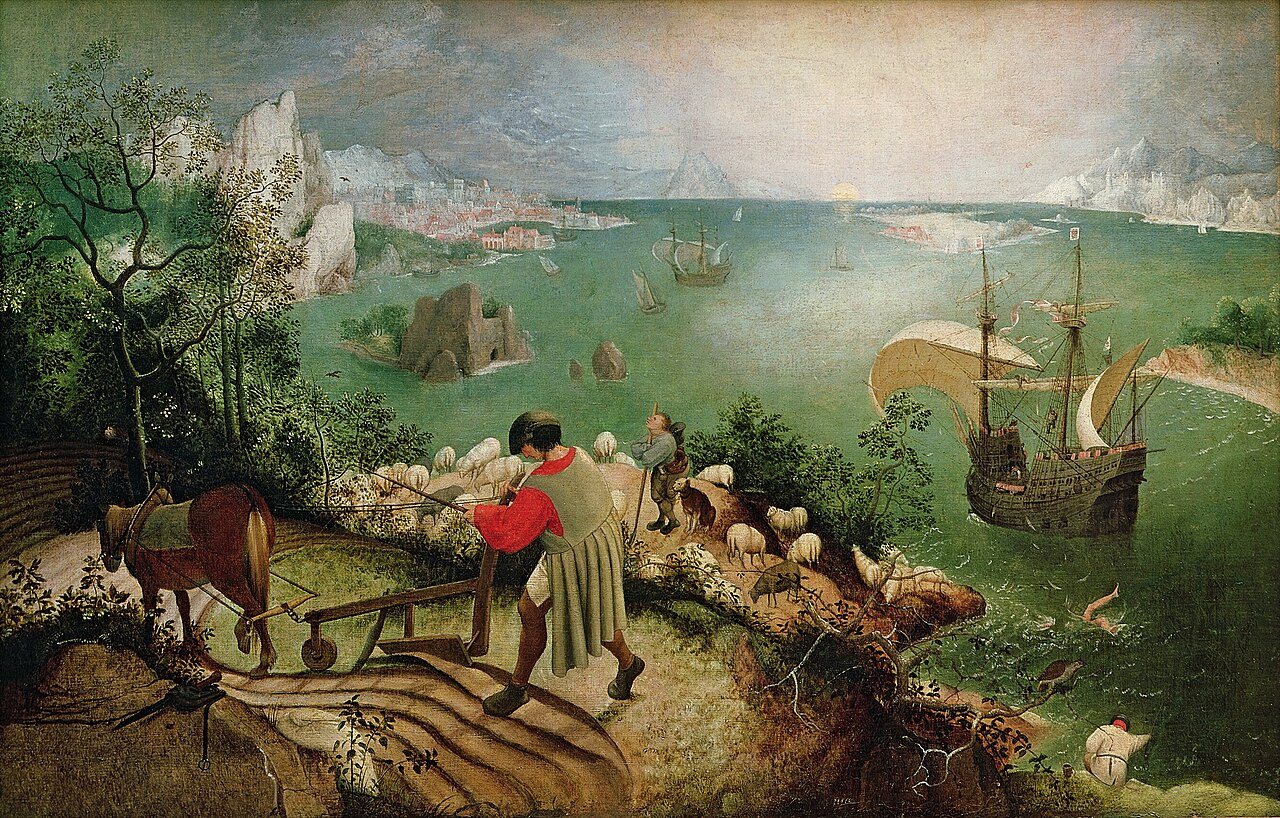
Across the Mediterranean, Western civilizations approached the open sky with caution. Centered on strict, unyielding limits, ancient Greece offered a different mythological framework. The tragic story of Icarus defines this cultural anxiety. Using feathers and wax, Daedalus crafted elaborate wings for his young son. Despite stern warnings from his father, the young man flew higher. Intoxicated by pure instinctual joy, he completely ignored the burning heat.
Once the wax melted, he plunged violently into the dark sea. This narrative shaped Western thought, establishing enduring Icarus dream symbolism. Upward flight is framed here as a highly dangerous act. By taking on tasks that are too large, one invites inevitable disaster. For attempting to leave their proper earthly station, the gods punish mortals. Daedalus himself successfully completed the aerial route. He maintained a moderate altitude, respecting the middle path of survival.
Centuries later, this cautionary tale heavily influenced Carl Jung dream interpretation methods. Analyzing these airborne visions, the Swiss psychiatrist saw vital attempts at psychological balance. To compensate for emotional heaviness, he suggested the psyche uses altitude. Weighed down by earthly responsibilities, a person dreams of soaring weightlessly. Seeking a brief respite, the mind creates these soaring, gravity-defying images.
At the same time, Jung warned against losing touch with waking reality. Flying too high risks a dangerous, isolating detachment from human relationships. Flying downwards symbolizes a necessary descent into the deeper subconscious. Directly confronting unacknowledged emotional problems, the dreamer is forced to look closer. It serves as a sudden wake-up call regarding unmanaged waking events. Mirroring the harsh friction of daily struggles, navigating dream turbulence builds endurance. Through air pressure and violent winds, stubborn resistance is deeply felt.
💡 Cross-Cultural Threads: The Archetypal Sky in Flying Dreams
Why does the sleeping mind repeatedly seek altitude? Across these diverse global traditions, a shared human obsession emerges clearly. Archetypal flying dreams appear in nearly every recorded civilization and span the globe. Though specific cultural meanings shift, the core act of defiance remains constant. To signify a dramatic shift in perspective, humanity consistently uses altitude. Strikingly, the dream of soaring without wings appears across all cultures. Uninhibited, boundless freedom requires defying logic entirely.
The dreamer relies on sheer internal will and abandons external physical tools. Even in modern variations, the surrounding environment dictates the exact symbolic meaning. A clear sky indicates inherent power and suggests the dreamer can free themselves. With this open space, they are finally ready to apply new approaches. Alternatively, a futuristic vehicle suggests the dreamer already has external tools. To move forward successfully, they only need to take a calculated risk.
Whether flying downward or upward, the act forces a direct physical confrontation. The dreamer must continually negotiate their complex relationship with the solid earth. The sky acts as a massive mirror, reflecting our deepest terrestrial anxieties. The act of leaving the ground forces us to examine exactly what anchors us. The persistent fear of falling often mirrors the fear of confronting solid reality. Despite this fear, the thrill of the ascent keeps the sleeping mind returning upward.
🧭 The Wingless Ascent: Defying the Ground in Sleep
In 1490, Leonardo da Vinci filled his journals with complex flying machines. He drafted elaborate gliders made of lightweight pine and dreamed of flight. Centuries after the ancient Siberian shaman, he shared the exact same obsession. Humanity flatly refuses the strict boundaries of the physical earth and looks upward. Later authors like Jules Verne echoed this exact cultural fixation, writing extensively. Through advanced technology and fearless exploration, they dreamed of escaping earthly constraints.
Douglas Adams mocked the rigid laws of physics and used the concept playfully. He suggested that flying simply required throwing yourself at the ground and missing. This enduring literary fascination reveals a profound collective psychological pattern. We are a restricted species, trapped by our own biological weight. The subconscious flight happens at night, an unconscious act of rebellion. The dreamer rejects the fixed laws of biology, escaping the heavy body.
As a radical departure from the norm, every tradition understands this night flight. The empty sky serves as the ultimate blank canvas, reflecting human potential. Violently, altitude strips away the mundane, heavy details of daily survival. Pure unencumbered consciousness remains active, floating freely in the dark void. The mind seeks the clouds because the earth demands constant, heavy attention. The mythology of flight endures, proving that the human imagination has no ceiling.
The Universal Ascent of the Dreaming Mind
We share an ancient impulse to leave the solid earth behind. Long before the first metal wings cut through the clouds, human minds were already airborne. A Tungus shaman and a modern city dweller experience the exact same sudden weightlessness. The cultural maps we use to navigate these visions change completely. Yet the raw sensation of upward motion remains identical across centuries. The instinct is universal.
Gravity commands our waking hours with absolute authority. Every physical step we take requires heavy effort and constant friction. Then the sun sets, the conscious mind rests, and those rigid rules suddenly dissolve. Our biology understands a freedom that our waking bones cannot physically touch. This strange memory might explain why a midnight ascent feels so natural. We are not learning a new skill in the dark. We are just remembering a very old human habit. The mind refuses to stay grounded forever.
Tonight, millions of people will close their eyes and slowly drift upward. They will leave their heavy blankets and quiet rooms far below them. Some will seek spiritual clarity above the clouds, while others just want the rush of cool wind. The destination matters less than the departure itself. The night sky waits for all of them.
❓ Frequently Asked Questions
Is it rare to dream about flying?
While not the most common nocturnal experience, flying dreams occur frequently enough to be considered a universal human phenomenon. Studies indicate that a significant percentage of adults experience at least one lucid or non-lucid flying dream during their lifetime. The frequency often increases during periods of heightened creativity or when an individual feels a sudden release from heavy personal restrictions.
Why did I have a dream of flying?
Ascending in sleep typically mirrors a waking desire to rise above immediate obstacles or restrictive circumstances. The subconscious mind utilizes the sensation of weightlessness to process feelings of liberation, sudden independence, or the successful evasion of a complex problem. Conversely, struggling to maintain altitude can indicate lingering anxieties about losing control over a recently acquired freedom.
What is the spiritual meaning of flying in a dream?
Across multiple religious and esoteric traditions, nocturnal flight signifies the soul’s temporary detachment from the physical body. It represents a brief return to a pure, unencumbered state of consciousness where spiritual topographies can be explored without biological limits. Traditions like Tibetan Buddhism view this aerial mobility as a direct encounter with the true, boundless nature of the mind.
For a broader understanding of this symbolic tradition, explore our complete guide to Dream Symbolism: The Ancient Secret That Awakens Us.
Explore Related Topics

Dalton Treviso is an independent researcher and writer exploring archetypes, Jungian psychology, and mythological symbolism. His work focuses on how ancient philosophical traditions and symbolic systems illuminate the hidden structures of the human psyche.
Drawing on Jungian psychology, Stoic thought, and comparative mythology, Dalton examines how the inner patterns we carry shape perception, conflict, and transformation.
Through EINSOF7, he writes about the symbolic architecture of the mind — exploring how myths, archetypes, and philosophical traditions act as both mirror and map for psychological depth and self-understanding.
Areas of study: Jungian archetypes, animal symbolism, dream symbolism, mythological figures, and ancient symbolic traditions.