This article is part of our Animal Symbolism series. Read the full guide: Why Animal Symbolism Awakens the Primal Mind
High above the plains, an eagle drops a single feather. To a passing traveler, it is just a bird molting. Yet across diverse indigenous tribes, that fallen plume carried immense weight. It meant a direct line of communication with the divine. Authentic native american animal symbolism relies on exactly this kind of sudden, unprompted encounter.
Modern pop culture treats spiritual guides like items in a catalog, with individuals attempting to pick a creature that matches a desired personality trait. Ancient hunting cultures operated under a completely different law. A person never consciously selects their sacred guardian. Instead, the spirit decides exactly whom it will approach. It dictates when and how it will reveal its presence.
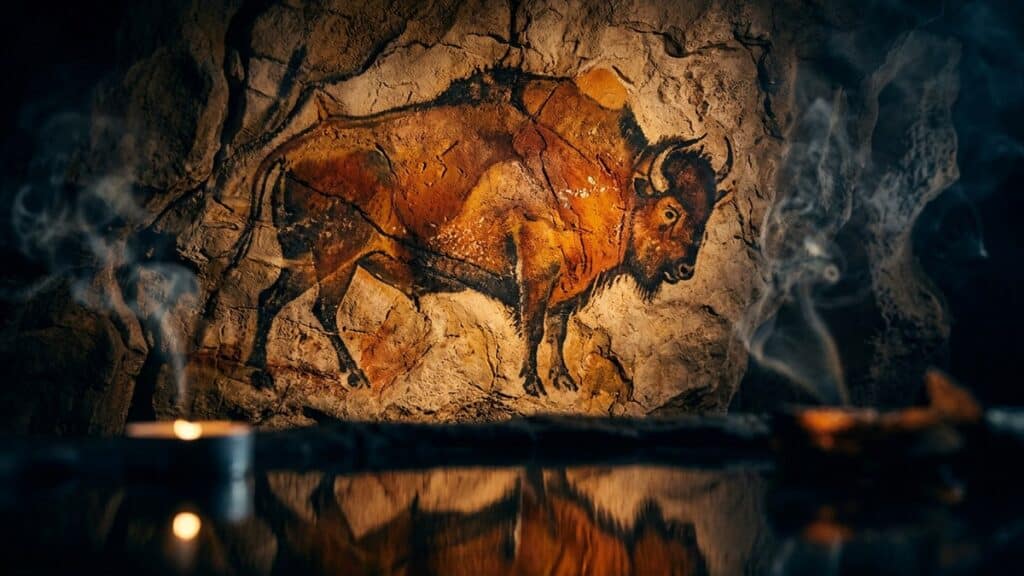
North America holds hundreds of distinct indigenous nations. These groups do not share one uniform mythology. The Lakota and Cheyenne deeply honor the buffalo as a sacred provider. They embed this massive creature into their daily survival. Meanwhile, other nations look to the turtle as the physical foundation of the earth. Each clan maintains strict spiritual taboos regarding their specific totemic kin.
The kinship shaped far more than private rituals. It bleeds into ancient petroglyphs, intricate beadwork, and carved wood. Craftsmen do not merely decorate their tools with wildlife imagery. They weave spiritual connections directly into clay and silver. Every etched line honors the unseen forces moving through the natural world.
Some traditions teach that nine different guides accompany an individual. These companions arrive during periods of shifting personal responsibility. They enter a life to impart a specific lesson. Then, they quietly exit when their task is finished. One primary guardian, however, remains anchored to the soul forever. Recognizing these silent visitors requires learning an ancient language of tracks and shadows.
Tribal groups cultivated unique relationships with their local landscapes. Yet a shared recognition emerges across their diverse geographies. The natural world acted as a mirror for the unseen spirit world. Animals were not simply resources to be consumed. They were elder relatives to be consulted.
🦬 Lakota and Cheyenne: The Sacred Provider
Cold wind swept across the Dakota plains. A hunter knelt silently in the dry winter grass. He watched a massive herd grazing in the distance. The animal was not merely a target for sustenance. It was a holy benefactor commanding deep respect.
Lakota buffalo symbolism centers on profound, daily gratitude. The Plains tribes viewed the massive buffalo as a sacred provider. The Cheyenne shared this exact same deep reverence. The animal offered heavy meat for food. It provided thick hides for durable shelter. It yielded warm furs for harsh winter clothing.
The hunt itself was a deeply spiritual endeavor. Hunters offered quiet prayers before drawing a single arrow, asking the buffalo for permission to take its life. This mutual agreement formed the foundation of Plains spirituality.
The buffalo embodied tribal prosperity and visible, life-sustaining abundance. Every single part of the animal saw practical use. The bones became sturdy tools and sewing needles. The hide became a warm, protective home. The stomach served as a durable water vessel. Such thorough utilization honored the physical sacrifice of the beast.
Above the grazing herds, another sacred relationship unfolded. The eagle held a supreme position in the open sky. Indigenous cultures understood the eagle as a divine visionary. It possessed raw courage and absolute, soaring freedom. It flew higher than any other living creature. This extreme altitude allowed it to touch the divine sphere directly.
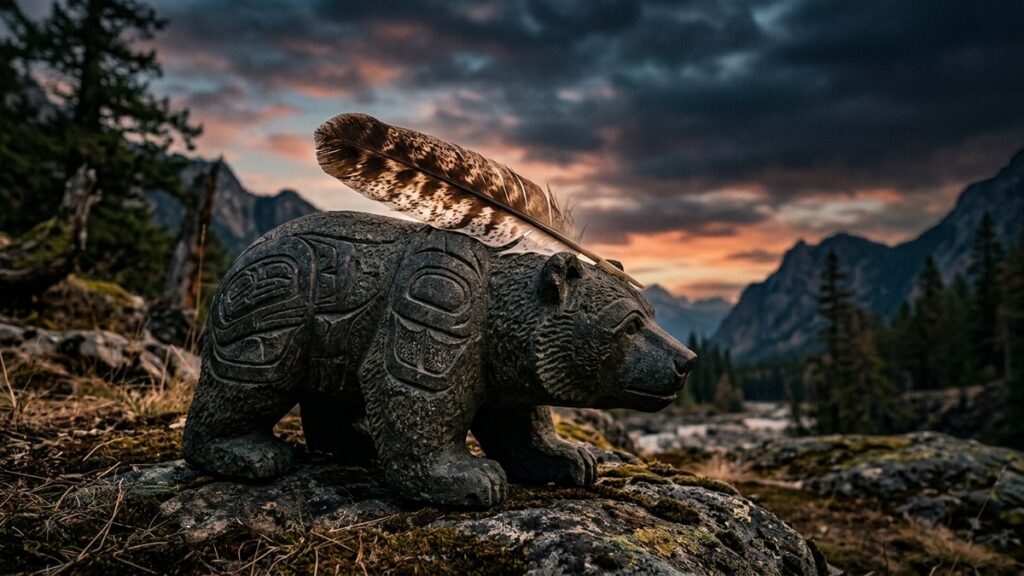
Fallen feathers became physical manifestations of this celestial bond. An eagle feather ceremony carried immense cultural gravity. The feather formed a direct link to the creator. It acted as a physical conduit for human prayers.
These Great Spirit messengers required very careful, deliberate handling. A dropped feather demanded a highly specific ritual of retrieval. The community never treated such an object lightly. It carried the heavy weight of the sky itself. An eagle feather earned in battle or given in peace marked a soul’s highest honor.
🐢 Earth Upon a Shell: Native American Creation Narratives
Creation narratives often begin in deep, dark waters. Native American creation stories frequently position the humble turtle as the physical foundation of the world. In widespread Eastern Woodlands traditions, the earth rests entirely upon a massive shell. A giant turtle carries the landmass on its broad back.
In the Haudenosaunee tradition, a woman fell from the sky. Water animals caught her and placed her on a turtle’s back. A muskrat dove deep to gather mud from the ocean floor. He placed it on the shell to grow the earth.
The turtle embodies extreme longevity and steady endurance. It moves slowly but with very deliberate purpose. Its hard shell offers perfect protection against harsh outside forces. Such imagery offered early cultures a profound sense of stability. The ground beneath their feet felt secure and permanently anchored.
Other forest animals carried different types of vital medicine. The bear stood as a towering figure of deep introspection. It was a highly respected, powerful medicine animal. Retreating into the dark earth to hibernate, it slept through the freezing winter.
It emerged reborn with physical strength and renewed leadership. It acted as a powerful healer for the community. It also served as a fierce, uncompromising protector of the vulnerable. Many tribes viewed the bear as the closest animal relative to humans. They walked on two legs and shared a similar diet.
Water creatures bridged different states of earthly being. The alligator lurked quietly at the muddy water’s edge in southern regions. It symbolized stealth and the raw fight for daily survival. It waited patiently in the thick, green reeds. It mastered both the aquatic and the terrestrial environments. It held the ancient memory of the swamp.
🐺 Voices in the Dark: Coyote Tricksters and Animal Guides
Not all animal encounters brought immediate comfort or clarity. The trickster coyote myth appears across the western continent. The coyote remains a deeply complex mythological figure. It often disrupted social order and broke established rules.
Coyote stories were told only during the winter months. These tales carried hidden moral lessons. The coyote acted foolishly so that humans might learn wisdom. Children laughed at the coyote’s terrible mistakes. Through laughter, they learned how a proper person should behave.
Isolated communities occasionally viewed its arrival as a harsh omen. Yet its chaotic nature sparked necessary human adaptation. The trickster forced people to stay alert and highly flexible. It broke dangerous stagnation through sudden, unexpected disruption.
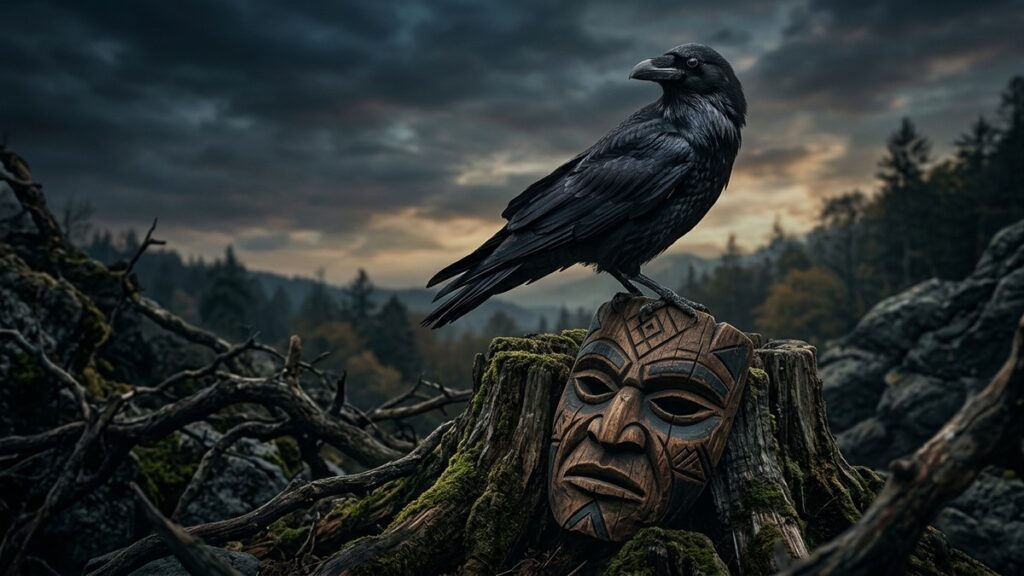
Birds of the night carried their own heavy symbolic weight. Operating comfortably in the deep, shifting shadows, the crow functioned as a reliable psychopomp, guiding lost souls from darkness into light.
The crow guarded the living against paralyzing fear in the dark. It understood the hidden mysteries of the unseen spirit world. It flew easily between the worlds of the living and the dead.
Social animals reflected essential human community needs. The wolf embodied the ideal tribal structure. It represented strong family bonds and vital, daily teamwork. A lone wolf rarely survived the harsh winter months alone.
The pack relied on strict loyalty and sharp, decisive leadership. They demonstrated the absolute importance of clear communication. A healthy wolf pack mirrored a healthy, functioning human tribe.
Even the smallest creatures offered vital survival lessons. The ant stood for relentless teamwork and steady perseverance. It built vast, complex structures grain by tiny grain. The butterfly showcased sudden metamorphosis and beautiful everlasting life. It transformed completely before taking its first delicate flight. The silent bobcat symbolized solitary focus and unseen observation.
🕸️ The Web of Kinship: Indigenous Totems and Taboos
How did these vast, unseen spiritual networks govern the daily physical reality of the tribe?
A deep animism unites these diverse regional beliefs. Authentic Native American totemism relies on spiritual kinship with wildlife. Humans and wildlife share a continuous, unbroken cosmic bond. A totem is a spirit being or a sacred object. It serves as an identifying emblem for a specific clan.
Tribal clan totems define ancient, enduring social structures. A person born into the Bear Clan remained a Bear forever. They could not marry another member of the Bear Clan. The structure prevented inbreeding and built strong alliances between different animal clans. According to the Smithsonian National Museum of the American Indian, these totemic systems established vast networks of mutual obligation that crossed geographic boundaries.
Strict totemic taboos govern all daily community behavior. Clan members cannot kill or eat their specific totemic animal. This unbreakable rule ensures the protection of the sacred lineage. The animal provides spiritual cover for the extended family. The human provides physical respect in return.
Individual spiritual connections follow a slightly different, personal rhythm. Some traditions recognize a highly specific “Nine Animals” concept. They believe nine different animal spirit guides accompany a person. These animals often correspond to different sacred directions. They represent North, South, East, West, Above, Below, and Within.
These guides enter and exit based on immediate current needs. They respond directly to a person’s shifting life direction. They arrive quietly to teach specific, timely lessons. When the lesson concludes, the animal energy retreats.
Despite this rotation, one primary guardian remains utterly constant. A single lifetime guardian spirit anchors the individual permanently. It walks with them in both the physical and spiritual worlds.
The most strict rule is the complete lack of human choice. A person cannot consciously select their power animals.
The spirit makes the final decision. It dictates the exact terms of the relationship. Human preference carries no weight.
🌍 A Universal Language of Wildlife Symbolism
These distinct tribal traditions reveal a deeply shared human impulse. Early communities did not view themselves as separate from nature. They read the dense forest and the open plains like a sacred text. True spirit animal meanings provided a clear vocabulary for human experience.
This localized reverence connects to a massive global human phenomenon. It forms one thread within the wider history of animal symbolism across human cultures. People everywhere looked to local wildlife to deeply understand themselves.
The desire to find kinship in the wild is ancient. It predates agriculture and permanent human settlements. It originates from a time when humans were deeply vulnerable. Early people looked to animals because they knew how to survive. The wildlife possessed the hidden secrets of the landscape.
The Native American approach strips away modern spiritual consumerism entirely. The strict rule of selection honors the raw autonomy of the wild. Humans do not command the ancient spirits. They simply listen to them with quiet respect.
Artistic representations secured these spiritual bonds across many generations. Authentic indigenous animal symbolism saturated normal daily life. Native American art symbols appeared on nearly every crafted surface.
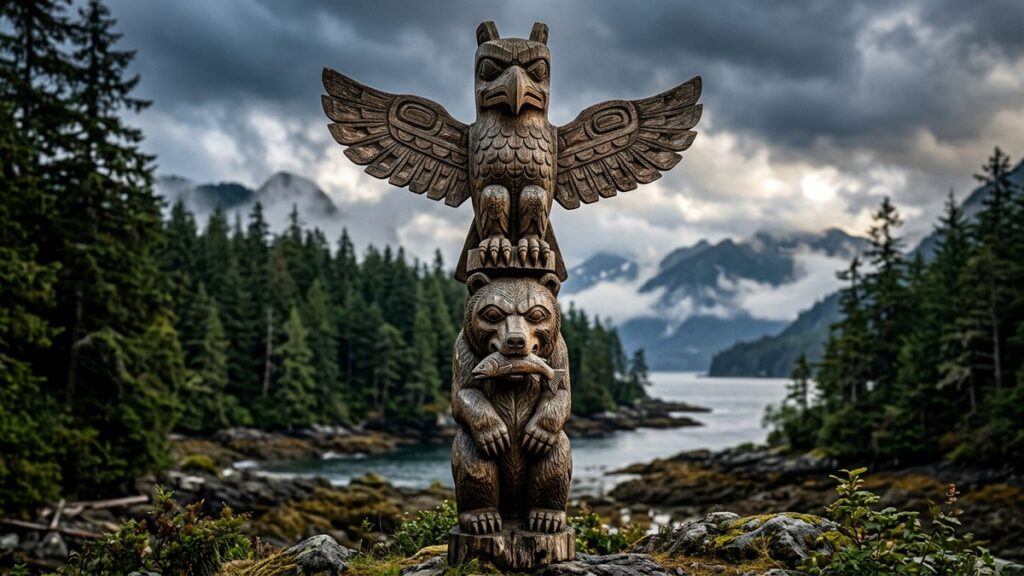
Craftsmen carved ancient petroglyphs and animal art into stone canyon walls. Women wove intricate, colorful beadwork and shaped smooth ceramic pottery. Silver etching captured the sharp, dangerous curve of an eagle’s beak. Woven textiles held the geometric, repeating patterns of a turtle shell.
Wood carvings brought protective spirits directly into the physical camp. Every single crafted object reinforced the ongoing spiritual reality. The natural world was a living, breathing community. The animals were elder kin to be deeply respected. They held the original wisdom of the untamed earth.
Vast distances separate the dense eastern woodlands from the sweeping western plains. Entirely different languages shaped how these ancient communities named their surroundings. Yet a striking convergence emerges across all these varied landscapes. People looked into the untamed wild and recognized something deeply familiar. They saw a reflection. Wildlife was never viewed as property or mere biological machinery. Animals lived alongside humanity as elder siblings in a shared home.
Today, concrete cities cover many of the old hunting grounds. We build thick walls to keep the unpredictable wilderness safely outside. Most people experience nature primarily through glowing screens and curated parks. Still, a sudden, unscripted encounter with wildlife can stop our breath. A lone hawk circling above a congested highway demands quiet attention. One deer pausing at the forest edge completely arrests our movement. The modern noise entirely falls away. We feel an old, familiar tug at the edge of awareness.
Beneath the modern rush, the original reverence was never about claiming power. It was about understanding our exact place within a massive family. That ancient kinship does not disappear simply because we paved the dirt. The earth remains heavily populated by these silent, breathing elders. High above the traffic, a single hawk rides an invisible thermal.
❓ Frequently Asked Questions
What are the 12 Native American spirit animals? The concept of a fixed Native American Zodiac with twelve specific animals is a contemporary invention rather than an authentic indigenous tradition. Traditional beliefs regarding animal guides vary wildly among hundreds of distinct tribes, relying on spontaneous spiritual encounters rather than calendar birth dates.
How do animals function as totems in indigenous cultures? Totems serve as hereditary emblems for specific clans, establishing strict social structures and kinship bonds. Members of a particular animal clan observe specific taboos, including strict prohibitions against hunting or eating their protective wildlife kin.
What does the coyote symbolize in Native American mythology? The coyote frequently appears as a complex trickster figure across Western and Plains narratives. Through chaotic behavior and foolish mistakes, the coyote disrupts social norms to impart moral lessons and force necessary human adaptation.

Dalton Treviso is an independent researcher and writer exploring archetypes, Jungian psychology, and mythological symbolism. His work focuses on how ancient philosophical traditions and symbolic systems illuminate the hidden structures of the human psyche.
Drawing on Jungian psychology, Stoic thought, and comparative mythology, Dalton examines how the inner patterns we carry shape perception, conflict, and transformation.
Through EINSOF7, he writes about the symbolic architecture of the mind — exploring how myths, archetypes, and philosophical traditions act as both mirror and map for psychological depth and self-understanding.
Areas of study: Jungian archetypes, animal symbolism, dream symbolism, mythological figures, and ancient symbolic traditions.