
This article is part of our Jungian Archetypes series. Read the full guide: Jungian Archetypes: The Hidden Patterns of Life
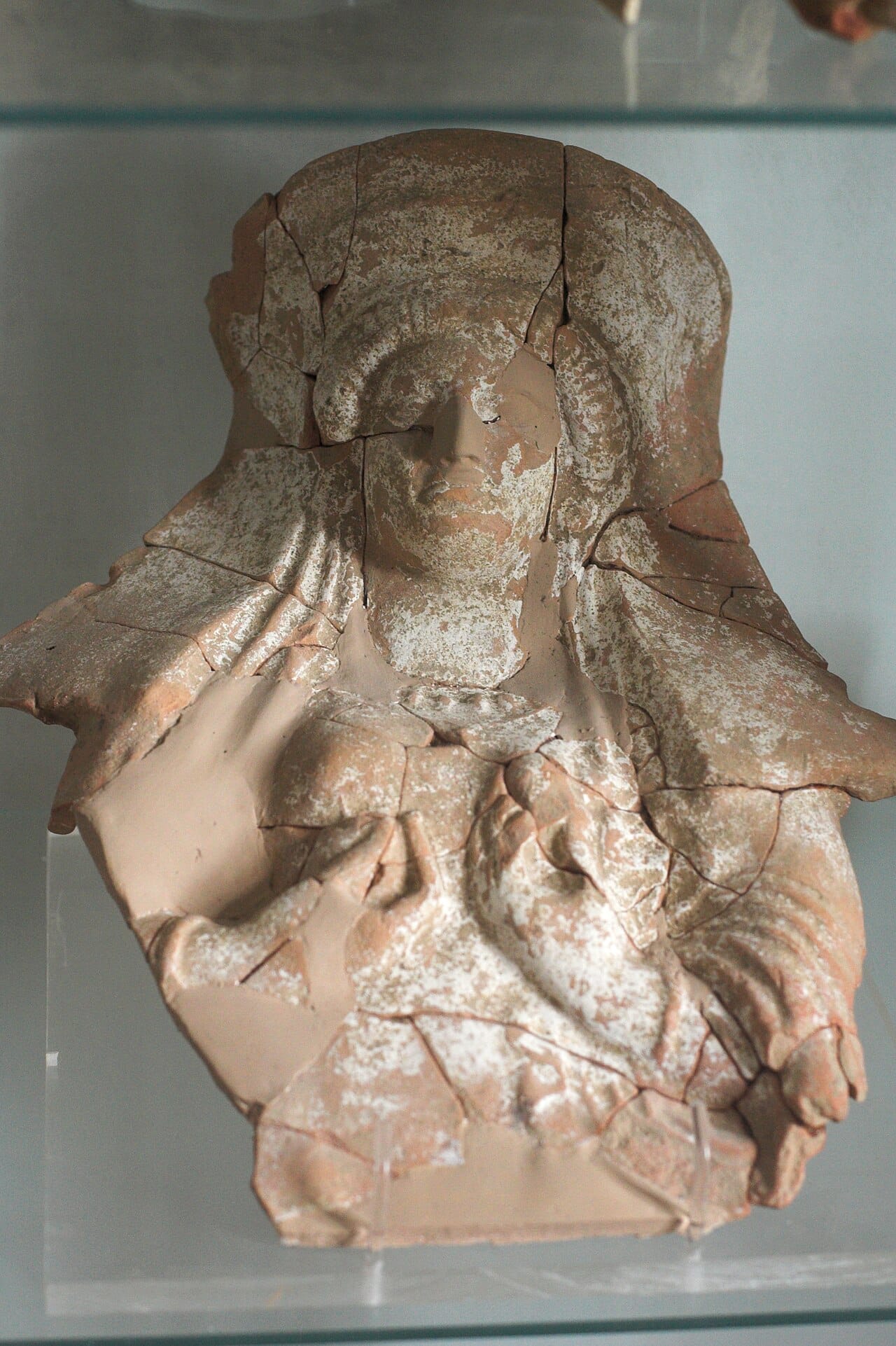
About thirty thousand years ago, someone pressed wet clay into a small, faceless figure. They baked this heavy-breasted statuette in a simple fire. It’s not a real person. Instead, this paleolithic artifact captures the great mother archetype in its rawest form by focusing on a force that rules over everything. The unknown creator didn’t want a human likeness.
Carl Jung argued that you project this ancient image directly onto your parents. Most children don’t actually see a flawed, ordinary person when they look at their mother. They encounter a mythological force that carries a terrifying amount of authority. This projection puts a massive weight on the real woman in your life while shaping how your mind grows before you even realize what’s happening.
Modern psychology usually sticks to clinical talk about childhood wounds. Most books focus heavily on maternal deprivation or the specific psychological damage caused by unloving parents, but that narrow lens misses her dual nature. Erich Neumann mapped this out with his idea of the Great Round. He saw that she is much more than just a family member.
This archetype holds the life-giving harvest of Demeter right next to the shadow witch or the fierce goddess Kali. Creation and destruction live in the same space. To meet this figure, you have to face a primal energy that goes far beyond your own family history. Look closer. Her darkness is just as meaningful as her light. You only find real balance when you look at her full reflection.
🌍 Millennia in Clay: Early Earth Mothers
In 1925, archaeologists digging in the Czech Republic found something strange in an ancient ash pit. It was a dark, small figure snapped in two. This was the Venus of Dolní Věstonice. It’s one of the oldest ceramic objects on earth. The people who made it lived thirty thousand years ago in the freezing Moravian basin. Life was brutal.
Winters were harsh. Small human groups needed a symbol to keep them going. If they stopped having children, their entire line just vanished into the frost. In her book The Language of the Goddess, Marija Gimbutas suggested these figures show a shared belief in a female creator that stretched across the continent. People carved her from limestone or mixed river clay with ground mammoth bone. They built her to endure.
Most of these statues don’t have faces. The artist didn’t care about an individual woman’s identity. They focused entirely on the heavy, life-giving body. The exaggerated breasts and wide hips told an urgent story about the power of the body to sustain a tribe through the worst conditions. She was the vessel for everything.
The fire that baked the Dolní Věstonice figure was actually quite cool. And yet, the image outlasted the ice age. The mother was likely the first deity your ancestors recognized. She was the earth itself. Her form was a simple promise that life would continue despite the cold.
🌾 Demeter to Isis: The Harvest Queens
Humans didn’t stay nomadic forever. As tribes settled down to farm, those quiet clay figures started to change. They grew into the complex goddesses we recognize today. The Mediterranean and Egyptian worlds gave this force a name and a story. It wasn’t just a statue anymore. You finally saw a personality emerge from the dust of the fields.
In Greece, she was Gaia, the soil you walk on. She also lived as Demeter. Demeter didn’t mess around. Because she ruled the harvest with an iron grip, the entire world trembled when her daughter disappeared and the soil went cold.
Think about the rites at Eleusis. People walked for miles and fasted until they were lightheaded. They drank a strange brew called kykeon and stood in a pitch-black hall. Then, a torch flared. After hours of sensory deprivation in the dark, that single ear of grain probably looked like a miracle from another dimension to every person in the room. It wasn’t just food. They were looking at life itself.
| Tradition | Symbol | Core Meaning |
|---|---|---|
| Paleolithic Moravia | Venus of Dolní Věstonice | The raw fertility you needed to survive a literal ice age. |
| Ancient Greece | Demeter / Gaia | The fierce ruler of the harvest and the physical earth. |
| Ancient Egypt | Isis | The protector and mother who uses magic to heal. |
| European Folklore | The Shadow Witch | The side of nature that eats what it creates. |
Over in Egypt, Isis took center stage. She was a mother who knew how to fight. When someone murdered her husband, she didn’t just give up. She searched the whole world for his remains. Later, she hid her son in the swamps to keep him from predators. Here’s the thing: these stories feel familiar because they tap into the same human needs regardless of which desert or valley you call home. It’s universal.
You can even hear this in the way babies talk. Their first word is almost always Ma. It’s the easiest sound to make while you’re nursing because the jaw drops and the throat vibrates without much effort at all. That’s it. That explains why you hear mommy, maman, or amma in totally different cultures. It is a call for help. A child screams into the dark and expects a response. When the mother walks in, she’s just a person. But to that child, she’s everything. She carries the ancient weight of a god into that nursery.
🕸️ The Great Round: Mapping the Feminine
Depth psychology eventually tried to map this ancient power. In 1951, Erich Neumann finished a dense manuscript while living in Israel. He called it The Great Mother. He gave the book to his mentor, C.G. Jung, as an eightieth birthday gift. It traces the feminine archetype through thousands of years by looking at everything from ancient pottery to medieval paintings.
Neumann created a complex diagram to explain his findings. He called it the Great Round. Think of it as a mandala that charts how the feminine psyche evolves over time. He put specific figures on the outer edge to show different psychological forces. These aren’t just old gods. They represent how you experience maternal energy deep inside your own mind, ranging from nourishing comfort to cold destruction.
On the positive side, you find Sophia. She represents the highest version of the Great Mother. Sophia is divine wisdom. She takes the raw, physical fertility of the earth and turns it into spiritual insight, acting as a bridge between the dirt and the divine. This makes her the mother of your thoughts, not just your body.
You can see this idea today in Sofia, Bulgaria. A massive metal statue of Santa Sofia stands there holding a crown and an owl. It’s a physical reminder of the intellectual mother. This ancient lineage connects back to the broader history of jungian archetypes that appear across almost every civilization throughout human history. The mother is the foundation of your world, far beyond a simple biological role.
Carl Jung noticed how powerful this figure feels. He argued that the mother’s influence doesn’t just come from your birth parent. A Jungian mother complex grows from your own internal projections. Your infant mind puts a massive mythological background onto a regular woman. It’s why children often see their mother as a figure with cosmic authority, investing an ordinary human woman with the weight of the entire universe. She is everything.
🌑 The Witches’ Sabbath: Nature’s Dark Pole
History shows a deep, inescapable duality in the mother. She’s warm. But she also carries a capacity for sudden, brutal destruction that you can’t ignore if you look closely at the world around you. The great mother archetype isn’t purely kind. Nature proves this. The same fertile soil that gives you sweet fruit also brings total ruin through droughts and hungry locusts.
A single failed harvest meant certain starvation for an ancient village. They understood. If the great mother gives life, she can just as easily swallow it back into the earth. She’s the dark tomb and the warm womb. You see this in European folklore as the shadow mother who stalks the deep woods as a child-eating witch. She is the jealous stepmother.
Historical art often captured this chaotic side of the feminine. Look at D. Vivant-Denon’s dark etching of the “Witches’ Sabbath.” It’s pure horror. Deformed figures dance in a violent frenzy under the cover of night to break every natural law we hold dear. This is the devouring mother in her most chaotic form. She’s the suffocating embrace.
When a mother refuses to let her child grow up, she embodies this darkness. She feeds on their independence. The problem is, the fairy tale witch locking children in an oven isn’t just a scary story for kids. It mirrors the psychological reality of a parent devouring her own young to keep her power. Myths don’t hide from this. The mother who gives life can become the one who takes it away. She has the power to unmake everything she created.
🌪️ Unbearable Weight of the Mortal Mother
The great mother archetype casts a long shadow over our lives. It’s heavy. Psychologists still struggle to understand how this idea shapes our culture. Authors like Peg Streep spend their careers breaking down the myth that maternal love is always unconditional and easy. She points out the real damage that happens when a child doesn’t get the warmth they need to feel safe and secure in the world. Society expects mothers to be goddesses. But we often ignore the mental strain this puts on real women.
When a woman fails to meet these standards, the damage is real. You might carry that empty feeling well into your adult life. Healing starts with a hard truth: your mother is just a tired human being who cannot act like a goddess every hour of the day. She isn’t a mythological force. Honestly, no living person can meet those standards.
Ancient clay figures found in the Moravian basin were left faceless for a reason. They were symbols of a massive force rather than a person you could actually talk to or know. But here is the problem: every child looks at their mother and expects a god to appear. It’s a lot. Infants want the endless bounty of Demeter and the fierce, magical protection of Isis every single time they cry or feel even the slightest bit of fear. When a real woman gets tired, the child feels a deep sense of betrayal.
⚖️ The Weight of the Great Mother Archetype
She outlives the ancient ash pits. The Great Mother moves through your private psychological landscapes today. We don’t mold her form from river clay and mammoth bone anymore. But we still project her shadow onto the women who raise us. It’s too much. Flesh and blood can’t contain a force that’s meant to govern the turning of the seasons and the cycle of the stars.
Seeing her requires you to step away from childhood grievances. Look at her directly. She is the soil and the frost. The dual nature of this archetype refuses to be cleaned up or turned into something that feels safe and gentle for the modern ego. A parent who only offers comfort is a modern fiction. The truer goddess holds life and death in the same calloused hands. Here’s the thing: she doesn’t care about your comfort.
You can’t master a force this old. It’s impossible. You learn to endure her approach throughout your life. You’ll encounter her during the moments when life feels like it is either beginning with a bang or ending with a whimper. She waits in the winter freeze. A faceless figure stands silent in the green burst of spring wheat. The clay figure holds the earth and waits for ice to melt.
❓ Frequently Asked Questions
What is the rarest feminine archetype?
You don’t see the Sophia or Wisdom figure very often. She’s different. While most people focus on mothers and physical birth, this archetype feeds your mind and soul through authority and deep insight. It’s about spiritual food rather than just biological creation.
What is the symbol of the Great Mother?
Think of anything that holds things. This includes simple cups, deep vessels, or even dark caves and tombs. You’ll see her in the crescent moon and bundles of wheat. These symbols show her dual nature as someone who gives life but also has the power to pull it back into the cold ground.
What are the characteristics of the Great Mother archetype?
Here’s the thing: she’s a double-edged sword. On one side, she offers warmth and protects you with everything she has. But she can also be terrifying. She provides you with endless nourishment and fierce protection, yet she also holds the power to bring about sudden chaos and total ruin. It’s a balance between constant care and destruction.

Dalton Treviso is an independent researcher and writer exploring archetypes, Jungian psychology, and mythological symbolism. His work focuses on how ancient philosophical traditions and symbolic systems illuminate the hidden structures of the human psyche.
Drawing on Jungian psychology, Stoic thought, and comparative mythology, Dalton examines how the inner patterns we carry shape perception, conflict, and transformation.
Through EINSOF7, he writes about the symbolic architecture of the mind — exploring how myths, archetypes, and philosophical traditions act as both mirror and map for psychological depth and self-understanding.
Areas of study: Jungian archetypes, animal symbolism, dream symbolism, mythological figures, and ancient symbolic traditions.