
This article is part of our Jungian Archetypes series. Read the full guide: Jungian Archetypes: The Hidden Patterns of Life
On his first day of life, a Greek infant stole fifty cattle from a god. Across the ocean, a Coyote juggled his own eyes just to impress a bird. These aren’t just old campfire stories. They reveal a pattern deep in your mind called the trickster archetype. Every culture shares tales of a figure who breaks the rules to build something new because creation often starts with a bit of trouble.
Most ancient gods work hard to establish order and law. But the trickster exists to tear those structures down. Scholar Lewis Hyde calls these spirits boundary-crossers. Without this necessary chaos, your culture simply stops moving and eventually dies because it loses the ability to adapt to anything new.
Names change. The chaotic energy remains the same. Norse myths give us Loki, who betrays his fellow gods just for a quick laugh. West African stories tell of Eshu, a spirit who confuses his friends by wearing a two-colored hat just to start an argument. These figures challenge every sacred cow you hold dear. They embody a type of divine logic that looks like madness.
To the modern mind, these disruptions look like bad luck. We try to insure ourselves against every surprise. But the myth suggests that accident is the mother of invention. Hermes invented the lyre only after he committed a crime. It’s worth asking whether a new idea can even enter your world without a little bit of disaster to clear the way.
Understanding this force changes how you react to sudden upheaval. Chaos isn’t a simple enemy. It’s a door.
🐢 Hermes and the Trickster Archetype: The Greek Boy-God
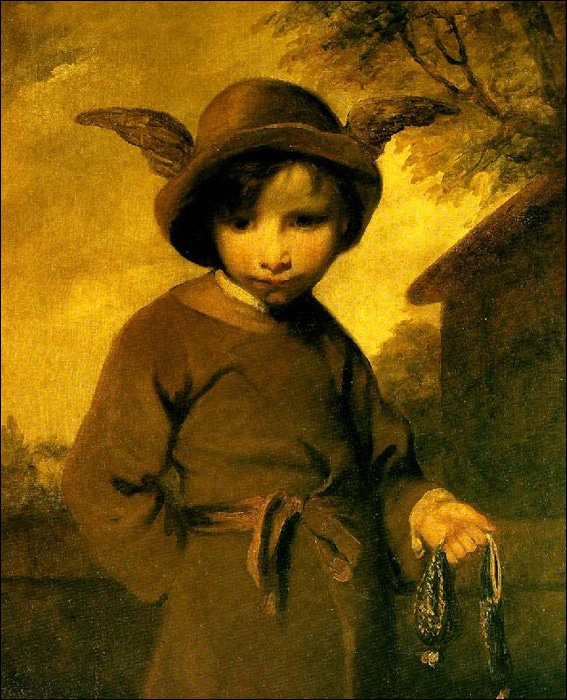
The myth of Hermes started at dawn on Mount Cyllene. He was born in a cave, but he was bored by lunch. The infant god didn’t stay in his cradle. Seeking comfort from his mother wasn’t the plan. He wanted power.
Hermes spotted a tortoise in the grass. Most people just see a slow reptile, but Hermes saw potential. He killed the creature and turned the empty shell into the first lyre. He created music where there was only silence before, proving that the trickster builds things by tearing other things apart. This is the trickster archetype in its simplest form.
Art wasn’t enough to satisfy him. The baby was hungry for meat. He went to Pieria and stole fifty of Apollo’s best cows. To hide his crime, he made the cattle walk backward while he wore brushwood sandals to mask his own footprints. The tracks led in circles. It was a mess.
When Apollo arrived to reclaim his property, Hermes was back in his blankets. He looked up with big, innocent eyes. A heavy oath followed where he swore he’d never even seen a cow. He claimed he was just a baby who only cared about milk and a nap.
This moment changed everything in Greek mythology. Before Hermes showed up, the gods told the truth. What they said was what existed. Hermes broke that connection. He introduced the space between words and facts. He became the patron of thieves, merchants, and anyone who talks for a living.
That cleverness stayed in his bloodline. Hermes passed his wit to his son, Autolycus, who eventually passed it to his grandson, Odysseus. The famous tricks of the Trojan War hero started in that cave. These stories don’t treat lying as a moral failure. They see it as a divine skill that helps an underdog survive a world of giants.
🔪 Loki and the Trickster Archetype: The Norse Catalyst
Travel north to Asgard and you’ll find the humor gets much darker. Loki isn’t a charming rogue like Hermes. He’s Odin’s blood-brother, but he constantly teeters between being a helpful ally and a total nightmare. This role makes him an agent of chaotic change who stops the gods from getting too comfortable.
One night, Loki snuck into Sif’s bedroom while she slept. Sif was Thor’s wife and famous for her hair that looked like spun gold, but Loki didn’t care about her status or her beauty. Loki sheared the whole lot off. He left her bald and miserable.
This seems like pure malice. Loki did it because he could. Unlike Hermes, who was driven by hunger, Loki just wanted to wreck the domestic peace of the strongest god in the room by causing unnecessary chaos.
Thor was ready to kill him. He promised to break every bone in Loki’s body. Naturally, Loki’s survival instincts took over. He promised to find a replacement that was even better than the original hair. The trip led him to the dwarves, who were the best smiths around, and through a series of bets where he literally risked his own head, he managed to secure several legendary treasures.
He brought Sif new hair made of actual gold that grew like real strands. But he didn’t stop there. His haul also included the spear Gungnir and a magic ship. Most importantly, his schemes resulted in the creation of Mjolnir, the heavy hammer that became the primary defense for everyone in Asgard.
The greatest weapon the gods have only exists because Loki was a jerk. This highlights the culture hero folklore paradox perfectly. A trickster breaks a rule, and the community gets an upgrade during the fix. If Loki hadn’t decided to be a thief that night, the gods would have had no defense against the giants when they eventually attacked. He’s the grit that forces the oyster to make a pearl.
🐺 Coyote’s Trickster Archetype: North American Wisdom
You’ll find the trickster wearing coyote fur in many North American oral traditions. He isn’t a human-shaped god like those in Norse myths. Instead, he stays an animal driven by his gut. Hunger and curiosity rule him. Often, his own plans blow up in his face because he can’t stop himself from pushing things just a little too far.
One story from the Southwest describes Coyote watching a bird. This bird tosses its eyes into the sky to see the world before they fall back into place. Coyote loves it. He asks to learn the trick. The bird gives him one rule: never do it more than four times in a single day.
Coyote agrees. But his ego is too loud for rules. He juggles his eyes four times just for the thrill of it. Then he tries a fifth. The eyes stay gone. They hang in a tree while Coyote stumbles through the brush, completely blind and helpless.
He eventually replaces his eyes with pine pitch. It’s why they’re yellow.
Coyote is a “bricoleur” – a tinkerer who builds the world through his own mistakes. He creates the stars and the seasons by accident or by trying to copy others. Jung argued this trickster archetype has god-like power but lacks even the basic impulse control you would expect from a wild animal. He ties the holy to the dirt. You can learn from your own foolishness as you recover from a fall.
🦊 Reynard and the Trickster Archetype: The European Satirist
Medieval European folklore brought the trickster down from the stars and dumped him in the mud. Reynard the Fox became the star of the show in France, Germany, and the Netherlands. He isn’t a deity. Instead, he’s a red-furred outlaw trying to survive a kingdom ruled by Noble the Lion.
Reynard acts as a peasant hero standing up to a crooked ruling class. While the wolf and the bear rely on muscle to get their way, the fox uses his brain to navigate a world that wants him dead. It works. If you look at the myth cycles, the bigger animals constantly drag him to court for his crimes, but he always talks his way out of the noose.
He knows how to exploit the king’s greed or the bear’s ego. Take the story where he convinces a wolf to use his tail as a fishing line in a frozen pond. The ice hardens. The wolf stays stuck.
Reynard represents the archetypal character pattern of the survivalist. He proves that when you live under an unjust social order, rule-breaking becomes a virtue. He’s basically the grandfather of the modern anti-hero. These stories gave regular people a chance to mock the nobility and the church without getting arrested, providing a safe way to vent their frustrations through fiction. Through him, the weak realized that a well-placed lie can topple the strong.
💡 Core Traits of the Trickster Archetype
Think about what a Norse god, a Greek baby, and a blind Coyote have in common. They test the ego’s rules. Eugene Monick described this as the unconscious judging our own judgments.
| Tradition | Symbol | Core Meaning |
|---|---|---|
| Greek | Hermes | Flips moral rules to build new things. |
| Norse | Loki | He breaks taboos to change the gods. |
| North American | Coyote | He fumbles through mistakes but ends up building the world. |
| European | Reynard | Uses words to beat brute force. |
| West African | Eshu | Breaks conversations to force everyone to find the truth. |
These figures live on the edges.
Lewis Hyde points out that they don’t belong in the city or the deep woods. You’ll find them at the crossroads or standing in a doorway. Hermes stands guard at the gate while Coyote circles the village perimeter looking for a way in. They live where lines get blurry.
They also check pride.
Systems naturally try to stay the same. Kings want to keep their crowns and gods hate being questioned. Power gets stiff. The trickster arrives to steal the cattle or shave a head to prove no one is safe, forcing the people at the top to see exactly what they have been ignoring for so long.
Here’s the thing: they act on raw hunger rather than a moral code.
Even so, their messy choices change the world in unexpected ways. Our basic instincts often drive our best work. You can’t make something truly original or move culture forward without letting the messy and irrational parts of your own mind take the wheel for a while.
This duality fits right into broader symbolism of jungian archetypes found everywhere. The trickster is the shadow that the world can’t ignore because he represents the part of the mind that hasn’t split “good” from “useful” yet. He is raw awareness.
📉 The Market Trickster Archetype: Phishing for Phools
The trickster didn’t disappear. He just put on a designer suit. Instead of raiding cattle, he trades futures. Economists George Akerlof and Robert Shiller explore how this pattern plays out in the free market in their book Phishing for Phools.
They argue that free markets naturally create trickster archetype examples. It’s a simple rule of the game. If you have a psychological blind spot – a “phool” – someone will eventually find a way to profit from it. It’s not an anomaly. This is a core feature of how the system works.
Look at Bernie Madoff or Martin Shkreli. Shkreli hiked the price of life-saving medicine by 5,000 percent overnight while Madoff maintained a $64 billion lie that lasted for decades. These men represent the shadow side of Hermes. They are the “shrewd” taking advantage of the “naïve.”
Worth noting: there’s a big difference here. Ancient tricksters actually gave something back to the world, like when Hermes gave his lyre to Apollo or Loki made sure Thor got his hammer. Modern tricksters mostly just take. The cycle of exchange stops with them.
The algorithm is our newest trickster. It doesn’t care about what’s true. Most of the time, it only cares about what keeps you scrolling. Like Coyote juggling his eyes, we get mesmerized by the show until we lose our own perspective. The algorithm acts as a conflict generator, and it stays powered by feeding on our strongest emotional reactions to keep the system running.
🧭 The Shadow and the Trickster Archetype
The trickster makes people uncomfortable. Most of us wouldn’t invite him to dinner. But you’ll notice that almost every ancient mythology suggests we simply can’t survive without him.
Societies that banish this figure turn brittle. A culture that refuses to laugh at its own flaws or recognize its inner rot will eventually crack under the pressure. The trickster stops this from happening by injecting tiny doses of messiness into the gears. He acts as the pressure valve.
You’ll meet him whenever you get too certain about your own goodness. He’s the one who trips you up. The trickster hides your keys when you’re in a hurry to remind you that you aren’t the master of the universe.
You can’t defeat the collective shadow. It’s a force that moves and changes constantly. The stories of Loki, Hermes, and Coyote show that finding wisdom isn’t a straight path. It’s a messy road full of potholes, stolen cows, and the kind of mistakes that make you want to hide your face in your hands. The trickster forces you to keep walking. He makes sure the story doesn’t end before it’s actually finished.
🌀 Synthesis: The Cosmic Function of the Trickster Archetype
Hermes, Loki, and Coyote didn’t come from the same place. You’ll find them in Greece, Scandinavia, and the American Southwest, yet they act almost exactly the same. It’s wild to think about. This trickster archetype keeps appearing because it serves a purpose we can’t ignore. These figures live right on the edge of what’s holy and what’s ordinary. They’re the ones who keep the boundaries between these worlds open.
That’s the real mystery. The Norse gods can’t get their weapons without Loki’s schemes, and the Greek gods rely on Hermes to keep their messages moving across the world. Indigenous tribes see Coyote as the one who put the stars in the sky. These myths all point to one truth. Static systems fail. The trickster isn’t just a funny character in an old story. He represents the disorder that lets the world renew itself. Change is mandatory.
❓ Frequently Asked Questions
What does the trickster archetype symbolize?
Think of the trickster as a necessary mess. While we all crave stability, staying in one place for too long leads to stagnation. The trickster brings the specific type of chaos that forces you to change when you would much rather stay comfortable and safe. It’s the mistake that teaches. This figure represents the sudden shift that shatters your old habits to let a new life begin.
Is the trickster considered evil?
Usually, they aren’t. Tricksters live outside our normal ideas of right and wrong. They act on impulse rather than malice. While their lying or stealing can cause real pain, these acts often push a culture forward in ways that following every rule simply cannot. They aren’t trying to be bad. They’re just being true to their own wild nature.
How did Carl Jung define the trickster?
Jung saw the trickster as a piece of the shadow. It’s the wild part of your mind. You try to hide these primitive urges, but they stay active regardless of your plans. He believed this figure exists to show us that we aren’t actually the masters of our own reality, no matter how much we value our logic. It’s half animal and half god. It humbles the ego by proving that logic doesn’t always win.
If you want to see how this fits into the bigger picture, you can read our guide to Jungian Archetypes: The Hidden Patterns of Life.
Where to go from here

Dalton Treviso is an independent researcher and writer exploring archetypes, Jungian psychology, and mythological symbolism. His work focuses on how ancient philosophical traditions and symbolic systems illuminate the hidden structures of the human psyche.
Drawing on Jungian psychology, Stoic thought, and comparative mythology, Dalton examines how the inner patterns we carry shape perception, conflict, and transformation.
Through EINSOF7, he writes about the symbolic architecture of the mind — exploring how myths, archetypes, and philosophical traditions act as both mirror and map for psychological depth and self-understanding.
Areas of study: Jungian archetypes, animal symbolism, dream symbolism, mythological figures, and ancient symbolic traditions.